Ch.18 Metabolic Pathways and ATP Production
Timberlake - Chemistry: An Introduction to General, Organic, and Biological Chemistry 14th Edition
Timberlake14th EditionChemistry: An Introduction to General, Organic, and Biological ChemistryISBN: 9781292472249당신이 사용하는 게 아니라요?교과서 변경
18장, 문제 98a

Which of the following molecules will produce the most ATP per mole?
a. glucose or stearic acid (C18)

검증된 단계별 안내
1
Understand the context: ATP (adenosine triphosphate) is the primary energy currency in cells. The amount of ATP produced depends on the molecule's structure and the number of carbon atoms it contains. Glucose and stearic acid are metabolized differently, with stearic acid being a fatty acid and glucose being a carbohydrate.
Recall the metabolic pathways: Glucose undergoes glycolysis, the citric acid cycle (Krebs cycle), and oxidative phosphorylation. Stearic acid undergoes beta-oxidation, the citric acid cycle, and oxidative phosphorylation. Fatty acids like stearic acid generally yield more ATP because they have more carbon atoms and are more reduced than glucose.
Compare the number of carbons: Glucose (C₆H₁₂O₆) has 6 carbon atoms, while stearic acid (C₁₈H₃₆O₂) has 18 carbon atoms. More carbon atoms mean more acetyl-CoA molecules can be produced during metabolism, leading to more ATP generation.
Analyze the ATP yield per molecule: Each glucose molecule produces 2 ATP from glycolysis, 2 ATP (or GTP) from the citric acid cycle, and approximately 28-30 ATP from oxidative phosphorylation, totaling around 32 ATP. In contrast, stearic acid produces significantly more ATP because each cycle of beta-oxidation generates NADH and FADH₂, which contribute to ATP production, and each acetyl-CoA enters the citric acid cycle.
Conclude: Since stearic acid has more carbon atoms and undergoes beta-oxidation, which is highly efficient in generating ATP, it will produce more ATP per mole compared to glucose.

비슷한 문제에 대한 검증된 영상 답변:

이 영상 해법은 위 문제에 도움이 된다고 튜터들이 추천한 것입니다.
영상 길이:
1m

주요 개념

질문에 올바르게 답하기 위해 반드시 이해해야 하는 핵심 개념들은 다음과 같습니다.

Cellular Respiration

Cellular respiration is the metabolic process by which cells convert nutrients into energy, specifically ATP. It involves glycolysis, the citric acid cycle, and oxidative phosphorylation. Different substrates, such as carbohydrates and fatty acids, yield varying amounts of ATP based on their chemical structure and the number of carbon-hydrogen bonds present.
추천 영상:
가이드 코스
1:47
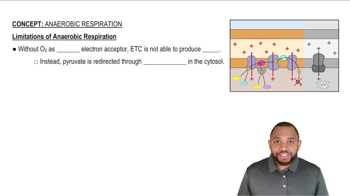
Anaerobic Respiration Concept 1

ATP Yield from Glucose vs. Fatty Acids

Glucose typically yields about 30-32 ATP molecules per molecule during cellular respiration, while fatty acids, such as stearic acid (C₁₈), can produce significantly more ATP due to their higher number of carbon atoms. Each fatty acid undergoes beta-oxidation, generating multiple acetyl-CoA units that enter the citric acid cycle, leading to a greater ATP output compared to glucose.
추천 영상:
가이드 코스
2:48
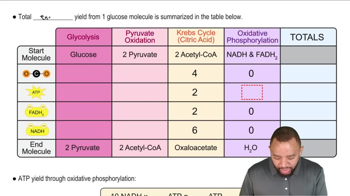
Total Energy From Glucose Concept 2

Beta-Oxidation

Beta-oxidation is the metabolic process by which fatty acids are broken down in the mitochondria to generate acetyl-CoA, NADH, and FADH₂. This process is crucial for the energy yield from fatty acids, as each cycle of beta-oxidation shortens the fatty acid chain by two carbon atoms, allowing for multiple rounds of ATP production through subsequent metabolic pathways.
추천 영상:
가이드 코스
02:32
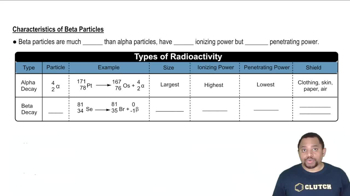
Characteristics of Beta Particles