Ch.7 Chemical Quantities and Reactions
Timberlake - Chemistry: An Introduction to General, Organic, and Biological Chemistry 14th Edition
Timberlake14th EditionChemistry: An Introduction to General, Organic, and Biological ChemistryISBN: 9781292472249당신이 사용하는 게 아니라요?교과서 변경
7장, 문제 69b

Classify each of the following as exothermic or endothermic:
b. The energy level of the products is higher than that of the reactants.

검증된 단계별 안내
1
Analyze the energy levels of the reactants and products. If the energy level of the products is higher than that of the reactants, it indicates that energy has been absorbed during the reaction.
Recall the definition of an endothermic reaction: an endothermic reaction absorbs energy from the surroundings, typically in the form of heat, resulting in an increase in the energy level of the products compared to the reactants.
Compare this to an exothermic reaction, where energy is released into the surroundings, and the energy level of the products is lower than that of the reactants.
Based on the given information, classify the reaction as endothermic because the energy level of the products is higher than that of the reactants, indicating energy absorption.
Conclude that the reaction is endothermic and explain that this classification is based on the energy flow and the relative energy levels of the reactants and products.

비슷한 문제에 대한 검증된 영상 답변:

이 영상 해법은 위 문제에 도움이 된다고 튜터들이 추천한 것입니다.
영상 길이:
1m

주요 개념

질문에 올바르게 답하기 위해 반드시 이해해야 하는 핵심 개념들은 다음과 같습니다.

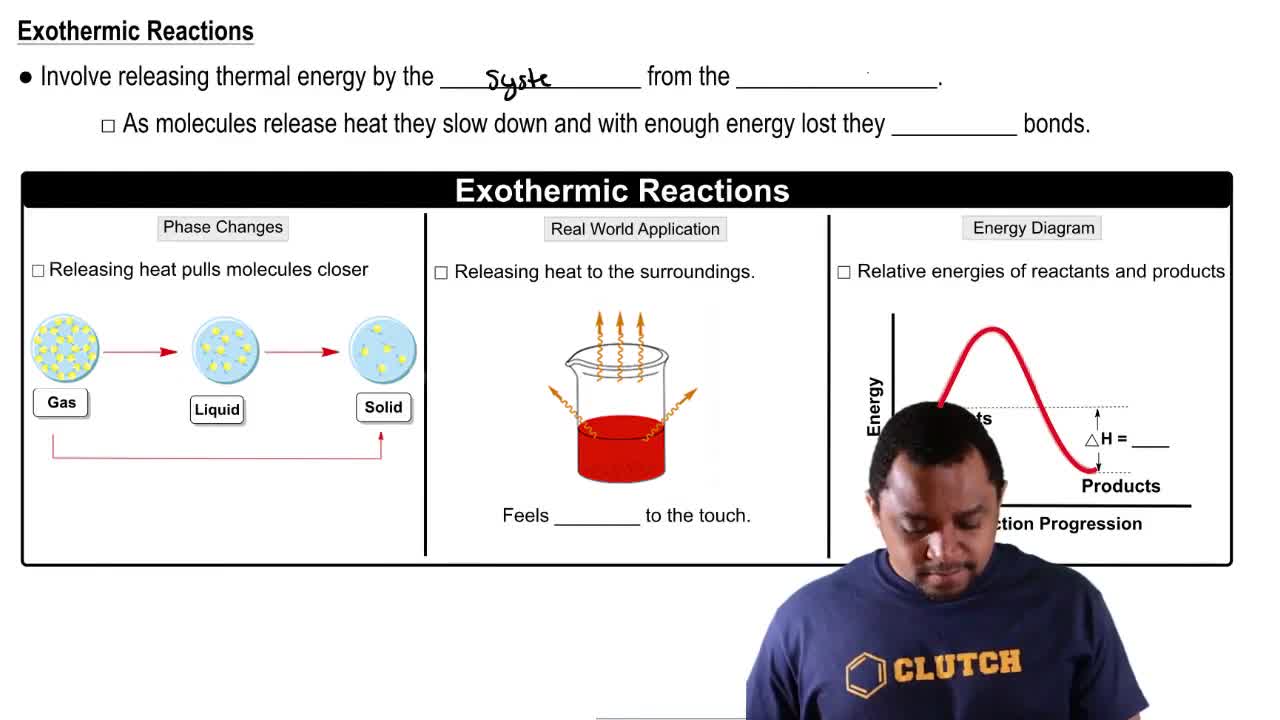
Exothermic Reactions

Exothermic reactions are chemical processes that release energy, usually in the form of heat, to the surroundings. In these reactions, the energy of the products is lower than that of the reactants, resulting in a net release of energy. Common examples include combustion and respiration, where energy is produced as a byproduct.
추천 영상:
가이드 코스
02:38
Endothermic & Exothermic Reactions

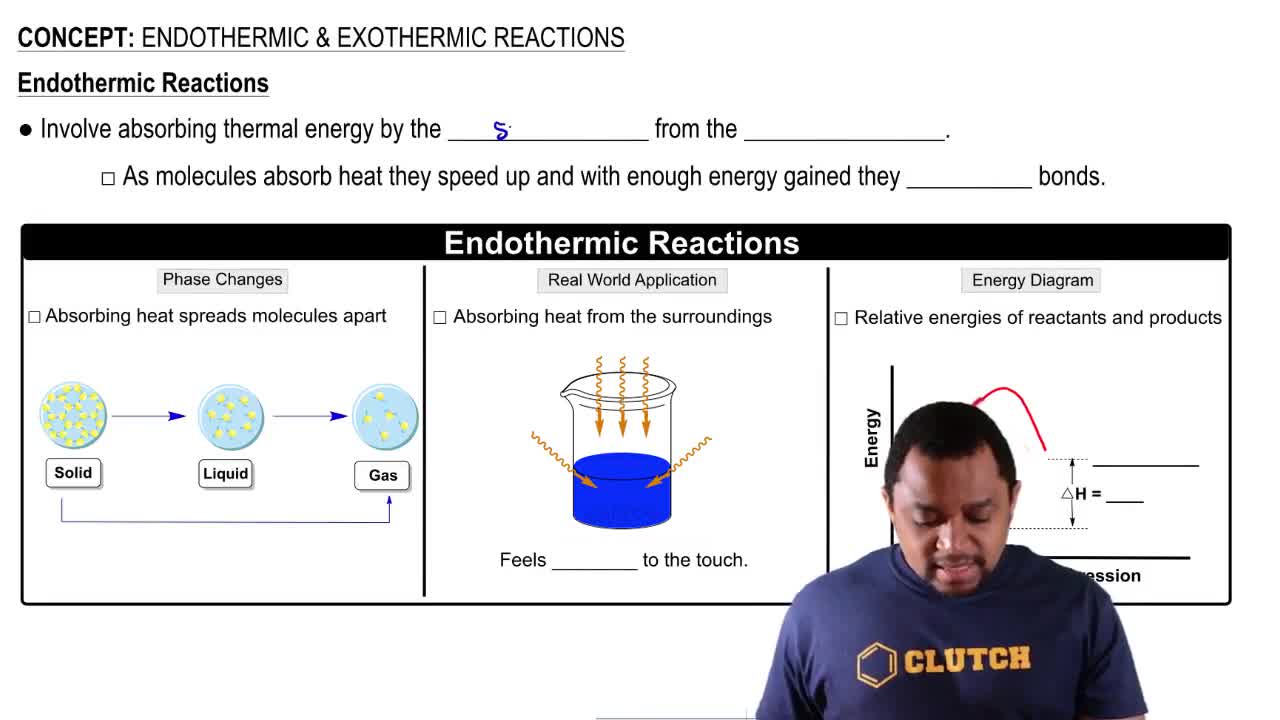
Endothermic Reactions

Endothermic reactions are chemical processes that absorb energy from the surroundings, leading to a decrease in temperature in the immediate environment. In these reactions, the energy level of the products is higher than that of the reactants, indicating that energy is required for the reaction to proceed. Photosynthesis is a classic example, where plants absorb sunlight to convert carbon dioxide and water into glucose.
추천 영상:
가이드 코스
02:30
Endothermic & Exothermic Reactions

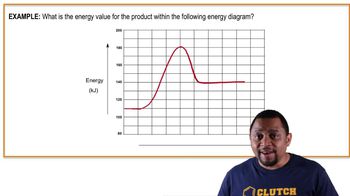
Energy Level Diagrams

Energy level diagrams visually represent the energy changes during a chemical reaction. They illustrate the energy of reactants and products, showing whether a reaction is exothermic or endothermic. In an endothermic reaction, the diagram will show the products at a higher energy level than the reactants, indicating that energy has been absorbed during the reaction.
추천 영상:
가이드 코스
00:37
Energy Diagrams Example 1