 뒤로
뒤로Introduction to Chemistry: Foundations, Matter, and Measurement
스터디 가이드 - 스마트 노트
 자료에 맞춘 맞춤형 노트, 핵심 정의, 예시, 맥락을 확장해 제공합니다.
Chemistry: The Chemical World
Introduction to Chemistry
Chemistry is the study of matter and its changes. It is a central science that connects and overlaps with many other scientific disciplines, including biology, physics, medicine, and environmental science. Understanding chemistry is essential for solving real-world problems and improving quality of life.
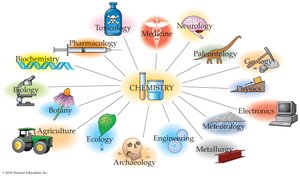
Science, Chemistry, and Technology
Definitions and Relationships
Science: The process of seeking an understanding of the underlying principles of nature. It is both technological (factual) and philosophical (theoretical).
Chemistry: The discipline of science that studies matter and its changes.
Technology: The direct application of scientific knowledge to solve practical problems.
Alchemy: A historical precursor to chemistry, focused on the transformation of substances, often with mystical or philosophical aims.
Science grew out of natural philosophy, which involved speculation about nature. Chemistry, as a modern science, relies on systematic experimentation and observation.
Green and Sustainable Chemistry
Green chemistry uses materials and processes designed to prevent or reduce pollution at its source. Sustainable chemistry aims to meet present needs without compromising the ability of future generations to meet theirs.
The Scientific Method and Reasoning
Key Terms and Concepts
Hypothesis: A testable explanation of observed data.
Scientific Law: A concise statement that summarizes large amounts of scientific data and describes natural phenomena (e.g., law of conservation of mass).
Scientific Theory: A set of tested hypotheses that explains natural phenomena. Theories are tentative and may change with new evidence.
Scientific Model: A tangible item or picture used to represent invisible processes.
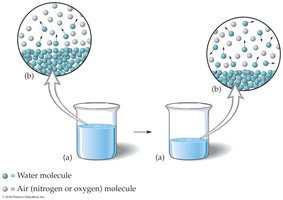
Science is characterized by being testable, reproducible, explanatory, predictive, and tentative. Reasoning in science can be inductive (specific to general) or deductive (general to specific).
Limitations of Science
Science is limited to studying observable phenomena and processes where variables can be controlled. Ideally, only one variable is changed at a time in experiments.
Risks, Benefits, and Critical Thinking
Risk-Benefit Analysis
Science and technology offer both risks and benefits. A desirability quotient (DQ) is used to estimate the balance between benefits and risks:
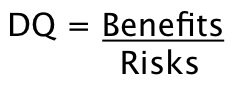
Example: The use of pesticides increases crop yields (benefit) but may harm the environment (risk).
Critical Thinking in Science
To evaluate scientific claims, use the FLaReS test:
Falsifiability
Logic
Replicability
Sufficiency
If a claim passes all four, it may be true; if it fails any, it is likely false.
Types of Scientific Research
Basic vs. Applied Research
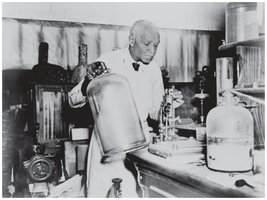
Basic Research: Seeks knowledge for its own sake. Example: Studying the role of purines in cells.
Applied Research: Focuses on solving specific problems. Example: Developing new products from peanuts.

Matter and Its Properties
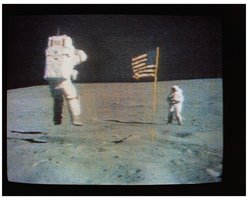
Definitions: Mass, Weight, and Matter
Matter: Anything that has mass and occupies space.
Mass: The measure of the amount of matter in an object (independent of gravity).
Weight: The measure of the gravitational force on an object (depends on gravity).
Physical and Chemical Properties
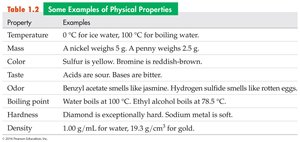
Physical Properties: Can be observed without changing the substance (e.g., color, mass, melting point).
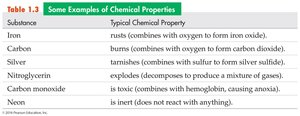
Chemical Properties: Can only be observed by changing the substance into a new one (e.g., flammability, reactivity).
Physical and Chemical Changes
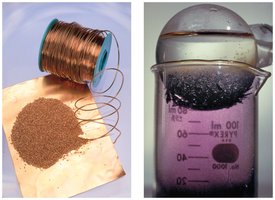
Physical Change: Does not alter the chemical identity (e.g., melting, freezing).
Chemical Change: Alters the chemical identity (e.g., burning, rusting).
Classification of Matter
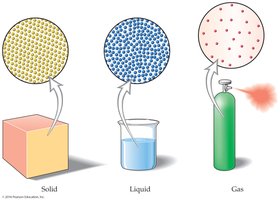
States of Matter
Solid: Definite shape and volume.
Liquid: Definite volume, no definite shape.
Gas: Neither definite shape nor volume.
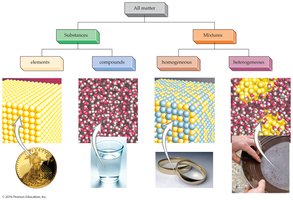
Elements, Compounds, and Mixtures
Element: Composed of one type of atom; represented by chemical symbols (e.g., H, O, Cl).
Compound: Made of two or more elements chemically combined; smallest unit is a molecule.
Mixture: Physical blend of two or more substances; can be homogeneous (uniform) or heterogeneous (not uniform).
Measurement and Units
SI Base Units
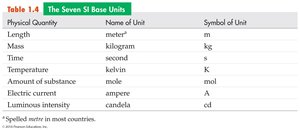
The International System of Units (SI) is used for scientific measurements. Key base units include:
Physical Quantity | Name of Unit | Symbol |
|---|---|---|
Length | meter | m |
Mass | kilogram | kg |
Time | second | s |
Temperature | kelvin | K |
Amount of substance | mole | mol |
Numerical Prefixes
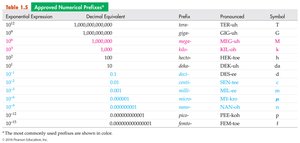
Prefixes are used to express powers of ten for SI units (e.g., kilo-, milli-, micro-).
Unit Conversions
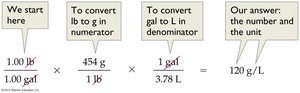
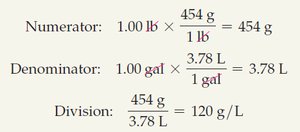
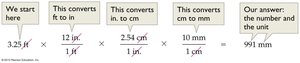
Unit conversions are performed using conversion factors so that units cancel appropriately. For example, converting pounds to grams and gallons to liters:
Density
Definition and Calculation
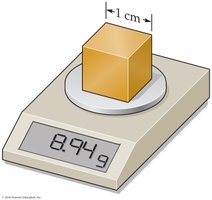
Density is the amount of matter in a given amount of space. It is calculated as:
where d is density, m is mass, and V is volume. For example, the density of copper is 8.94 g/cm3.
Energy: Heat and Temperature
Forms of Energy
Potential Energy: Stored energy.
Kinetic Energy: Energy of motion.
Heat vs. Temperature
Heat: Energy transferred from hotter to cooler objects.
Temperature: Average kinetic energy of the particles in a substance.
Temperature Scales and Conversions
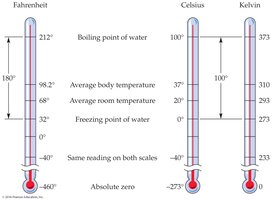
The three main temperature scales are Fahrenheit, Celsius, and Kelvin. The Kelvin scale is the SI unit for temperature. The conversion between Celsius and Kelvin is:
Summary Table: Physical and Chemical Properties
Examples of Physical Properties
Property | Examples |
|---|---|
Temperature | 0°C for ice water, 100°C for boiling water |
Mass | A nickel weighs 5 g. A penny weighs 2.5 g. |
Color | Sulfur is yellow. Bromine is reddish-brown. |
Taste | Acids are sour. Bases are bitter. |
Odor | Benzyl acetate smells like jasmine. Hydrogen sulfide smells like rotten eggs. |
Boiling point | Water boils at 100°C. Ethyl alcohol boils at 78.5°C. |
Hardness | Diamond is exceptionally hard. Sodium metal is soft. |
Density | 1.00 g/mL for water, 19.3 g/cm3 for gold. |
Examples of Chemical Properties
Substance | Typical Chemical Property |
|---|---|
Iron | Rusts (combines with oxygen to form iron oxide) |
Carbon | Burns (combines with oxygen to form carbon dioxide) |
Silver | Tarnishes (combines with sulfur to form silver sulfide) |
Nitroglycerin | Explodes (decomposes to produce a mixture of gases) |
Carbon monoxide | Is toxic (combines with hemoglobin, causing anoxia) |
Neon | Is inert (does not react with anything) |
