 뒤로
뒤로Microbial Growth and Metabolism: Bioenergetics and Pathways
스터디 가이드 - 스마트 노트
 자료에 맞춘 맞춤형 노트, 핵심 정의, 예시, 맥락을 확장해 제공합니다.
Microbial Metabolism and Bioenergetics
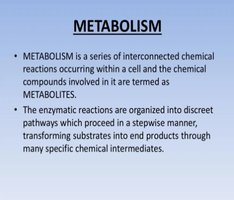
Introduction to Metabolism
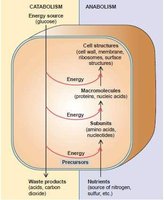
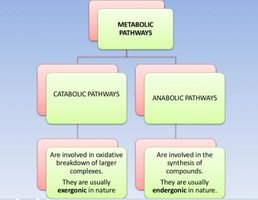
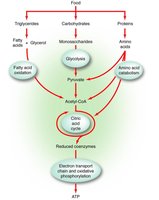
Metabolism encompasses all biochemical reactions within a cell, divided into catabolic and anabolic processes. These reactions are essential for energy generation and the synthesis of cellular components, collectively supporting microbial growth and survival.
Catabolism: Degradation of complex molecules to simpler ones, releasing energy.
Anabolism: Synthesis of complex molecules from simpler ones, requiring energy input.
Types and Functions of Metabolic Pathways
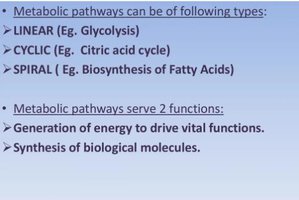
Metabolic pathways are organized sequences of enzymatic reactions, classified by their structure and function. They are crucial for energy production and biosynthesis.
Linear Pathways: e.g., Glycolysis
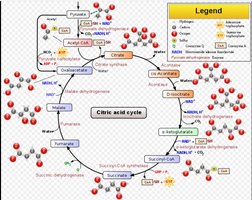
Cyclic Pathways: e.g., Citric Acid Cycle (Krebs Cycle)
Spiral Pathways: e.g., Fatty Acid Biosynthesis
Functions:
Generation of energy for vital cellular functions
Synthesis of biological molecules
Energy and Carbon Classes of Microorganisms
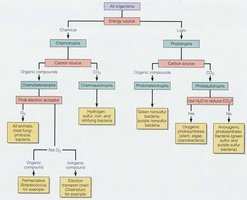
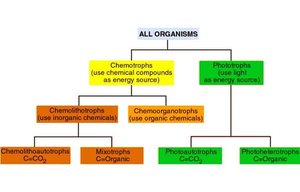
Microorganisms are classified based on their energy and carbon sources. This classification helps understand their ecological roles and metabolic diversity.
Phototrophs: Use light as an energy source
Chemotrophs: Use chemical compounds as energy sources
Autotrophs: Use CO2 as a carbon source
Heterotrophs: Use organic compounds as carbon sources
Metabolic Pathways: Organization and Enzymatic Catalysis
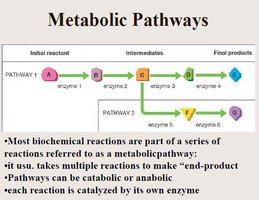
Metabolic pathways consist of a series of enzyme-catalyzed reactions, transforming substrates into end products through intermediates. Each step is catalyzed by a specific enzyme, ensuring regulation and efficiency.
Pathways can be catabolic (energy-releasing) or anabolic (energy-consuming).
Enzymes lower activation energy, increasing reaction rates without being consumed.
Bioenergetics: ATP and Energy Transfer
Role and Structure of ATP
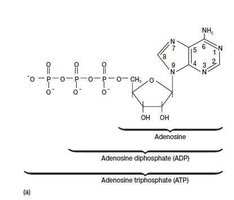
Adenosine triphosphate (ATP) is the primary energy currency of the cell. It stores and transfers energy for cellular processes through the hydrolysis of its high-energy phosphate bonds.
ATP is continuously synthesized and broken down in cells.
Energy is released when ATP is hydrolyzed to ADP and inorganic phosphate.
Mechanisms of ATP Generation
Microorganisms generate ATP through three main mechanisms:
Substrate-level phosphorylation: Direct transfer of a phosphate group to ADP from a phosphorylated intermediate.
Oxidative phosphorylation: ATP synthesis via the electron transport chain (ETC) and chemiosmosis.
Photophosphorylation: ATP generation using light energy (in phototrophs).
Glycolysis and Carbohydrate Metabolism
Overview of Glycolysis
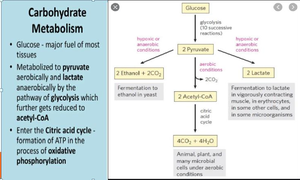
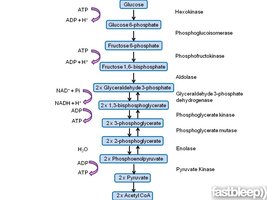
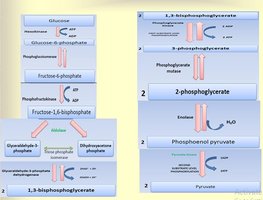
Glycolysis is a central metabolic pathway that converts glucose into pyruvate, generating ATP and NADH. It is a series of ten enzyme-catalyzed reactions occurring in the cytoplasm of both prokaryotic and eukaryotic cells.
Initial phosphorylation traps glucose in the cell.
Glucose is split into two three-carbon molecules, which are oxidized to pyruvate.
Net yield: 2 ATP and 2 NADH per glucose molecule.
Energy Yield in Glycolysis
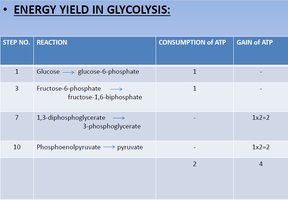
The energy yield of glycolysis is summarized in the following table:
Step No. | Reaction | Consumption of ATP | Gain of ATP |
|---|---|---|---|
1 | Glucose → glucose-6-phosphate | 1 | - |
3 | Fructose-6-phosphate → fructose-1,6-bisphosphate | 1 | - |
7 | 1,3-bisphosphoglycerate → 3-phosphoglycerate | - | 2 |
10 | Phosphoenolpyruvate → pyruvate | - | 2 |
Total | 2 | 4 | |
Respiration and Fermentation
Cellular Respiration: Aerobic and Anaerobic
Respiration is an ATP-generating process where electrons from NADH are transferred to an inorganic terminal electron acceptor via the electron transport chain (ETC).
Aerobic Respiration: Final electron acceptor is O2; yields the most ATP.
Anaerobic Respiration: Final electron acceptor is an inorganic molecule other than O2 (e.g., nitrate, sulfate); yields less ATP than aerobic respiration.
Electron Transport Chain and Oxidative Phosphorylation
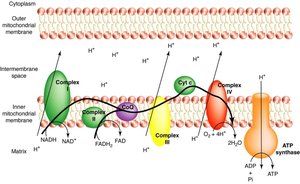
The ETC is a series of protein complexes in the inner mitochondrial membrane (eukaryotes) or plasma membrane (prokaryotes) that transfer electrons from NADH and FADH2 to O2, generating a proton gradient used to synthesize ATP.
Major ATP production occurs here via chemiosmosis.
Prokaryotes may have diverse ETCs, but the goal is always ATP synthesis.
Fermentation
Fermentation is used by organisms that cannot respire due to the absence of an inorganic electron acceptor or an electron transport system. The terminal electron acceptor is always an organic compound, and the end products vary by microorganism.
Homolactic fermentation: Pyruvate to lactic acid (e.g., Streptococcus, Lactobacillus)
Alcoholic fermentation: Pyruvate to ethanol (e.g., yeast)
Mixed acid fermentation: (e.g., E. coli)
Butylene-glycol fermentation: (e.g., Pseudomonas)
Propionic acid fermentation: (e.g., Propionibacterium)
Comparative Metabolism in Prokaryotes and Eukaryotes
Cellular Localization of Metabolic Pathways
In prokaryotes, all steps of cellular respiration occur in the cytosol or plasma membrane. In eukaryotes, glycolysis occurs in the cytosol, the Krebs cycle in the mitochondrial matrix, and the ETC in the inner mitochondrial membrane.
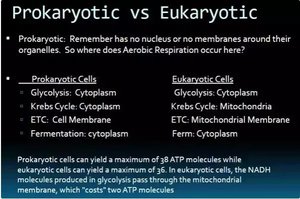

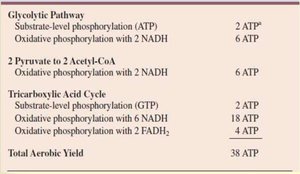
Summary Table: ATP Yield from Aerobic Respiration
Pathway | ATP Yield |
|---|---|
Glycolytic Pathway (Substrate-level) | 2 ATP |
Glycolytic Pathway (Oxidative, 2 NADH) | 6 ATP |
2 Pyruvate to 2 Acetyl-CoA (Oxidative, 2 NADH) | 6 ATP |
Tricarboxylic Acid Cycle (Substrate-level, GTP) | 2 ATP |
Tricarboxylic Acid Cycle (Oxidative, 6 NADH) | 18 ATP |
Tricarboxylic Acid Cycle (Oxidative, 2 FADH2) | 4 ATP |
Total Aerobic Yield | 38 ATP |
Key Terms and Concepts
Metabolism: All chemical reactions in a cell.
Catabolism: Breakdown of molecules to release energy.
Anabolism: Synthesis of complex molecules using energy.
ATP: Main energy currency of the cell.
Glycolysis: Pathway converting glucose to pyruvate.
Krebs Cycle: Series of reactions generating NADH and FADH2.
Electron Transport Chain: Series of proteins transferring electrons to generate ATP.
Fermentation: Anaerobic process yielding organic end products.
