Ch. 11 - Characterizing and Classifying Prokaryotes
Bauman - Microbiology with Diseases by Taxonomy 6th Edition
Bauman6th EditionMicrobiology with Diseases by TaxonomyISBN: 9780134832302당신이 사용하는 게 아니라요?교과서 변경
11장, 문제 5

Compare and contrast bacterial and archaeal cells.

검증된 단계별 안내
1
Begin by identifying the fundamental similarities between bacterial and archaeal cells, such as both being prokaryotes, meaning they lack a membrane-bound nucleus and organelles.
Next, examine the differences in cell membrane composition: bacterial membranes typically contain ester-linked lipids, whereas archaeal membranes have ether-linked lipids, which provide greater stability in extreme environments.
Then, compare the cell wall structures: bacterial cell walls usually contain peptidoglycan, a polymer unique to bacteria, while archaeal cell walls lack peptidoglycan and instead may have pseudopeptidoglycan or other polymers.
Consider genetic and molecular differences, such as the presence of unique RNA polymerases and differences in ribosomal RNA sequences, which reflect evolutionary divergence between bacteria and archaea.
Finally, discuss ecological and physiological distinctions, noting that archaea often inhabit extreme environments (e.g., high temperature, salinity, or acidity), whereas bacteria are found in a broader range of habitats.

비슷한 문제에 대한 검증된 영상 답변:

이 영상 해법은 위 문제에 도움이 된다고 튜터들이 추천한 것입니다.
영상 길이:
3m
도움이 되었나요?

주요 개념

질문에 올바르게 답하기 위해 반드시 이해해야 하는 핵심 개념들은 다음과 같습니다.

Cellular Structure Differences

Bacterial and archaeal cells differ in their cell wall composition; bacteria typically have peptidoglycan, while archaea lack peptidoglycan and may have pseudopeptidoglycan or other polymers. Their membrane lipids also differ, with bacteria having ester-linked fatty acids and archaea having ether-linked isoprenoids, affecting membrane stability and function.
추천 영상:
가이드 코스
05:32
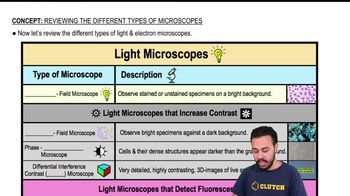
Reviewing the Different Types of Microscopes

Genetic and Molecular Machinery

Archaea share similarities with eukaryotes in their transcription and translation processes, including RNA polymerase structure and ribosomal proteins, whereas bacteria have distinct machinery. This reflects evolutionary differences and impacts how genes are expressed and regulated in each domain.
추천 영상:

Environmental Adaptations and Metabolism

Archaea often thrive in extreme environments (e.g., high temperature, salinity), possessing unique metabolic pathways like methanogenesis, which bacteria lack. Bacteria exhibit diverse metabolic capabilities but generally occupy a broader range of habitats, highlighting ecological and functional distinctions.
추천 영상:
가이드 코스
02:17
Introduction to Metabolism