Ch. 12 - Characterizing and Classifying Eukaryotes
Bauman - Microbiology with Diseases by Taxonomy 6th Edition
Bauman6th EditionMicrobiology with Diseases by TaxonomyISBN: 9780134832302당신이 사용하는 게 아니라요?교과서 변경
12장, 문제 5

Tubular filaments with cross walls found in large fungi are ___________.
a. Septate hyphae
b. Aseptate hyphae
c. Aseptate haustoria
d. Dimorphic mycelia

검증된 단계별 안내
1
Understand the structure of fungal hyphae: Hyphae are the thread-like filaments that make up the mycelium of a fungus.
Recall that hyphae can be classified based on the presence or absence of cross walls (septa) within the filaments.
Identify that 'septate hyphae' have cross walls (septa) dividing the filament into distinct cells, while 'aseptate hyphae' lack these cross walls and appear as continuous tubes.
Recognize that 'haustoria' are specialized structures used by some parasitic fungi to extract nutrients from host cells, and 'dimorphic mycelia' refers to fungi that can switch between yeast and filamentous forms.
Conclude that the term describing tubular filaments with cross walls in large fungi corresponds to 'septate hyphae'.

비슷한 문제에 대한 검증된 영상 답변:

이 영상 해법은 위 문제에 도움이 된다고 튜터들이 추천한 것입니다.
영상 길이:
2m
도움이 되었나요?

주요 개념

질문에 올바르게 답하기 위해 반드시 이해해야 하는 핵심 개념들은 다음과 같습니다.

Hyphae Structure in Fungi

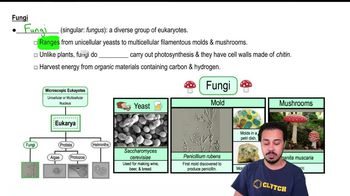
Hyphae are the thread-like filaments that make up the mycelium of a fungus. They can be either septate, meaning they have cross walls (septa) dividing the cells, or aseptate, lacking these cross walls and forming a continuous cytoplasmic mass.
추천 영상:
02:49
Fungi

Septate vs. Aseptate Hyphae

Septate hyphae contain septa that separate individual cells, allowing compartmentalization and controlled flow of organelles. Aseptate hyphae lack septa, resulting in a multinucleate, continuous cytoplasm, typical of some lower fungi like Zygomycetes.
추천 영상:
05:56
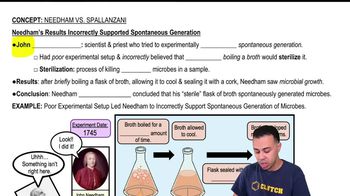
Needham vs. Spallanzani

Fungal Terminology: Haustoria and Dimorphic Mycelia

Haustoria are specialized hyphal structures used by parasitic fungi to extract nutrients from host cells. Dimorphic mycelia refer to fungi that can switch between yeast and filamentous forms depending on environmental conditions, unrelated to the presence of septa.
추천 영상:
03:09
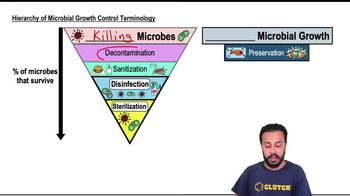
Hierarchy of Microbial Growth Control Terminology