Ch. 15 - Innate Immunity
Bauman - Microbiology with Diseases by Taxonomy 6th Edition
Bauman6th EditionMicrobiology with Diseases by TaxonomyISBN: 9780134832302당신이 사용하는 게 아니라요?교과서 변경
15장, 문제 6

How do NOD proteins differ from Toll-like receptors?

검증된 단계별 안내
1
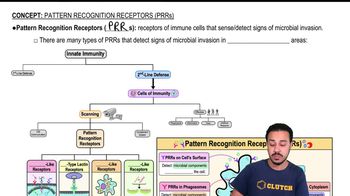
Understand that both NOD proteins and Toll-like receptors (TLRs) are part of the innate immune system and function as pattern recognition receptors (PRRs) that detect microbial components.
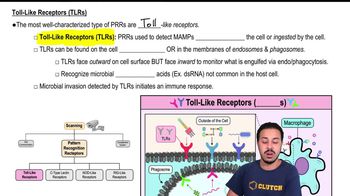
Recognize that Toll-like receptors are membrane-bound receptors located either on the cell surface or within endosomal membranes, where they detect extracellular or endosomal pathogen-associated molecular patterns (PAMPs).
Know that NOD proteins are cytoplasmic receptors, meaning they are located inside the cell, and they detect intracellular bacterial components, such as fragments of peptidoglycan from bacterial cell walls.
Compare the signaling pathways: TLRs typically activate signaling cascades leading to the production of pro-inflammatory cytokines through pathways like NF-κB, while NOD proteins also activate NF-κB but respond specifically to intracellular bacterial invasion.
Summarize the key difference: TLRs detect extracellular or endosomal microbial molecules, whereas NOD proteins detect intracellular bacterial components, reflecting their different cellular localizations and roles in immune surveillance.

비슷한 문제에 대한 검증된 영상 답변:

이 영상 해법은 위 문제에 도움이 된다고 튜터들이 추천한 것입니다.
영상 길이:
4m
도움이 되었나요?

주요 개념

질문에 올바르게 답하기 위해 반드시 이해해야 하는 핵심 개념들은 다음과 같습니다.

NOD Proteins

NOD proteins are intracellular pattern recognition receptors (PRRs) that detect bacterial peptidoglycan fragments inside the cytoplasm. They play a key role in sensing intracellular pathogens and initiating immune responses by activating signaling pathways like NF-κB.
추천 영상:

Toll-like Receptors (TLRs)

Toll-like receptors are membrane-bound PRRs located on the cell surface or in endosomal compartments. They recognize a broad range of microbial molecules such as lipopolysaccharides and flagellin, triggering innate immune responses by activating inflammatory signaling cascades.
추천 영상:
가이드 코스
03:35
Toll-Like Receptors

Differences in Localization and Ligand Recognition

The main difference between NOD proteins and TLRs lies in their cellular location and ligands: NOD proteins detect intracellular bacterial components, while TLRs recognize extracellular or endosomal microbial molecules. This distinction allows the immune system to detect pathogens in different cellular compartments.
추천 영상:
가이드 코스
04:24
Pattern Recognition Receptors