Ch. 16 - Adaptive Immunity
Bauman - Microbiology with Diseases by Taxonomy 6th Edition
Bauman6th EditionMicrobiology with Diseases by TaxonomyISBN: 9780134832302당신이 사용하는 게 아니라요?교과서 변경
16장, 문제 1

Antibodies function to:
a. Directly destroy foreign organ grafts
b. Mark invading organisms for destruction
c. Kill intracellular viruses
d. Directly promote cytokine synthesis
e. Stimulate T cell growth

검증된 단계별 안내
1
Understand the role of antibodies in the immune system: Antibodies are proteins produced by B cells that specifically recognize and bind to antigens on invading pathogens.
Recall that antibodies do not directly destroy pathogens but instead tag or mark them for other immune cells to recognize and eliminate.
Consider the options: antibodies do not directly kill intracellular viruses or promote cytokine synthesis; these functions are typically carried out by other immune components like cytotoxic T cells or helper T cells.
Focus on the function of antibodies in marking or opsonizing pathogens, which facilitates their destruction by phagocytes such as macrophages and neutrophils.
Conclude that the best description of antibody function is to mark invading organisms for destruction, which corresponds to option b.

비슷한 문제에 대한 검증된 영상 답변:

이 영상 해법은 위 문제에 도움이 된다고 튜터들이 추천한 것입니다.
영상 길이:
2m
도움이 되었나요?

주요 개념

질문에 올바르게 답하기 위해 반드시 이해해야 하는 핵심 개념들은 다음과 같습니다.

Role of Antibodies in Immune Response

Antibodies are proteins produced by B cells that specifically bind to antigens on pathogens. Their primary function is to mark these invaders for destruction by other immune cells, a process called opsonization, rather than directly killing the pathogens themselves.
추천 영상:
02:57
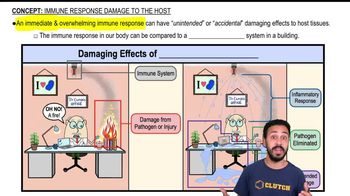
Intro to Immune Response Damage

Mechanisms of Pathogen Elimination

The immune system eliminates pathogens through various mechanisms, including phagocytosis by macrophages and neutrophils, complement activation, and cytotoxic T cell activity. Antibodies facilitate these processes by tagging pathogens, but do not directly destroy cells or viruses.
추천 영상:
03:40
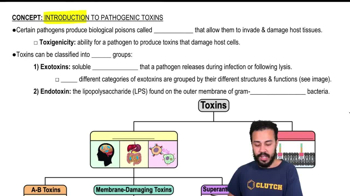
Introduction to Pathogenic Toxins

Difference Between Humoral and Cellular Immunity

Humoral immunity involves antibodies targeting extracellular pathogens, while cellular immunity involves T cells attacking infected or abnormal cells. Antibodies do not kill intracellular viruses or directly stimulate T cell growth; these functions are primarily mediated by cellular immune components.
추천 영상:
05:47
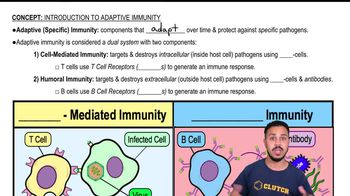
Introduction to Adaptive Immunity