Ch. 18 - Immune Disorders
Bauman - Microbiology with Diseases by Taxonomy 6th Edition
Bauman6th EditionMicrobiology with Diseases by TaxonomyISBN: 9780134832302당신이 사용하는 게 아니라요?교과서 변경
18장, 문제 1

Put the number of the type of immune system hypersensitivity in the blank next to each manifestation. Each of the four types may be used more than once or not at all. If the manifestation is not an immune hypersensitivity, put zero in the blank.
1. Acute anaphylaxis
2. Allergic contact dermatitis
3. Systemic lupus erythematosus
4. Allograft rejection
5. AIDS
6. Graft-versus-host disease
7. Milk allergy
8. Rheumatoid arthritis (RA)
9. Asthma
10. Hay fever
I. Type I hypersensitivity
II. Type II hypersensitivity
III. Type III hypersensitivity
IV. Type IV hypersensitivity
0. Not a hypersensitivity

검증된 단계별 안내
1
Step 1: Understand the four types of hypersensitivity reactions: - Type I: Immediate hypersensitivity mediated by IgE antibodies causing allergic reactions like anaphylaxis. - Type II: Antibody-mediated cytotoxic hypersensitivity involving IgG or IgM antibodies directed against cell surface or extracellular matrix antigens. - Type III: Immune complex-mediated hypersensitivity where antigen-antibody complexes deposit in tissues causing inflammation. - Type IV: Delayed-type hypersensitivity mediated by T cells, not antibodies, causing tissue damage over 48-72 hours.
Step 2: Analyze each manifestation and classify it based on the mechanism involved: - Acute anaphylaxis is a classic Type I hypersensitivity reaction involving IgE. - Allergic contact dermatitis is a Type IV hypersensitivity reaction involving T cells. - Systemic lupus erythematosus (SLE) involves immune complex deposition, so it is Type III. - Allograft rejection is mediated by T cells attacking foreign tissue, so it is Type IV.
Step 3: Identify conditions that are not hypersensitivity reactions: - AIDS is caused by viral infection leading to immunodeficiency, not a hypersensitivity, so assign 0. - Graft-versus-host disease involves donor T cells attacking host tissues, a Type IV hypersensitivity.
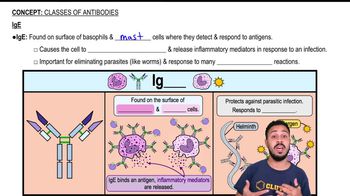
Step 4: Classify allergic reactions involving IgE antibodies: - Milk allergy, asthma, and hay fever are all mediated by IgE and are Type I hypersensitivity reactions.
Step 5: For autoimmune diseases involving antibody or immune complex mechanisms: - Rheumatoid arthritis involves immune complexes and antibody-mediated damage, so it is Type III hypersensitivity.

비슷한 문제에 대한 검증된 영상 답변:

이 영상 해법은 위 문제에 도움이 된다고 튜터들이 추천한 것입니다.
영상 길이:
2m
도움이 되었나요?

주요 개념

질문에 올바르게 답하기 위해 반드시 이해해야 하는 핵심 개념들은 다음과 같습니다.

Types of Immune Hypersensitivity

Immune hypersensitivity reactions are classified into four types based on the immune mechanism involved: Type I (immediate, IgE-mediated allergic reactions), Type II (antibody-mediated cytotoxicity), Type III (immune complex-mediated), and Type IV (delayed, T-cell mediated). Understanding these types helps identify the underlying cause of various immune disorders.
추천 영상:
03:19
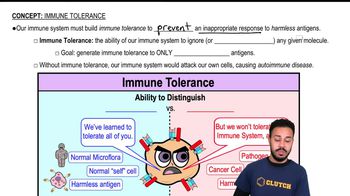
Immune Tolerance

Clinical Manifestations of Hypersensitivity

Different diseases and conditions manifest through specific hypersensitivity types. For example, acute anaphylaxis and asthma are Type I reactions, while allergic contact dermatitis is Type IV. Recognizing the clinical features linked to each hypersensitivity type aids in accurate diagnosis and treatment.
추천 영상:

Distinguishing Hypersensitivity from Non-Hypersensitivity Conditions

Not all immune-related diseases are hypersensitivities; some, like AIDS, involve immune deficiency rather than hypersensitivity. Differentiating between hypersensitivity reactions and other immune dysfunctions is crucial to avoid misclassification and to understand the pathophysiology correctly.
추천 영상:
03:47
DNA Polymerase Distinguishes Template from New Strand via Methylation