Ch. 25 - Pathogenic RNA Viruses
Bauman - Microbiology with Diseases by Taxonomy 6th Edition
Bauman6th EditionMicrobiology with Diseases by TaxonomyISBN: 9780134832302당신이 사용하는 게 아니라요?교과서 변경
25장, 문제 5

True/False
_____ A typical host for a togavirus is a horse.

검증된 단계별 안내
1
Understand the context: Togaviruses are a family of viruses that include several genera, one of which is Alphavirus. These viruses often have specific hosts or vectors associated with their transmission cycles.
Recall that many togaviruses are arthropod-borne viruses (arboviruses), meaning they are transmitted by insects such as mosquitoes or ticks, and they often infect vertebrate hosts like birds, humans, or mammals.
Identify the specific togavirus that commonly uses a horse as a typical host. For example, Eastern Equine Encephalitis Virus (EEEV) and Western Equine Encephalitis Virus (WEEV) are togaviruses known to infect horses.
Recognize that in the transmission cycle, horses are usually considered 'dead-end' hosts because they can become infected but do not typically contribute to further transmission of the virus to vectors.
Summarize that the blank in the sentence should be filled with the name of the virus or the type of virus within the togavirus family that typically infects horses, such as 'Eastern Equine Encephalitis Virus' or simply 'equine encephalitis virus.'

비슷한 문제에 대한 검증된 영상 답변:

이 영상 해법은 위 문제에 도움이 된다고 튜터들이 추천한 것입니다.
영상 길이:
1m
도움이 되었나요?

주요 개념

질문에 올바르게 답하기 위해 반드시 이해해야 하는 핵심 개념들은 다음과 같습니다.

Togavirus Characteristics

Togaviruses are a family of enveloped, positive-sense single-stranded RNA viruses. They often infect vertebrates and are typically transmitted by arthropod vectors like mosquitoes. Understanding their structure and transmission helps identify typical hosts and disease patterns.
추천 영상:
가이드 코스
05:09
Intro to Characteristics of Infectious Disease

Host Specificity and Reservoirs

Host specificity refers to the preference of a virus for infecting certain species. Reservoir hosts maintain the virus in nature without severe disease, enabling transmission to other species. Identifying typical hosts is crucial for understanding viral ecology and epidemiology.
추천 영상:
가이드 코스
01:50
Hide Within Host Cells

Zoonotic Transmission and Vector-Borne Diseases

Many togaviruses are zoonotic, meaning they can be transmitted from animals to humans, often via arthropod vectors. Horses can serve as amplifying hosts in diseases like Eastern Equine Encephalitis, highlighting the role of vectors and animal hosts in disease cycles.
추천 영상:
가이드 코스
04:57
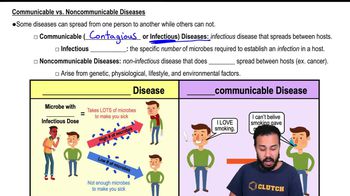
Communicable vs. Noncommunicable Diseases