Ch. 3 - Cell Structure and Function
Bauman - Microbiology with Diseases by Taxonomy 6th Edition
Bauman6th EditionMicrobiology with Diseases by TaxonomyISBN: 9780134832302당신이 사용하는 게 아니라요?교과서 변경
3장, 문제 7

Which of the following statements is true?


a. The cell walls of bacteria are composed of peptidoglycan.
b. Peptidoglycan is a fatty acid.
c. Gram-positive bacterial walls have a relatively thin layer of peptidoglycan anchored to the cytoplasmic membrane by teichoic acids.
d. Peptidoglycan is found mainly in the cell walls of fungi, algae, and plants.

검증된 단계별 안내
1
Step 1: Understand the composition of bacterial cell walls. Bacterial cell walls are primarily made of a polymer called peptidoglycan, which provides structural strength and shape to the cell.
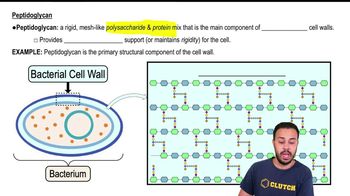
Step 2: Clarify what peptidoglycan is chemically. Peptidoglycan is not a fatty acid; it is a complex polymer consisting of sugars and amino acids forming a mesh-like layer outside the plasma membrane.
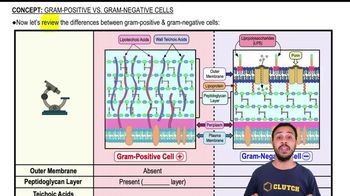
Step 3: Differentiate between Gram-positive and Gram-negative bacterial cell walls. Gram-positive bacteria have a thick peptidoglycan layer, whereas Gram-negative bacteria have a thinner peptidoglycan layer and an outer membrane.
Step 4: Understand the role of teichoic acids. In Gram-positive bacteria, teichoic acids are molecules that anchor the thick peptidoglycan layer to the cytoplasmic membrane and contribute to cell wall maintenance and ion regulation.
Step 5: Recognize where peptidoglycan is found. Peptidoglycan is unique to bacterial cell walls and is not found in the cell walls of fungi, algae, or plants, which have other structural components like chitin or cellulose.

비슷한 문제에 대한 검증된 영상 답변:

이 영상 해법은 위 문제에 도움이 된다고 튜터들이 추천한 것입니다.
영상 길이:
3m
도움이 되었나요?

주요 개념

질문에 올바르게 답하기 위해 반드시 이해해야 하는 핵심 개념들은 다음과 같습니다.

Structure and Composition of Bacterial Cell Walls

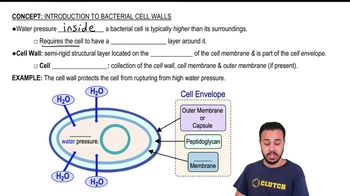
Bacterial cell walls are primarily composed of peptidoglycan, a polymer consisting of sugars and amino acids that provides structural support and shape. This layer is essential for bacterial survival and differs between Gram-positive and Gram-negative bacteria.
추천 영상:
03:44
Introduction to Bacterial Cell Walls

Differences Between Gram-Positive and Gram-Negative Bacteria

Gram-positive bacteria have a thick peptidoglycan layer containing teichoic acids that anchor it to the cytoplasmic membrane, while Gram-negative bacteria have a thinner peptidoglycan layer located between the inner and outer membranes. These differences affect staining properties and antibiotic susceptibility.
추천 영상:
04:46
Gram-Positive vs. Gram-Negative Cell Walls

Composition of Peptidoglycan

Peptidoglycan is not a fatty acid but a complex polymer made of sugar chains cross-linked by short peptides. It is unique to bacterial cell walls and is absent in fungi, algae, and plants, which have cell walls made of chitin, cellulose, or other polysaccharides.
추천 영상:
01:58
Peptidoglycan