Ch. 5 - Microbial Metabolism
Bauman - Microbiology with Diseases by Taxonomy 6th Edition
Bauman6th EditionMicrobiology with Diseases by TaxonomyISBN: 9780134832302당신이 사용하는 게 아니라요?교과서 변경
5장, 문제 3

For the phrase given below, indicate the type of metabolism referred to, using the following choices:
a. Anabolism only
b. Both anabolism and catabolism (amphibolic)
c. Catabolism only


Is exergonic

검증된 단계별 안내
1
Understand the definitions of the metabolism types: Anabolism refers to biosynthetic processes that build complex molecules from simpler ones and generally require energy input (endergonic). Catabolism refers to the breakdown of complex molecules into simpler ones, releasing energy (exergonic). Amphibolic pathways involve both anabolic and catabolic reactions.
Analyze the phrase 'Is exergonic' which means the process releases energy. Since catabolic reactions release energy, this phrase is describing a catabolic process.
Recall that anabolic processes are endergonic (require energy), so 'exergonic' cannot describe anabolism only.
Since the phrase does not indicate both building up and breaking down molecules, it does not describe an amphibolic pathway.
Conclude that the metabolism type referred to by 'Is exergonic' is catabolism only.

비슷한 문제에 대한 검증된 영상 답변:

이 영상 해법은 위 문제에 도움이 된다고 튜터들이 추천한 것입니다.
영상 길이:
1m
도움이 되었나요?

주요 개념

질문에 올바르게 답하기 위해 반드시 이해해야 하는 핵심 개념들은 다음과 같습니다.

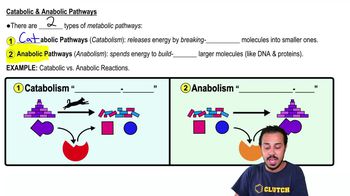
Catabolism

Catabolism refers to the metabolic pathways that break down molecules into smaller units, releasing energy in the process. These reactions are typically exergonic, meaning they release energy that the cell can use for various functions.
추천 영상:
03:25
Catabolic & Anabolic Pathways

Anabolism

Anabolism involves metabolic pathways that build complex molecules from simpler ones, requiring an input of energy. These reactions are endergonic, meaning they consume energy to synthesize cellular components like proteins and nucleic acids.
추천 영상:
03:25
Catabolic & Anabolic Pathways

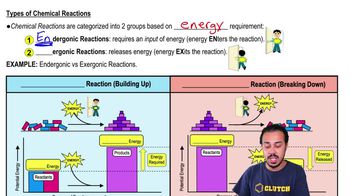
Exergonic Reactions

Exergonic reactions release energy as they proceed, often driving cellular processes. In metabolism, catabolic pathways are usually exergonic, providing the energy needed for anabolic reactions and other cellular activities.
추천 영상:
05:48
Types of Chemical Reactions