Ch. 5 - Microbial Metabolism
Bauman - Microbiology with Diseases by Taxonomy 6th Edition
Bauman6th EditionMicrobiology with Diseases by TaxonomyISBN: 9780134832302당신이 사용하는 게 아니라요?교과서 변경
5장, 문제 3

How do organisms control the rate of metabolic activities in their cells?

검증된 단계별 안내
1
Understand that organisms control the rate of metabolic activities primarily through regulation of enzyme activity, since enzymes catalyze metabolic reactions.
Recognize that one key method is allosteric regulation, where molecules bind to an enzyme at a site other than the active site, causing a change in enzyme activity and thus controlling the metabolic rate.
Consider feedback inhibition, a process where the end product of a metabolic pathway inhibits an enzyme involved earlier in the pathway, preventing overproduction and balancing the metabolic flow.
Acknowledge that gene expression regulation also plays a role by controlling the amount of enzyme produced, thereby adjusting the metabolic activity over longer periods.
Note that environmental factors such as temperature, pH, and availability of substrates or cofactors can influence enzyme activity and thus the rate of metabolism.

비슷한 문제에 대한 검증된 영상 답변:

이 영상 해법은 위 문제에 도움이 된다고 튜터들이 추천한 것입니다.
영상 길이:
2m
도움이 되었나요?

주요 개념

질문에 올바르게 답하기 위해 반드시 이해해야 하는 핵심 개념들은 다음과 같습니다.

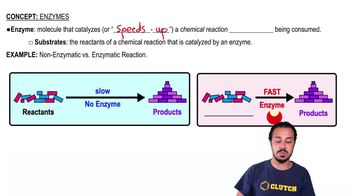
Enzyme Regulation

Enzymes catalyze metabolic reactions and their activity can be controlled through mechanisms like allosteric regulation, covalent modification, and feedback inhibition, allowing cells to adjust metabolic rates efficiently.
추천 영상:
02:55
Enzymes

Gene Expression Control

Cells regulate the production of enzymes by controlling gene expression, turning genes on or off in response to environmental or internal signals, which affects the amount of metabolic enzymes available and thus the metabolic rate.
추천 영상:
06:40
Introduction to Regulation of Gene Expression

Cellular Signaling Pathways

Cells use signaling molecules and pathways to detect changes in their environment and coordinate metabolic responses, ensuring that metabolic activities are adjusted appropriately to maintain homeostasis.
추천 영상:
04:44
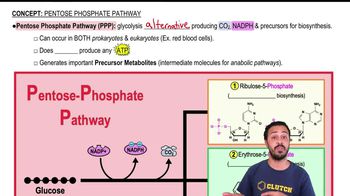
Pentose-Phosphate Pathway
관련 실천
교과서 질문

Two ATP molecules are used to initiate glycolysis. Enzymes generate molecules of ATP for each molecule of glucose that undergoes glycolysis. Thus, a net gain of _________ molecules of ATP is produced in glycolysis.

1281
views

교과서 질문

For the phrase given below, indicate the type of metabolism referred to, using the following choices:

a. Anabolism only

b. Both anabolism and catabolism (amphibolic)

c. Catabolism only


Is exergonic

790
views
교과서 질문

Indian tradition holds that storing water in brass pitchers prevents disease. Scientists have discovered that there is some truth in the tradition. The researchers collected river water samples and found fecal bacterial counts as high as 1 million bacteria per milliliter. However, they could detect no bacteria in the water after it had been stored for two days in traditional brass pitchers. Bacterial levels in plastic or earthenware containers remained high over the same period. How can brass, which is an alloy of copper mixed with zinc, make water safer to drink?

<IMAGE>

1231
views
교과서 질문

Examine the biosynthetic pathway for the production of the amino acids tryptophan, tyrosine, and phenylalanine in the figure. Where do the initial reactants (erythrose 4-phosphate and PEP) originate?

1305
views
교과서 질문

The initial catabolism of glucose occurs by glycolysis and/or the ________ and ________pathways.

1276
views
교과서 질문

Why are enzymes necessary for anabolic reactions to occur in living organisms?

1541
views