
Ch. 5 - Microbial Metabolism
Bauman - Microbiology with Diseases by Taxonomy 6th Edition
Bauman6th EditionMicrobiology with Diseases by TaxonomyISBN: 9780134832302당신이 사용하는 게 아니라요?교과서 변경
5장, 문제 2

Why are enzymes necessary for anabolic reactions to occur in living organisms?

검증된 단계별 안내
1
Understand that anabolic reactions involve the synthesis of complex molecules from simpler ones, which requires energy input and precise control within the cell.
Recognize that enzymes act as biological catalysts, meaning they speed up chemical reactions without being consumed in the process.
Identify that enzymes lower the activation energy needed for anabolic reactions, making these reactions proceed faster and more efficiently under physiological conditions.
Consider that without enzymes, anabolic reactions would occur too slowly to meet the metabolic demands of living organisms.
Conclude that enzymes are necessary because they enable anabolic reactions to happen at rates compatible with life, ensuring proper growth, repair, and maintenance of cells.

비슷한 문제에 대한 검증된 영상 답변:

이 영상 해법은 위 문제에 도움이 된다고 튜터들이 추천한 것입니다.
영상 길이:
2m
도움이 되었나요?

주요 개념

질문에 올바르게 답하기 위해 반드시 이해해야 하는 핵심 개념들은 다음과 같습니다.

Anabolic Reactions

Anabolic reactions are metabolic processes that build complex molecules from simpler ones, requiring energy input. These reactions are essential for cell growth, repair, and synthesis of biomolecules like proteins and nucleic acids.
추천 영상:
01:56
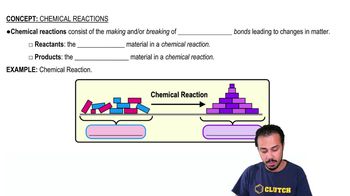
Chemical Reactions

Role of Enzymes in Metabolism

Enzymes are biological catalysts that speed up chemical reactions by lowering the activation energy. In metabolism, enzymes ensure that anabolic reactions proceed efficiently and at rates compatible with life.
추천 영상:
02:17
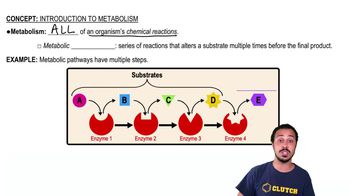
Introduction to Metabolism

Energy Requirement and Activation Energy

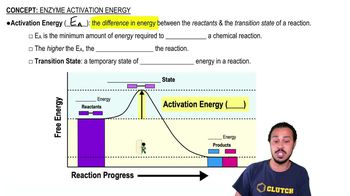
Anabolic reactions require energy to form new chemical bonds, but the initial energy barrier (activation energy) must be overcome. Enzymes reduce this barrier, allowing reactions to occur under physiological conditions.
추천 영상:
04:18
Enzyme Activation Energy
관련 실천
교과서 질문

Label the diagram below to indicate acetyl-CoA, electron transport chain, FADH2, fermentation, glycolysis, citric acid cycle, NADH, and respiration. Indicate the net number of molecules of ATP that could be synthesized at each stage during bacterial respiration of one molecule of glucose.

1246
views
교과서 질문

How do organisms control the rate of metabolic activities in their cells?

1585
views
교과서 질문

Two ATP molecules are used to initiate glycolysis. Enzymes generate molecules of ATP for each molecule of glucose that undergoes glycolysis. Thus, a net gain of _________ molecules of ATP is produced in glycolysis.

1281
views
교과서 질문

Label the mitochondrion to indicate the location of glycolysis, the citric acid cycle, and electron transport chains.

1089
views
교과서 질문

Indian tradition holds that storing water in brass pitchers prevents disease. Scientists have discovered that there is some truth in the tradition. The researchers collected river water samples and found fecal bacterial counts as high as 1 million bacteria per milliliter. However, they could detect no bacteria in the water after it had been stored for two days in traditional brass pitchers. Bacterial levels in plastic or earthenware containers remained high over the same period. How can brass, which is an alloy of copper mixed with zinc, make water safer to drink?

<IMAGE>

1231
views
교과서 질문

For the phrase given below, indicate the type of metabolism referred to, using the following choices:

a. Anabolism only

b. Both anabolism and catabolism (amphibolic)

c. Catabolism only


Includes dehydration synthesis reactions

767
views