Describe five physical methods of microbial control.
Ch. 9 - Controlling Microbial Growth in the Environment
9장, 문제 7
A company that manufactures an antimicrobial cleaner for kitchen counters claims that its product is effective when used in a 50% water solution. By what means might scientists best verify this statement?
a. Disk-diffusion test
b. Phenol coefficient
c. Filter paper test
d. In-use test
검증된 단계별 안내1
Understand the purpose of each test method listed: the disk-diffusion test measures the zone of inhibition of microbial growth around a disk soaked with the antimicrobial agent; the phenol coefficient compares the effectiveness of the antimicrobial agent to phenol; the filter paper test is similar to disk-diffusion but uses filter paper disks; the in-use test evaluates the antimicrobial product's effectiveness under actual usage conditions.
Recognize that the company claims effectiveness specifically when the product is diluted to 50% in water, which implies testing the product in conditions that mimic real-life application rather than just laboratory conditions.
Consider that the disk-diffusion and filter paper tests are primarily laboratory assays that measure inhibition zones but may not reflect practical usage scenarios such as surface cleaning in kitchens.
Note that the phenol coefficient is a comparative measure of antimicrobial strength but does not directly test the product's effectiveness in real-world conditions or specific dilutions.
Conclude that the in-use test is designed to verify antimicrobial effectiveness under actual conditions of use, including the specified 50% water dilution, making it the best method to verify the company's claim.

비슷한 문제에 대한 검증된 영상 답변:
이 영상 해법은 위 문제에 도움이 된다고 튜터들이 추천한 것입니다.
영상 길이:
3m도움이 되었나요?
주요 개념
질문에 올바르게 답하기 위해 반드시 이해해야 하는 핵심 개념들은 다음과 같습니다.
Disk-Diffusion Test
The disk-diffusion test evaluates antimicrobial effectiveness by placing disks soaked with the agent on an agar plate inoculated with bacteria. The zone of inhibition around the disk indicates the agent's ability to prevent microbial growth. It is useful for comparing antimicrobial potency but may not reflect real-world usage conditions.
추천 영상:
가이드 코스
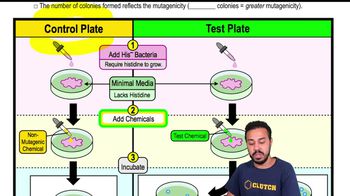
The Ames Test
Phenol Coefficient
The phenol coefficient is a quantitative measure comparing the effectiveness of a disinfectant to phenol under standardized conditions. It helps determine relative antimicrobial strength but does not assess performance in practical or diluted applications like a 50% water solution.
추천 영상:
가이드 코스
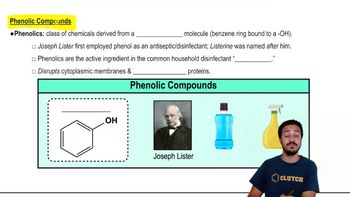
Phenolic Compounds
In-Use Test
The in-use test evaluates the antimicrobial product's effectiveness under actual usage conditions, such as on kitchen counters with the recommended dilution. This method provides realistic data on how well the cleaner works in practice, making it ideal for verifying manufacturer claims.
추천 영상:
가이드 코스
The Ames Test
관련 실천
교과서 질문
1320
views
교과서 질문
What is the difference between thermal death point and thermal death time?
1303
views
교과서 질문
Which of the following items functions most like an autoclave?
a. Boiling pan
b. Incinerator
c. Microwave oven
d. Pressure cooker
926
views
교과서 질문
The endospores of which organism can be used as a biological indicator of sterilization?
a. Bacillus stearothermophilus
b. Salmonella enterica
c. Mycobacterium tuberculosis
d. Staphylococcus aureus
887
views
교과서 질문
Defend the following statement: “Pasteurization is not sterilization.”
825
views
교과서 질문
Which of the following statements is true concerning the selection of an antimicrobial agent?
a. An ideal antimicrobial agent is stable during storage
b. An ideal antimicrobial agent is fast acting
c. Ideal microbial agents do not exist
d. All of the above are correct
745
views