Ch. 9 - Controlling Microbial Growth in the Environment
Bauman - Microbiology with Diseases by Taxonomy 6th Edition
Bauman6th EditionMicrobiology with Diseases by TaxonomyISBN: 9780134832302당신이 사용하는 게 아니라요?교과서 변경
9장, 문제 8

Defend the following statement: “Pasteurization is not sterilization.”

검증된 단계별 안내
1
Step 1: Define pasteurization by explaining that it is a heat treatment process designed to reduce the number of viable pathogenic microorganisms in food or liquids, typically by heating to a specific temperature for a set time, but not intended to kill all microorganisms.
Step 2: Define sterilization as a process that aims to completely eliminate or destroy all forms of microbial life, including bacteria, viruses, spores, and fungi, resulting in a sterile product.
Step 3: Compare the goals of both processes, emphasizing that pasteurization focuses on improving safety and extending shelf life by reducing harmful microbes, whereas sterilization ensures total microbial destruction.
Step 4: Discuss the temperature and time parameters used in pasteurization (e.g., 72°C for 15 seconds in high-temperature short-time pasteurization) versus sterilization methods (e.g., autoclaving at 121°C for 15 minutes), highlighting that pasteurization uses milder conditions insufficient to kill all microorganisms.
Step 5: Conclude by explaining that because pasteurization does not eliminate all microorganisms, especially heat-resistant spores, it cannot be considered sterilization, which requires complete microbial eradication.

비슷한 문제에 대한 검증된 영상 답변:

이 영상 해법은 위 문제에 도움이 된다고 튜터들이 추천한 것입니다.
영상 길이:
3m
도움이 되었나요?

주요 개념

질문에 올바르게 답하기 위해 반드시 이해해야 하는 핵심 개념들은 다음과 같습니다.

Pasteurization

Pasteurization is a heat treatment process designed to reduce the number of pathogenic and spoilage microorganisms in food and beverages, typically by heating to a specific temperature for a set time. It aims to make products safe and extend shelf life without significantly affecting taste or quality.
추천 영상:
가이드 코스
03:53
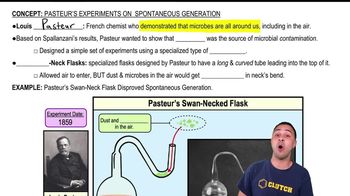
Pasteur's Experiments on Spontaneous Generation

Sterilization

Sterilization is a process that completely eliminates or kills all forms of microbial life, including spores, from a surface, fluid, or medium. It is more intense than pasteurization and is used in medical, laboratory, and some food applications to ensure absolute microbial destruction.
추천 영상:
가이드 코스
05:58
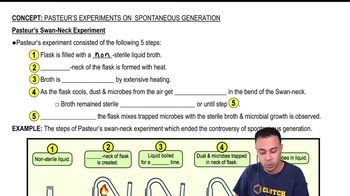
Pasteur’s Swan-Neck Experiment

Differences Between Pasteurization and Sterilization

The key difference is that pasteurization reduces microbial load but does not kill all microorganisms or spores, while sterilization achieves total microbial death. Pasteurization preserves food quality by using milder heat, whereas sterilization uses harsher conditions that can alter product characteristics.
추천 영상:
가이드 코스
05:58
Pasteur’s Swan-Neck Experiment