Ch. 9 - Controlling Microbial Growth in the Environment
Bauman - Microbiology with Diseases by Taxonomy 6th Edition
Bauman6th EditionMicrobiology with Diseases by TaxonomyISBN: 9780134832302당신이 사용하는 게 아니라요?교과서 변경
9장, 문제 10

Compare and contrast the action of alcohols, halogens, and oxidizing agents in controlling microbial growth.

검증된 단계별 안내
1
Step 1: Define the general mechanism of action for alcohols in microbial control. Explain that alcohols, such as ethanol and isopropanol, primarily denature proteins and disrupt cell membranes, leading to leakage of cellular contents and cell death. Emphasize their effectiveness against bacteria and enveloped viruses but limited action on spores.
Step 2: Describe how halogens, like chlorine and iodine, control microbial growth. Highlight that halogens act by oxidizing cellular components, including proteins and nucleic acids, and can penetrate cell walls to cause irreversible damage. Note their broad-spectrum activity, including effectiveness against bacteria, viruses, fungi, and spores (depending on concentration and exposure).
Step 3: Explain the role of oxidizing agents such as hydrogen peroxide and peracetic acid. Discuss that these agents produce reactive oxygen species that damage proteins, lipids, and DNA, leading to oxidative stress and cell death. Mention their ability to kill a wide range of microorganisms, including spores, due to strong oxidizing properties.
Step 4: Compare the spectrum of activity and limitations of each group. For example, alcohols are rapid and effective but not sporicidal; halogens are broad-spectrum but can be inactivated by organic matter; oxidizing agents are potent and sporicidal but may be unstable or corrosive.
Step 5: Summarize the practical applications and considerations for each agent in microbial control, such as alcohols being used for skin antisepsis, halogens for water disinfection, and oxidizing agents for sterilization of medical equipment.

비슷한 문제에 대한 검증된 영상 답변:

이 영상 해법은 위 문제에 도움이 된다고 튜터들이 추천한 것입니다.
영상 길이:
2m
도움이 되었나요?

주요 개념

질문에 올바르게 답하기 위해 반드시 이해해야 하는 핵심 개념들은 다음과 같습니다.

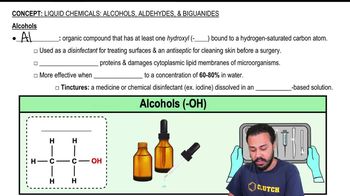
Mechanism of Action of Alcohols

Alcohols, such as ethanol and isopropanol, control microbial growth primarily by denaturing proteins and dissolving lipids in the cell membrane. This disrupts membrane integrity, leading to leakage of cellular contents and cell death. They are effective against bacteria and enveloped viruses but less so against spores.
추천 영상:
03:39
Alcohols

Role of Halogens in Microbial Control

Halogens like chlorine and iodine act as strong oxidizing agents that disrupt microbial proteins and nucleic acids. They penetrate cells and oxidize essential enzymes, leading to cell death. Halogens are broad-spectrum antimicrobials effective against bacteria, viruses, fungi, and spores under certain conditions.
추천 영상:
00:56
Liquid Chemicals: Halogens

Function of Oxidizing Agents

Oxidizing agents such as hydrogen peroxide and peracetic acid kill microbes by producing reactive oxygen species that damage cellular components including DNA, proteins, and lipids. They are effective against a wide range of microorganisms, including spores, and are often used for sterilization and disinfection.
추천 영상:
04:38
Pyruvate Oxidation