Ch. 9 - Controlling Microbial Growth in the Environment
Bauman - Microbiology with Diseases by Taxonomy 6th Edition
Bauman6th EditionMicrobiology with Diseases by TaxonomyISBN: 9780134832302당신이 사용하는 게 아니라요?교과서 변경
9장, 문제 9

Compare and contrast desiccation and lyophilization.

검증된 단계별 안내
1
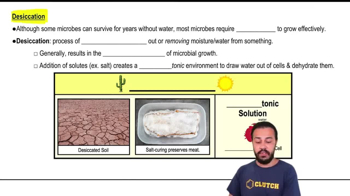
Define desiccation: It is a process of drying out microorganisms by removing water, typically through exposure to air or heat, which inhibits microbial growth by depriving cells of the moisture needed for metabolic activities.
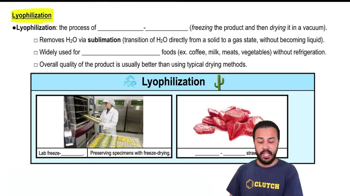
Define lyophilization (freeze-drying): It is a preservation method where microorganisms are first frozen and then subjected to a vacuum to remove water by sublimation, allowing long-term storage while maintaining cell viability.
Compare the effects on microorganisms: Desiccation generally inhibits growth but may not kill all microbes, as some can survive in a dormant state; lyophilization preserves microbes in a viable state for rehydration and use later.
Contrast the mechanisms: Desiccation removes water by evaporation at ambient or elevated temperatures, which can damage cells, whereas lyophilization removes water by sublimation under low temperature and pressure, minimizing damage.
Summarize applications: Desiccation is often used for short-term microbial control or food preservation, while lyophilization is widely used for long-term storage of microbial cultures, vaccines, and pharmaceuticals.

비슷한 문제에 대한 검증된 영상 답변:

이 영상 해법은 위 문제에 도움이 된다고 튜터들이 추천한 것입니다.
영상 길이:
3m
도움이 되었나요?

주요 개념

질문에 올바르게 답하기 위해 반드시 이해해야 하는 핵심 개념들은 다음과 같습니다.

Desiccation

Desiccation is the process of removing moisture from microorganisms by drying, which inhibits their growth by depriving them of water necessary for metabolic activities. It is a simple preservation method but may not kill all microbes, as some can survive in a dormant state.
추천 영상:

Lyophilization (Freeze-Drying)

Lyophilization involves freezing the material and then reducing the surrounding pressure to allow frozen water to sublimate directly from solid to gas. This method preserves microbial cells by removing moisture while maintaining structural integrity and viability for long-term storage.
추천 영상:

Comparison of Preservation Effects

While both desiccation and lyophilization remove water to inhibit microbial growth, desiccation is less controlled and may damage cells, whereas lyophilization better preserves cell viability and structure. Lyophilization is preferred for long-term storage, whereas desiccation is simpler but less effective.
추천 영상:
가이드 코스
01:32
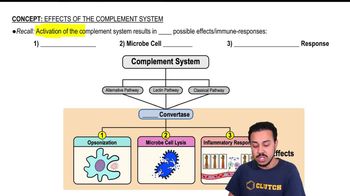
Effects of the Complement System