Ch. 12 - Adaptive Immunity
Norman-McKay- Microbiology: Basic and Clinical Principles 2nd Edition
Norman-McKay2nd EditionMicrobiology: Basic and Clinical PrinciplesISBN: 9780137661619당신이 사용하는 게 아니라요?교과서 변경
8장, 문제 8

T helper cells activate B cells to become ________________, which make ________________.

검증된 단계별 안내
1
Understand the role of T helper cells in the immune response: T helper cells assist other immune cells by releasing cytokines that activate B cells.
Recall that when B cells are activated by T helper cells, they differentiate into plasma cells.
Recognize that plasma cells are specialized cells that produce antibodies.
Therefore, fill in the blanks by identifying that T helper cells activate B cells to become plasma cells, which make antibodies.
Summarize the process: T helper cells → activate B cells → B cells become plasma cells → plasma cells produce antibodies.

비슷한 문제에 대한 검증된 영상 답변:

이 영상 해법은 위 문제에 도움이 된다고 튜터들이 추천한 것입니다.
영상 길이:
3m
도움이 되었나요?

주요 개념

질문에 올바르게 답하기 위해 반드시 이해해야 하는 핵심 개념들은 다음과 같습니다.

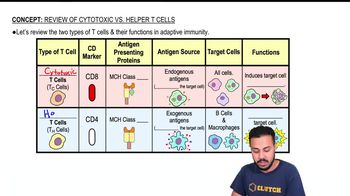
T Helper Cells

T helper cells are a type of white blood cell that play a crucial role in the immune response by activating other immune cells, including B cells. They recognize antigens presented by antigen-presenting cells and release cytokines that stimulate B cell activation and differentiation.
추천 영상:
가이드 코스
04:27
Review of Cytotoxic vs Helper T Cells

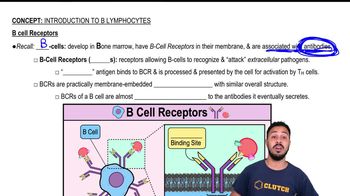
B Cell Activation

B cell activation occurs when B cells encounter their specific antigen and receive signals from T helper cells. This activation triggers B cells to proliferate and differentiate into plasma cells or memory B cells, enabling an effective adaptive immune response.
추천 영상:
가이드 코스
04:37
B cell Receptors

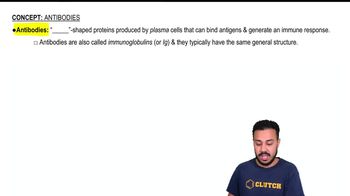
Plasma Cells and Antibody Production

Activated B cells differentiate into plasma cells, which are specialized for producing and secreting large amounts of antibodies. These antibodies bind to specific antigens, neutralizing pathogens or marking them for destruction by other immune cells.
추천 영상: