
Ch. 15 - Microbial Mechanisms of Pathogenicity
Tortora - Microbiology: An Introduction 14th Edition
Tortora14th EditionMicrobiology: An IntroductionISBN: 9780138200398당신이 사용하는 게 아니라요?교과서 변경
11장, 문제 9

How can viruses and protozoa avoid being killed by the host’s immune response?

검증된 단계별 안내
1
Understand that viruses and protozoa have evolved various mechanisms to evade the host's immune system, allowing them to survive and replicate within the host.
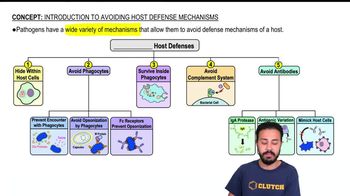
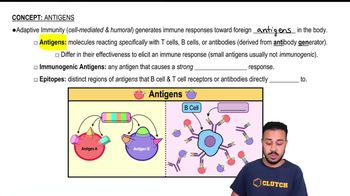
Recognize that one common viral strategy is antigenic variation, where the virus changes its surface proteins to avoid recognition by antibodies. This can be described as the virus altering its antigenic epitopes to escape immune detection.
Note that some viruses can inhibit the host's immune signaling pathways, such as blocking interferon responses, which normally help to alert and activate immune cells.
For protozoa, consider mechanisms like antigenic variation as well, where they switch surface proteins to avoid antibody binding, and also their ability to hide inside host cells or tissues, effectively shielding themselves from immune attack.
Understand that both viruses and protozoa can produce molecules that suppress or modulate the host immune response, such as secreting factors that inhibit immune cell activation or induce immune tolerance.

비슷한 문제에 대한 검증된 영상 답변:

이 영상 해법은 위 문제에 도움이 된다고 튜터들이 추천한 것입니다.
영상 길이:
3m
도움이 되었나요?

주요 개념

질문에 올바르게 답하기 위해 반드시 이해해야 하는 핵심 개념들은 다음과 같습니다.

Immune Evasion Mechanisms

Viruses and protozoa use various strategies to evade the host immune system, such as antigenic variation, hiding within host cells, and producing molecules that inhibit immune responses. These mechanisms help them avoid detection and destruction by immune cells.
추천 영상:
가이드 코스
01:59
Introduction to Avoiding Host Defense Mechanisms

Antigenic Variation

Antigenic variation involves changing surface proteins to avoid recognition by antibodies. Many protozoa and viruses alter their antigens periodically, which prevents the immune system from mounting an effective, lasting response.
추천 영상:

Intracellular Survival

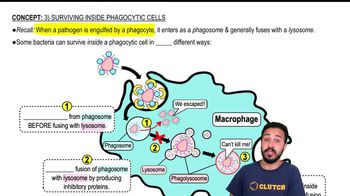
Some viruses and protozoa survive inside host cells, where they are shielded from antibodies and some immune cells. By residing intracellularly, they can replicate and persist while evading immune detection and attack.
추천 영상:
가이드 코스
04:18
Surviving Inside Phagocytic Cells
관련 실천
교과서 질문

Which of the following does not represent the same mechanism for avoiding host defenses as the others?

a. Rabies virus attaches to the receptor for the neurotransmitter acetylcholine.

b. Salmonella attaches to the receptor for epidermal growth factor.

c. Lymphocryptovirus (mononucleosis) virus binds to the host receptor for complement protein.

d. Surface protein genes in N. gonorrhoeae mutate frequently.

e. none of the above

1297
views
교과서 질문

The Opa gene is used to identify this endotoxin-producing bacterium that grows well in the high- CO₂ conditions inside phagocytes.

1282
views
교과서 질문

Which of the following statements is true?

a. The primary goal of a pathogen is to kill its host.

b. Evolution selects for the most virulent pathogens.

c. A successful pathogen doesn't kill its host before it is transmitted.

d. A successful pathogen never kills its host.

1126
views
교과서 질문

Describe the factors contributing to the pathogenicity of fungi, protozoa, and helminths.

1310
views
교과서 질문

The earliest smallpox vaccines were infected tissue rubbed into the skin of a healthy

person. The recipient of such a vaccine usually developed a mild case of smallpox, recovered, and was immune thereafter. What is the most likely reason this vaccine did not kill more people?

a. Skin is the wrong portal of entry for smallpox.

b. The vaccine consisted of a mild form of the virus.

c. Smallpox is normally transmitted by skin-to-skin contact.

d. Smallpox is a virus.

e. The virus mutated.

1276
views
교과서 질문

Which of the following genera is the most infectious?

1165
views