 뒤로
뒤로Chapter 1: The Science of Nutrition – Linking Food, Function, and Health
스터디 가이드 - 스마트 노트
 자료에 맞춘 맞춤형 노트, 핵심 정의, 예시, 맥락을 확장해 제공합니다.
The Science of Nutrition
Introduction to Nutrition
Nutrition is the scientific study of food, focusing on how it nourishes the human body and influences health. It encompasses the processes of consumption, digestion, metabolism, and storage of nutrients, as well as the study of eating patterns, food safety, production, and policy.
Nutrition investigates the relationship between diet and health, including the prevention and management of diseases.
It also addresses global food policy and safety concerns.
Evolution of Nutrition Science
Historical Perspective
The field of nutrition has evolved from early observations linking diet and illness to the identification of essential nutrients and the study of chronic diseases.
Mid-1700s: Associations between diet and illness were first observed.
1800s: Identification of carbohydrates, lipids, proteins, and minerals.
Early 20th century: Focus on deficiency diseases.
Modern era: Research supports wellness and the prevention of chronic diseases such as cardiovascular disease, type 2 diabetes, and cancer.
Nutrition and Health
Role of Nutrition in Wellness
Proper nutrition is essential for wellness, which is an active process involving both physical and mental health. Wellness is more than the absence of disease; it includes optimal functioning and the ability to resist infections.
Nutrition and physical activity are key components of wellness.
Healthful nutrition supports daily activities, mental tasks, immune function, and social interactions.

Nutrition and Disease Prevention
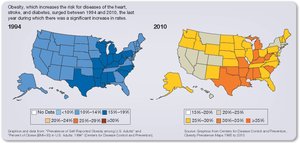
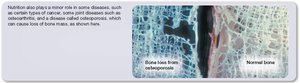
Nutrition can prevent some diseases and reduce the risk for others. Poor diet and inadequate or excessive physical activity can lead to serious health problems.
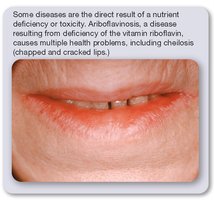
Some diseases are directly caused by nutrient deficiencies or toxicities (e.g., riboflavin deficiency causing cheilosis).
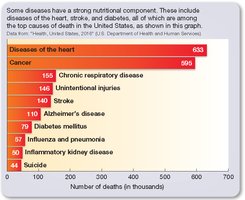
Chronic diseases such as heart disease, cancer, stroke, and diabetes have strong nutritional components.
National Health Promotion: Healthy People 2020
Nutrition is a central part of the U.S. national health promotion and disease prevention plan, Healthy People 2020, which is revised every 10 years by the U.S. Department of Health and Human Services.
Determinants of health include biology, behavior, social factors, health services, and policymaking.
Nutrition and physical activity influence all these determinants.
Primary goals: improve quality and length of life, achieve health equity, create healthy environments, and promote healthy behaviors across all life stages.
Nutrients: Types and Functions
Definition and Classification
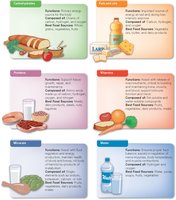
Nutrients are chemicals in food critical for human growth and function. They are classified as organic (containing carbon and hydrogen) or inorganic (not containing both elements).
Organic nutrients: Carbohydrates, lipids, proteins, vitamins
Inorganic nutrients: Minerals, water
Macronutrients
Macronutrients are required in large amounts and provide energy to the body. They include carbohydrates, lipids, and proteins. Alcohol provides energy but is not considered a nutrient.
Carbohydrates: 4 kcal/g
Proteins: 4 kcal/g
Lipids: 9 kcal/g
Alcohol: 7 kcal/g (not a nutrient)
Carbohydrates
Primary fuel source, especially for the brain and during exercise.
Composed of carbon, hydrogen, and oxygen.
Sources: grains, vegetables, fruits, legumes, seeds, nuts, milk products.
Fiber is a type of carbohydrate.
Lipids
Insoluble in water; includes triglycerides, phospholipids, and sterols.
Main energy source during rest or low-intensity exercise.
Stored as adipose tissue; provides fat-soluble vitamins.
Proteins
Contain carbon, hydrogen, oxygen, and nitrogen.
Made of amino acids; important for building tissues, regulating metabolism, and fluid balance.
Not a primary energy source.
Sources: meat, dairy, seeds, nuts, legumes, grains, vegetables.
Micronutrients
Micronutrients are required in small amounts and do not provide energy but are essential for regulating body processes.
Vitamins: Organic compounds, assist in metabolism, immune function, and tissue health. Two types: fat-soluble and water-soluble.
Minerals: Inorganic, regulate fluid and energy production, support bone and blood health. Two types: major and trace minerals.
Water
Water is a vital inorganic nutrient supporting all body processes, including fluid balance, temperature regulation, nutrient transport, and waste excretion.
Sources: pure water, juices, other beverages, fruits, and vegetables.
Determining Nutrient Needs
Dietary Reference Intakes (DRIs)
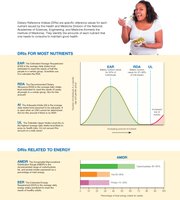
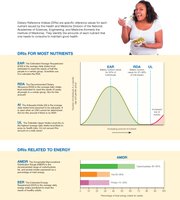
DRIs are a set of dietary standards developed to prevent chronic disease and promote optimal health. They include:
Estimated Average Requirement (EAR): Average daily intake to meet needs of half the healthy population.
Recommended Dietary Allowance (RDA): Intake level to meet needs of 97–98% of healthy people.
Adequate Intake (AI): Recommended intake based on observed estimates when RDA is not available.
Tolerable Upper Intake Level (UL): Highest intake level unlikely to cause adverse health effects.
Estimated Energy Requirement (EER): Average energy intake to maintain energy balance.
Acceptable Macronutrient Distribution Ranges (AMDR): Ranges of macronutrient intake associated with reduced risk of chronic disease.
Assessing Nutritional Status
Nutrition Care Process
Nutrition professionals assess nutritional status using a systematic process:
Nutritional-status assessment
Nutrition diagnosis
Nutrition intervention
Nutrition monitoring and evaluation
Domains of Nutritional Status Assessment
Food/nutrition-related history (subjective self-report)
Anthropometric measurements (height, weight, circumferences)
Biochemical data, medical tests, and procedures (blood, urine, vital signs)
Nutrition-focused physical findings (hair, skin, nails, etc.)
Client health history (age, medications, family history, socioeconomic factors)
Malnutrition Classification
Overnutrition: Excess energy or nutrient intake; can lead to obesity, heart disease, or toxicity.
Undernutrition: Insufficient energy or nutrient intake; can cause weight loss, deficiency diseases.
Nutrition Deficiencies
Primary deficiency: Inadequate intake of a nutrient.
Secondary deficiency: Poor absorption, excessive excretion, or inefficient utilization of a nutrient.
Subclinical deficiency: Early stage, few or no symptoms.
Covert symptoms: Hidden, require laboratory tests.
Overt symptoms: Obvious and detectable.
The Scientific Method in Nutrition
Steps of the Scientific Method
The scientific method ensures rigorous evaluation of nutrition claims:
Observation and description of a phenomenon
Hypothesis formulation
Experimental design and testing
Data collection and analysis
Conclusion and repeatability
Theory development after repeated support

Well-Designed Experiments
Adequate sample size
Control group for comparison
Control of variables to avoid bias
Types of Research Studies
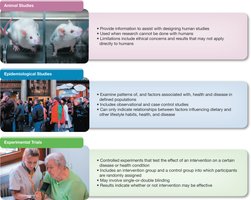
Animal studies: Used for preliminary information and research not possible in humans; results may not always apply to humans.
Epidemiological studies: Examine patterns and associations in populations; cannot establish cause and effect.
Observational studies: Assess habits and trends in large populations.
Case control studies: Compare individuals with and without a condition.
Experimental trials: Controlled experiments with intervention and control groups; may use randomization and blinding.
Evaluating Nutrition Claims
Critical Evaluation
Assess conflict of interest: Who conducted and funded the study?
Check credentials and reliability of sources (e.g., .gov, .edu, .org).
Distinguish reputable research from testimonials and quackery.
Trustworthy Nutrition Experts and Sources
Registered Dietitian/Nutritionist (RD), licensed dietitian, professionals with advanced degrees, and physicians are reliable experts.
Government sources: CDC, NHANES, NIH, etc.
Professional organizations: Academy of Nutrition and Dietetics, American Society for Nutrition Sciences, etc.
