 뒤로
뒤로Fluid and Electrolyte Balance: Essential Concepts for Nutrition Students
스터디 가이드 - 스마트 노트
 자료에 맞춘 맞춤형 노트, 핵심 정의, 예시, 맥락을 확장해 제공합니다.
Nutrients Important to Fluid and Electrolyte Balance
Overview of Fluid and Electrolyte Balance
Fluid and electrolyte balance is a fundamental aspect of human physiology, crucial for maintaining homeostasis and supporting life. Water constitutes the largest percentage of the body’s volume, but it is always mixed with solutes such as electrolytes, proteins, and glucose. The movement and distribution of water and solutes are regulated by osmoregulation, which ensures proper cellular function and overall health.
Electrolytes: Substances that dissociate into charged ions when dissolved in water, enabling electrical conductivity and fluid balance.
Solutes: Any dissolved substances in a fluid, including electrolytes, proteins, and glucose.
Osmoregulation: The control of fluid balance and composition in the body.
Osmosis: The movement of water through a selectively permeable membrane from an area of high concentration to an area of low concentration.
Example: Osmosis is essential for maintaining cellular water volume and is illustrated by the movement of water across cell membranes.
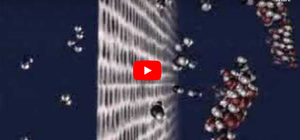
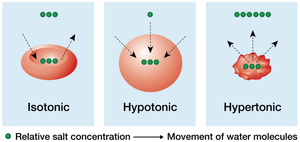
Additional info: Osmosis does not require energy; it is a passive process driven by concentration gradients.
Key Takeaways: Fluid Compartments and Regulation
Water and solutes are distributed into two main compartments: intracellular (inside cells) and extracellular (outside cells). The movement of water between these compartments is regulated by controlling electrolyte movement, ensuring equal concentrations of dissolved particles.
Intracellular fluid: Fluid within cells.
Extracellular fluid: Fluid outside cells, including plasma and interstitial fluid.
Homeostasis: The maintenance of stable internal conditions, including fluid and electrolyte balance.
Water’s Importance to Vitality
Major Functions of Water in the Human Body
Water is indispensable for life and serves four major functions in the human body:
Transportation vehicle: Carries nutrients, waste products, and other substances throughout the body.
Medium for chemical reactions: Facilitates enzymatic and metabolic reactions.
Lubricant/shock absorber: Protects joints, organs, and tissues from mechanical damage.
Temperature regulator: Helps maintain stable body temperature through heat storage and distribution.
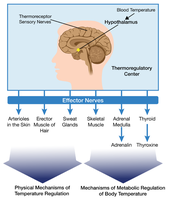
Example: Water acts as a universal solvent, dissolving more substances than any other fluid, which is essential for metabolic processes.
Regulation of Water Balance
Thirst Mechanism and Water Input
The body regulates water input and output to maintain balance. The thirst mechanism is activated by decreased fluid volume or increased sodium concentration, prompting fluid intake.
Thirst: An osmoregulatory response to increase water input.
Sequence: Receptors detect changes, hypothalamus activates thirst center, sensory signals prompt drinking, and feedback shuts off thirst.
Adequate Intake (AI): 2.7 liters/day for adult females, 3.7 liters/day for adult males (includes all dietary sources).
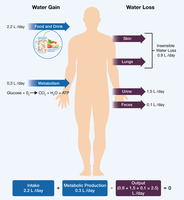
Example: Water intake varies based on climate, age, physical activity, and kidney function.
Regulation of Water Output
Water output occurs through insensible (unnoticed) and sensible (noticed) losses. The kidneys play a central role in regulating urine output and maintaining fluid and electrolyte balance.
Insensible loss: Water lost through exhalation and skin.
Sensible loss: Water lost through urine and feces.
Kidneys: Filter blood, remove wastes, and regulate water and electrolyte balance.
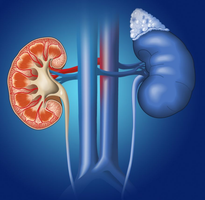
Example: The kidneys detect blood volume and osmolality, triggering hormonal responses to adjust water retention and output.
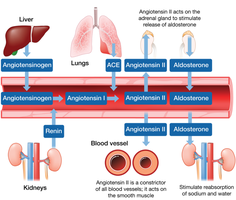
Electrolytes Important for Fluid Balance
Sodium, Potassium, and Chloride
Electrolytes are essential for maintaining fluid balance, nerve transmission, and muscle function. Sodium, potassium, and chloride are the primary electrolytes involved in these processes.
Sodium: Regulates fluid balance, nerve impulses, and nutrient absorption. Most dietary sodium comes from processed foods.
Potassium: Most abundant positive ion inside cells; maintains sodium levels, nerve impulses, and muscle contraction.
Chloride: Follows sodium to maintain charge neutrality, regulates fluid secretion, and helps maintain acid-base balance.
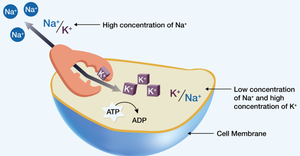
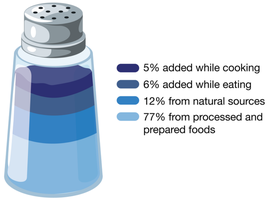
Example: The sodium-potassium pump uses ATP to exchange sodium and potassium ions across cell membranes, maintaining proper cell function.
Consequences of Deficiency or Excess
Fluid and Electrolyte Imbalance Disorders
Imbalances in fluid and electrolytes can lead to serious health conditions, including dehydration, water intoxication, heat stroke, and hypertension. The DASH diet is recommended to manage blood pressure and promote overall health.
Dehydration: Water loss without adequate replacement; symptoms include thirst, dizziness, low blood pressure, and fatigue.
Water intoxication: Rare, usually affects athletes who overhydrate; healthy kidneys can excrete excess water efficiently.
Heat stroke: Life-threatening condition from inability to cool body; body temperature exceeds 105.1°F (40.6°C).
Hypertension: High blood pressure (≥140/90 mmHg); risk factor for cardiovascular disease.
DASH diet: Emphasizes fruits, vegetables, low-fat dairy, whole grains, fish, poultry, and nuts; reduces sodium and increases potassium, calcium, and magnesium.
Example: Lower sodium intake and increased intake of potassium, calcium, and magnesium are effective in decreasing blood pressure.
Beverage Consumption in America
Sources of Fluid Intake and Health Implications
Beverages are a major source of fluid intake, but their nutritional quality varies. Nutrient-dense beverages are preferable, and lower-calorie options are better for health. Beverage consumption patterns in the U.S. have shifted toward low- and zero-sugar drinks.
Key sources: Water, soft drinks, coffee, tea, sports drinks, energy drinks, fruit drinks, bottled water.
Health impact: Beverages do not provide satiety; excessive calorie intake from beverages can contribute to obesity and other health issues.
Alcoholic and Caffeinated Beverages
Impacts of Alcohol and Caffeine on Health
Alcohol and caffeine are widely consumed psychoactive substances. Excessive alcohol intake is detrimental to health, while moderate intake may offer some benefits. Caffeine increases alertness but can cause adverse effects at high doses.
Alcohol: Can cause micronutrient deficiencies, liver disease, and impaired digestion when consumed in excess. Moderate intake may reduce risks of heart disease and metabolic syndrome.
Caffeine: Most widely consumed psychoactive substance; increases alertness, delays fatigue, but can cause anxiety, shakiness, and insomnia at high doses.
Example: Moderate alcohol intake is defined as no more than one drink per day for women and two for men. High caffeine intake may increase cardiovascular risk, but moderate coffee consumption is linked to reduced risk of type 2 diabetes and Parkinson’s disease.
