 뒤로
뒤로Molecules of Biological Importance: Carbohydrates, Proteins, Lipids, and Nucleic Acids
스터디 가이드 - 스마트 노트
 자료에 맞춘 맞춤형 노트, 핵심 정의, 예시, 맥락을 확장해 제공합니다.
Introduction to Molecules of Biological Importance
Overview of Biological Macromolecules
Biological macromolecules are essential for all living organisms and include carbohydrates, lipids, proteins, and nucleic acids. These large molecules, or macromolecules, are typically polymers formed by the covalent bonding of smaller units called monomers. The diversity in structure and function of these molecules arises from their unique arrangements of carbon, hydrogen, and various functional groups.
Carbohydrates
Introduction to Carbohydrates
Carbohydrates are the most abundant organic compounds in nature, serving as primary energy sources and structural components in plants and animals. Plants synthesize carbohydrates via photosynthesis, converting carbon dioxide and water into glucose and oxygen using sunlight. Carbohydrates have a caloric value of 4.1 kcal/g and are composed of carbon, hydrogen, and oxygen, typically in the ratio Cn(H2O)m.
Classification of Carbohydrates
Monosaccharides: Simple sugars that cannot be hydrolyzed into simpler compounds (e.g., glucose, fructose).
Disaccharides: Composed of two monosaccharides linked by a glycosidic bond (e.g., sucrose = glucose + fructose).
Polysaccharides: Polymers of many monosaccharide units (e.g., starch, cellulose).
Monosaccharides: Structure and Stereochemistry
Monosaccharides are classified based on:
Presence of an aldehyde (aldose) or ketone (ketose) group
Number of carbon atoms: triose (3C), tetrose (4C), pentose (5C), hexose (6C), heptose (7C)
Stereochemical configuration of asymmetric carbons
The number of asymmetric carbons determines the number of possible stereoisomers. For example, an aldohexose has four asymmetric carbons, resulting in 24 = 16 stereoisomers.
Cyclic Structure of Monosaccharides
Monosaccharides with five or more carbons often form cyclic hemiacetals in solution. The cyclic structure is favored in equilibrium. The process involves the reaction of the aldehyde group with a hydroxyl group within the same molecule, forming a ring structure.
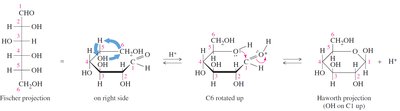
Example: The conversion of glucose from its Fischer projection to its Haworth (cyclic) form.
Examples of Monosaccharides
Below are the Fischer projections of two important monosaccharides:
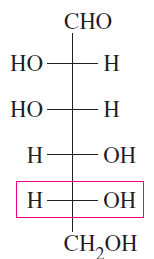
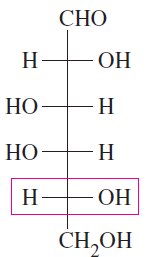
Disaccharides: Formation and Structure
Disaccharides are formed by dehydration synthesis, where a water molecule is removed, and a glycosidic bond is formed between two monosaccharides. The most common linkage is between the 1st carbon of one sugar and the 4th carbon of another (1,4 linkage).
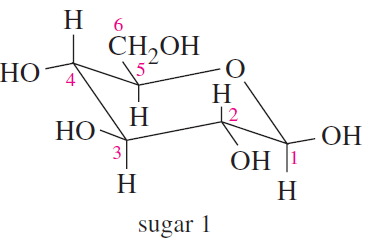
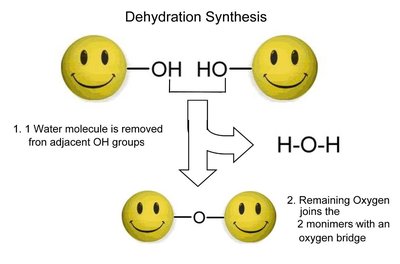
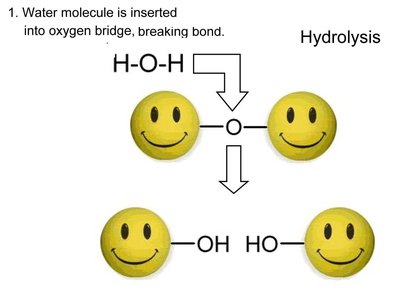
Example: Sucrose is a disaccharide composed of glucose and fructose.
Polysaccharides: Structure and Function
Polysaccharides are long chains of monosaccharide units joined by glycosidic bonds. They can be linear or branched and serve as energy storage (starch, glycogen) or structural components (cellulose).
Starch: Storage polysaccharide in plants, composed of α-glucose units.
Cellulose: Structural polysaccharide in plants, composed of β-glucose units.
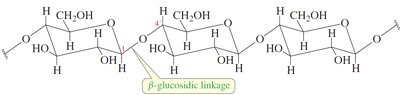
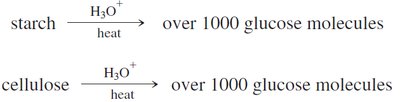
Both starch and cellulose can be hydrolyzed to yield glucose monomers:
Proteins
Structure and Function of Proteins
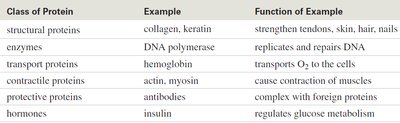
Proteins are the most abundant organic molecules in animals and are polymers of α-amino acids. The amino group is attached to the α-carbon, adjacent to the carboxyl group. Proteins perform a wide variety of functions, including catalysis, transport, structure, and regulation.
Class of Protein | Example | Function of Example |
|---|---|---|
Structural proteins | collagen, keratin | strengthen tendons, skin, hair, nails |
Enzymes | DNA polymerase | replicates and repairs DNA |
Transport proteins | hemoglobin | transports O2 to the cells |
Contractile proteins | actin, myosin | cause contraction of muscles |
Protective proteins | antibodies | complex with foreign proteins |
Hormones | insulin | regulates glucose metabolism |
Essential Amino Acids
There are 10 essential amino acids that must be obtained from the diet:

Stereochemistry of Amino Acids
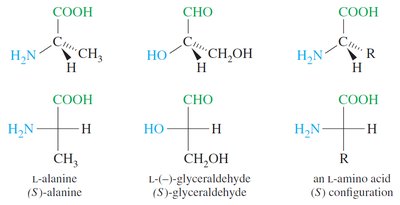
Most naturally occurring amino acids have the (S) configuration at the α-carbon, which corresponds to the L-form. D-amino acids (R configuration) are rare in nature.
Synthesis of Amino Acids
Amino acids can be synthesized via several organic reactions, including reductive amination and the bromination-amination of carboxylic acids.


Peptide Bonds and Protein Structure
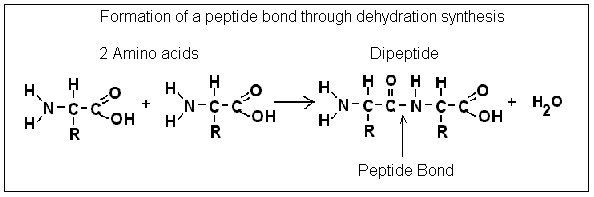
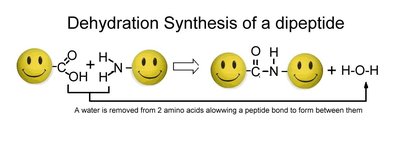
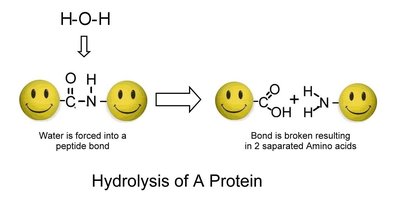
Amino acids are linked by peptide bonds formed through dehydration synthesis. Two amino acids form a dipeptide; longer chains are called polypeptides, which can be thousands of amino acids long.
Lipids
Structure and Function of Lipids
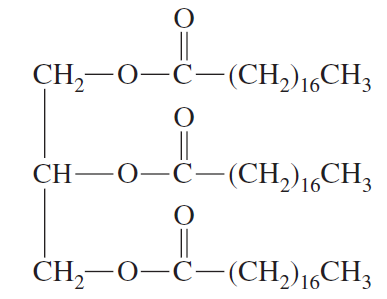
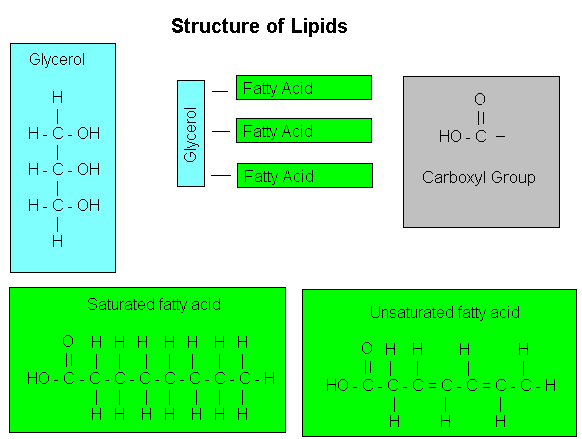
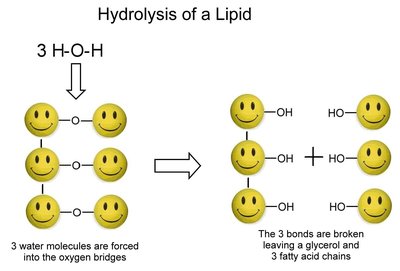
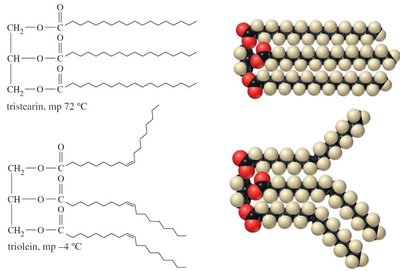
Lipids are a diverse group of macromolecules including fats, oils, and waxes. Their primary function is energy storage, with energy stored in C-H bonds. Lipids are composed of glycerol (an alcohol) and three fatty acids (long hydrocarbon chains).
Saturated vs. Unsaturated Fats
Most saturated triglycerides are solid at room temperature (fats), while unsaturated triglycerides (with double bonds) are liquid (oils). Polyunsaturated fats contain several double bonds.
Other Biologically Important Lipids
Phospholipids: Key components of cell membranes
Steroids: Cholesterol, testosterone; membrane support and hormones
Terpenes: Components of pigments
Prostaglandins: Localized hormones for cellular responses
Nucleic Acids
Types and Structure of Nucleic Acids
Nucleic acids are polymers that store and transmit genetic information. There are two main types:
DNA (Deoxyribonucleic Acid): Double helix structure
RNA (Ribonucleic Acid)
Nucleotide Structure
Each nucleotide consists of three components:
A 5-carbon sugar
A nitrogenous base
A phosphate group
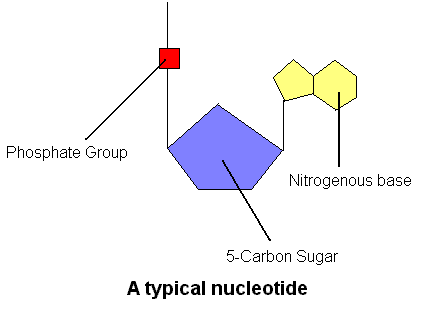
Nucleotides are linked by phosphodiester bonds between the 3' hydroxyl group of one sugar and the phosphate group of the next.
DNA Bases and Base Pairing
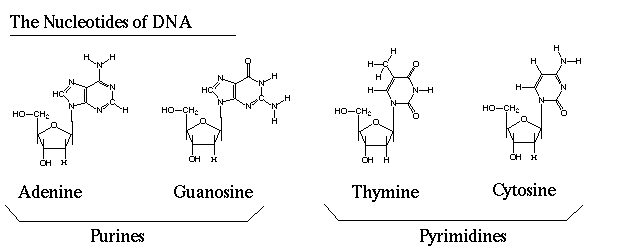
DNA contains four types of nucleotides, classified as purines (double ring) and pyrimidines (single ring):
Adenine (A) - Purine
Guanine (G) - Purine
Cytosine (C) - Pyrimidine
Thymine (T) - Pyrimidine
Base pairing in DNA is highly specific:
Adenine (A) pairs with Thymine (T) via two hydrogen bonds
Cytosine (C) pairs with Guanine (G) via three hydrogen bonds
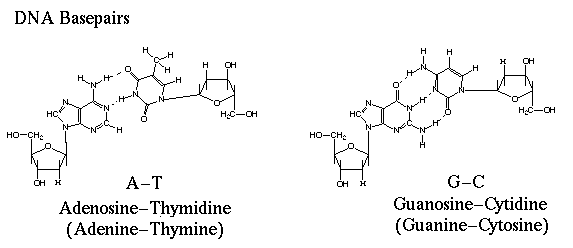
This specificity ensures accurate replication and transmission of genetic information.
