뒤로
뒤로
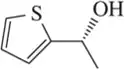
문제 36d
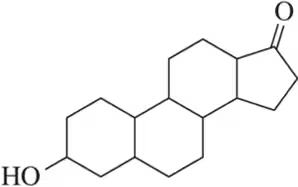
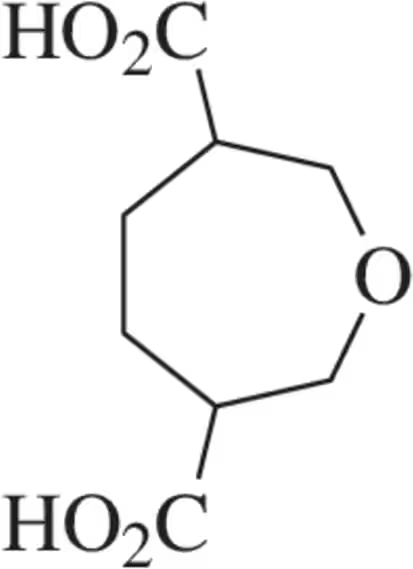
How many stereoisomers are possible for each of the following molecules?
(d)
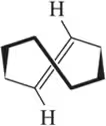
문제 36e
How many stereoisomers are possible for each of the following molecules?
(e)
문제 37a
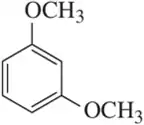
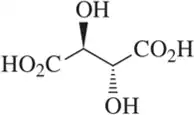
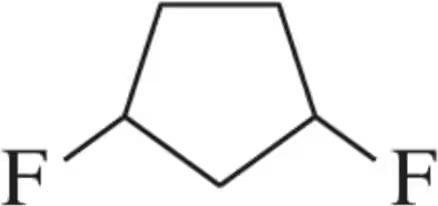
Which of the following compounds are meso?
(a)
문제 37c
Which of the following compounds are meso?
(c)
문제 37e
Which of the following compounds are meso?
(e)
문제 37f
Which of the following compounds are meso?
(f)
문제 37g
Which of the following compounds are meso?
(g)
문제 38a
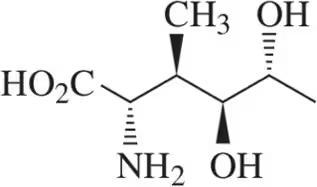
How many stereoisomers are possible for each of the following molecules?
(a)
문제 38b
How many stereoisomers are possible for each of the following molecules?
(b)
문제 39
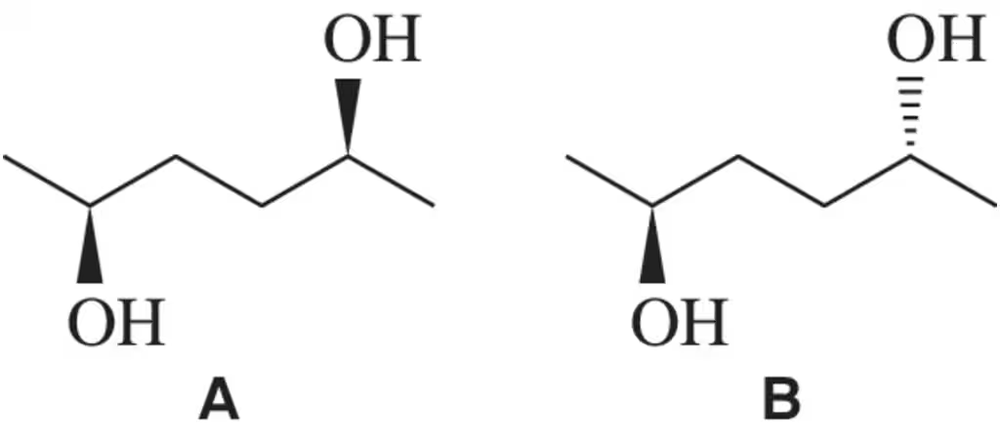
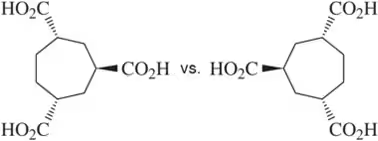
Which of the following diastereomers of hexane-2,5-diol is optically inactive? Why?
문제 40a
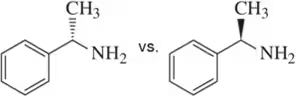
(i) Which of the following pairs of compounds would you expect to have different physical properties?
(ii) What is the relationship between each of the pairs?
(iii) Assign the absolute configuration of each stereocenter to confirm your answer.
(a)
문제 40b
(i) Which of the following pairs of compounds would you expect to have different physical properties?
(ii) What is the relationship between each of the pairs?
(iii) Assign the absolute configuration of each stereocenter to confirm your answer.
(b)
문제 40c
(i) Which of the following pairs of compounds would you expect to have different physical properties?
(ii) What is the relationship between each of the pairs?
(iii) Assign the absolute configuration of each stereocenter to confirm your answer.
(c)
문제 41a
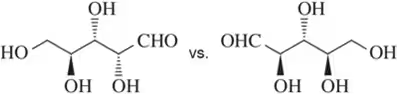
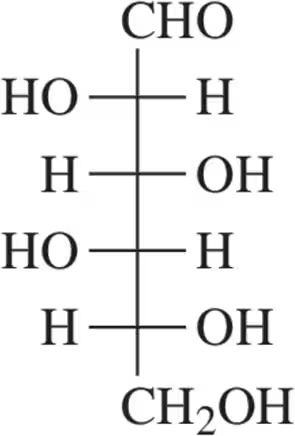
Convert the Fischer projections into line-angle drawings and assign (R) and (S) at each chiral center.
(a)
문제 41c
Convert the Fischer projections into line-angle drawings and assign (R) and (S) at each chiral center.
(c)
문제 42a
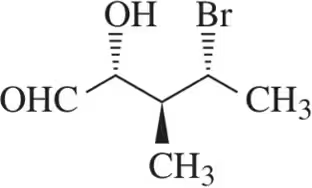
Convert the line-angle drawings into Fischer projections.
(a)
문제 42b
Convert the line-angle drawings into Fischer projections.
(b)
문제 42c
Convert the line-angle drawings into Fischer projections.
(c)
문제 43
How might you separate enantiomers of 2-phenylpropionic acid?
문제 44
Figure 6.52 <IMAGE> shows the lipase-catalyzed kinetic resolution of secondary alcohols. Show a reaction coordinate diagram that rationalizes the results obtained.
문제 45a
We discuss the reaction of Grignard reagents (organomagnesium compounds) to ketones in Chapter 17. Mechanistically, the reaction proceeds by the nucleophilic addition of a methyl carbanion to the electrophilic carbon of the carbonyl, breaking the C―Oπ bond, resulting in an alkoxide intermediate that is subsequently protonated to produce the 3° alcohol.
(a) Why does this reaction produce a racemic mixture of 3° alcohols?
문제 45b
We discuss the reaction of Grignard reagents (organomagnesium compounds) to ketones in Chapter 17. Mechanistically, the reaction proceeds by the nucleophilic addition of a methyl carbanion to the electrophilic carbon of the carbonyl, breaking the C―Oπ bond, resulting in an alkoxide intermediate that is subsequently protonated to produce the 3° alcohol.
(b) Why, when the substrate is modified slightly, does the reaction result in an excess of one stereoisomer?
문제 46a
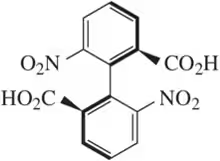
Classify the following objects and molecules as chiral or achiral.
(a) <IMAGE>
문제 46c
Classify the following objects and molecules as chiral or achiral.
(c) <IMAGE>
문제 46e
Classify the following objects and molecules as chiral or achiral.
(e)
문제 46h
Classify the following objects and molecules as chiral or achiral.
(h)
문제 46k
Classify the following objects and molecules as chiral or achiral.
(k)
문제 46l
Classify the following objects and molecules as chiral or achiral.
(l)
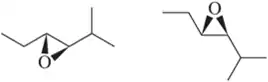
문제 47a
Define the relationship between each set of two molecules as chain isomers, positional isomers, functional group isomers, enantiomers, diastereomers, conformational isomers, or identical
(a)
문제 47c
Define the relationship between each set of two molecules as chain isomers, positional isomers, functional group isomers, enantiomers, diastereomers, conformational isomers, or identical.
(c)