

Ch 35: Optical Instruments
Knight Calc - Physics for Scientists and Engineers 5th Edition
Knight Calc5th EditionPhysics for Scientists and EngineersISBN: 9780137344796당신이 사용하는 게 아니라요?교과서 변경
35장, 문제 45b

The Hubble Space Telescope has a mirror diameter of 2.4 m. Suppose the telescope is used to photograph stars near the center of our galaxy, 30,000 light years away, using red light with a wavelength of 650 nm. For comparison, what is this distance as a multiple of the distance of Jupiter from the sun?

검증된 단계별 안내
1
Convert the distance of the center of the galaxy from light years to meters. Use the conversion factor: 1 light year = 9.461 × 10^15 m. Multiply 30,000 light years by this factor to find the distance in meters.
Determine the average distance of Jupiter from the Sun. This distance is approximately 5.2 astronomical units (AU), where 1 AU = 1.496 × 10^11 m. Multiply 5.2 by this factor to find the distance in meters.
Calculate the ratio of the distance to the center of the galaxy to the distance of Jupiter from the Sun. Divide the distance to the center of the galaxy (in meters) by the distance of Jupiter from the Sun (in meters).
Express the result as a multiple of Jupiter's distance from the Sun. This ratio will indicate how many times farther the center of the galaxy is compared to Jupiter's distance from the Sun.
Ensure all units are consistent throughout the calculations and verify the final ratio is dimensionless, as it represents a multiple.

비슷한 문제에 대한 검증된 영상 답변:

이 영상 해법은 위 문제에 도움이 된다고 튜터들이 추천한 것입니다.
도움이 되었나요?

주요 개념

질문에 올바르게 답하기 위해 반드시 이해해야 하는 핵심 개념들은 다음과 같습니다.

Light Year

A light year is the distance that light travels in one year in a vacuum, approximately 9.46 trillion kilometers (5.88 trillion miles). It is a standard unit of measurement in astronomy to express vast distances between celestial objects. Understanding this concept is crucial for comparing astronomical distances, such as the distance from the center of our galaxy to Earth.
추천 영상:
가이드 코스
10:30
Ray Nature of Light

Wavelength of Light

Wavelength is the distance between successive peaks of a wave, commonly measured in nanometers (nm) for light. The wavelength determines the color of light; for instance, red light has a wavelength of about 650 nm. This concept is important in understanding how telescopes, like the Hubble Space Telescope, capture images of distant stars, as different wavelengths can reveal different information about celestial objects.
추천 영상:
가이드 코스
10:30
Ray Nature of Light

Astronomical Units (AU)

An astronomical unit (AU) is a standard unit of measurement used in astronomy, defined as the average distance from the Earth to the Sun, approximately 149.6 million kilometers (about 93 million miles). This unit is useful for expressing distances within our solar system, such as the distance from Jupiter to the Sun, and allows for easier comparisons with interstellar distances, like those measured in light years.
추천 영상:
07:46
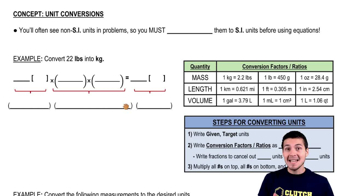
Unit Conversions
관련 실천
교과서 질문

Alpha Centauri, the nearest star to our solar system, is 4.3 light years away. Assume that Alpha Centauri has a planet with an advanced civilization. Professor Dhg, at the planet’s Astronomical Institute, wants to build a telescope with which he can find out whether any planets are orbiting our sun. Building a telescope of the necessary size does not appear to be a major problem. What practical difficulties might prevent Professor Dhg’s experiment from succeeding?

135
views
교과서 질문

White light is incident onto a 30° prism at the 40° angle shown in FIGURE P35.41. Violet light emerges perpendicular to the rear face of the prism. The index of refraction of violet light in this glass is 2.0% larger than the index of refraction of red light. At what angle Φ does red light emerge from the rear face?

1655
views
교과서 질문

A beam of white light enters a transparent material. Wavelengths for which the index of refraction is n are refracted at angle θ₂. Wavelengths for which the index of refraction is n + δn, where δn << n, are refracted at angle θ₂ + δθ. A beam of white light is incident on a piece of glass at 30°. Deep violet light is refracted 0.28° more than deep red light. The index of refraction for deep red light is known to be 1.552. What is the index of refraction for deep violet light?

1642
views
교과서 질문

The resolution of a digital camera is limited by two factors: diffraction by the lens, a limit of any optical system, and the fact that the sensor is divided into discrete pixels. Consider a typical point-and-shoot camera that has a 20-mm-focal-length lens and a sensor with 2.5μm x 2.5 μm pixels. What is the f-number of the lens for the diameter you found in part b? Your answer is a quite realistic value of the f-number at which a camera transitions from being pixel limited to being diffraction limited. For f-numbers smaller than this (larger-diameter apertures), the resolution is limited by the pixel size and does not change as you change the aperture. For f-numbers larger than this (smaller-diameter apertures), the resolution is limited by diffraction, and it gets worse as you “stop down” to smaller apertures.

1539
views
교과서 질문

High-power lasers are used to cut and weld materials by focusing the laser beam to a very small spot. This is like using a magnifying lens to focus the sun's light to a small spot that can burn things. As an engineer, you have designed a laser cutting device in which the material to be cut is placed 5.0 cm behind the lens. You have selected a high-power laser with a wavelength of 1.06 μm. Your calculations indicate that the laser must be focused to a 5.0-μm-diameter spot in order to have sufficient power to make the cut. What is the minimum diameter of the lens you must install?

1444
views
교과서 질문

The lens shown in FIGURE CP35.49 is called an achromatic doublet, meaning that it has no chromatic aberration. The left side is flat, and all other surfaces have radii of curvature R. Because of dispersion, either lens alone would focus red rays and blue rays at different points. Define ∆n1 and ∆n2 as nblue - nred for the two lenses. What value of the ratio ∆n1 / ∆n2 makes fblue = fred for the two-lens system? That is, the two-lens system does not exhibit chromatic aberration.

120
views