
Ch. 9 - Correlation and Regression
Larson - Elementary Statistics: Picturing the World 8th Edition
Larson8th EditionElementary Statistics: Picturing the WorldISBN: 9780137493470당신이 사용하는 게 아니라요?교과서 변경
9장, 문제 9.1.19

"In Exercises 19-22, two variables are given that have been shown to have correlation but no cause-and-effect relationship. Describe at least one possible reason for the correlation.
19. Value of home and life span"

검증된 단계별 안내
1
Understand the concept of correlation: Correlation measures the strength and direction of a linear relationship between two variables. It does not imply causation, meaning one variable does not necessarily cause the other to change.
Identify the two variables in the problem: The variables are 'value of home' and 'life span.' These are correlated, but there is no direct cause-and-effect relationship between them.
Consider external factors or confounding variables: A possible reason for the correlation could be socioeconomic status. Individuals with higher socioeconomic status may afford homes with higher values and also have access to better healthcare, nutrition, and living conditions, which can contribute to a longer life span.
Explore shared environmental influences: Another reason for the correlation might be the geographic location. Areas with higher property values may also have better infrastructure, cleaner environments, and access to resources that promote healthier lifestyles, indirectly affecting life span.
Summarize the reasoning: The correlation between 'value of home' and 'life span' is likely due to shared external factors such as socioeconomic status or environmental conditions, rather than a direct cause-and-effect relationship between the two variables.

비슷한 문제에 대한 검증된 영상 답변:

이 영상 해법은 위 문제에 도움이 된다고 튜터들이 추천한 것입니다.
영상 길이:
3m
도움이 되었나요?

주요 개념

질문에 올바르게 답하기 위해 반드시 이해해야 하는 핵심 개념들은 다음과 같습니다.

Correlation vs. Causation

Correlation refers to a statistical relationship between two variables, indicating that they tend to move together in some way. However, this does not imply that one variable causes the other to change. Understanding this distinction is crucial, as many correlations can arise from confounding factors or coincidental relationships rather than direct causation.
추천 영상:
가이드 코스
05:43
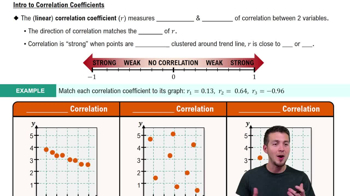
Correlation Coefficient

Confounding Variables

Confounding variables are external factors that may influence both variables being studied, leading to a spurious correlation. For example, in the case of home value and life span, factors such as socioeconomic status, access to healthcare, and neighborhood safety could affect both, creating a misleading association between the two without a direct causal link.
추천 영상:
가이드 코스
07:09
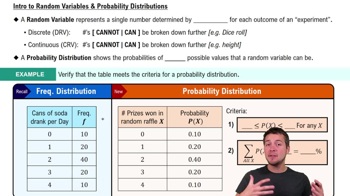
Intro to Random Variables & Probability Distributions

Spurious Correlation

A spurious correlation occurs when two variables appear to be related but are actually influenced by a third variable or are coincidentally correlated. This concept highlights the importance of careful analysis in statistics, as it emphasizes that observed relationships may not reflect true connections, necessitating further investigation to uncover underlying factors.
추천 영상:
가이드 코스
05:43
Correlation Coefficient