Ch. 1 - Introduction to Statistics
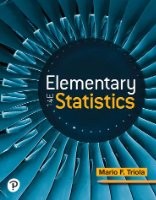
Triola - Elementary Statistics 14th Edition
Triola14th EditionElementary StatisticsISBN: 9780137366446당신이 사용하는 게 아니라요?교과서 변경
1장, 문제 1.3.8e

Sampling Method Assume that the population consists of all students currently in your statistics class. Describe how to obtain a sample of six students so that the result is a sample of the given type.


e. Convenience sample

검증된 단계별 안내
1
Identify the characteristics of a convenience sample: A convenience sample is a non-probability sampling method where the sample is taken from a group that is easy to access or contact.
Consider the environment of your statistics class: Think about the students who are readily available, such as those sitting near you or those you frequently interact with.
Select six students based on ease of access: Choose students who are nearby or whom you can easily approach, such as those sitting in the front row or those who are your friends.
Ensure the sample is not random: Remember that a convenience sample does not require random selection, so you can select students based on proximity or familiarity.
Reflect on the potential biases: Understand that convenience sampling may introduce bias because it does not represent the entire population of the class, as it only includes those who are easily accessible.

비슷한 문제에 대한 검증된 영상 답변:

이 영상 해법은 위 문제에 도움이 된다고 튜터들이 추천한 것입니다.
영상 길이:
2m
도움이 되었나요?

주요 개념

질문에 올바르게 답하기 위해 반드시 이해해야 하는 핵심 개념들은 다음과 같습니다.

Convenience Sampling

Convenience sampling is a non-probability sampling technique where samples are selected based on their easy availability and proximity to the researcher. This method is often used when quick and easy data collection is desired, but it may not represent the entire population accurately due to potential biases.
추천 영상:
05:11
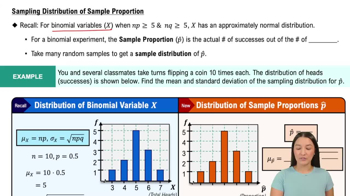
Sampling Distribution of Sample Proportion

Population and Sample

In statistics, the population refers to the entire group of individuals or instances about whom we are interested in drawing conclusions. A sample is a subset of the population selected for analysis. The goal is to use the sample to make inferences about the population, though the representativeness of the sample is crucial for valid conclusions.
추천 영상:
05:11
Sampling Distribution of Sample Proportion

Bias in Sampling

Bias in sampling occurs when certain members of the population are systematically more likely to be selected in the sample than others, leading to a sample that is not representative of the population. Convenience sampling is particularly prone to bias, as it relies on the ease of access rather than random selection, potentially skewing results.
추천 영상:
05:11
Sampling Distribution of Sample Proportion