Which of the following would shift the long-run aggregate supply (LRAS) curve to the right?
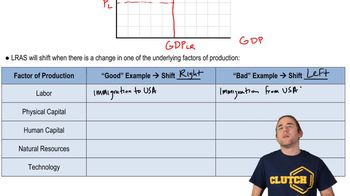
An increase in factors of production, such as more labor through immigration, more physical capital (factories and equipment), improvements in human capital (like free college education), discovery of new natural resources, or technological advancements, would shift the LRAS curve to the right.
Which of the following would shift the long-run aggregate supply (LRAS) curve to the left?
A decrease in factors of production, such as emigration reducing labor, loss of physical capital, decline in human capital (less education), loss of natural resources due to war, or destruction of technology, would shift the LRAS curve to the left.
What is the meaning of a leftward shift in the long-run aggregate supply (LRAS) curve?
A leftward shift in the LRAS curve means the economy's potential real GDP has decreased, usually due to a reduction in available factors of production like labor, capital, natural resources, or technology.
Why is the long-run aggregate supply (LRAS) curve depicted as a vertical line on the AD-AS graph?
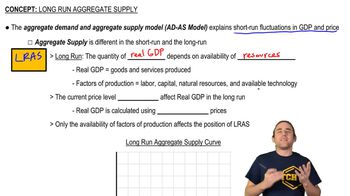
The LRAS curve is vertical because real GDP in the long run is determined by the availability of factors of production, not by the price level.
What does real GDP measure in the context of long-run aggregate supply?
Real GDP measures the quantity of goods and services produced in the economy, adjusted for changes in price level using base year prices.
How does an increase in human capital affect the long-run aggregate supply?
An increase in human capital, such as through better education, makes workers more productive and shifts the LRAS curve to the right.
What role do natural resources play in determining the position of the LRAS curve?
The availability of natural resources, like oil or lumber, affects how much an economy can produce in the long run and can shift the LRAS curve left or right.
How does the destruction of technology impact the long-run aggregate supply?
Destruction of technology can reduce productivity and shift the LRAS curve to the left, though such events are rare.
What happens to the LRAS curve if a country loses a significant portion of its physical capital?
If a country loses physical capital, such as factories and equipment, the LRAS curve shifts to the left, indicating a lower potential real GDP.
Why does the price level not affect the quantity of real GDP in the long run?
In the long run, the economy's output is limited by its resources, so changes in the price level do not change the amount of goods and services produced.