Skip to main content
Macroeconomics
My Course
Learn
Exam Prep
AI Tutor
Study Guides
Flashcards
Explore
Try the app
My Course
Learn
Exam Prep
AI Tutor
Study Guides
Flashcards
Explore
Try the app
Back
Productivity and the Per-Worker Production Function definitions
You can tap to flip the card.
Productivity
You can tap to flip the card.
👆
Productivity
Goods and services produced from each unit of labor, reflecting how efficiently resources are transformed into output.
Track progress
Control buttons has been changed to "navigation" mode.
1/15
Related flashcards
Related practice
Recommended videos
Productivity and the Per-Worker Production Function quiz
Productivity and the Per-Worker Production Function
15 Terms
Productivity and the Per-Worker Production Function
12. Productivity and Economic Growth
10 problems
Topic
Institutions that Promote Economic Growth
12. Productivity and Economic Growth
10 problems
Topic
13. Productivity and Economic Growth
6 topics
14 problems
Chapter
Guided course
02:27
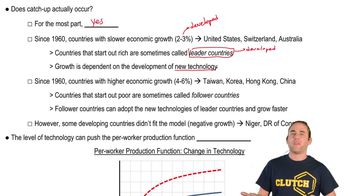
Per-Worker Production Function:Change in Technology
1947
views
41
rank
Guided course
05:51
Catch-up Effect
1989
views
25
rank
Guided course
05:02
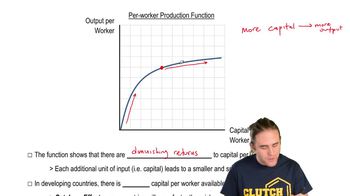
Per-Worker Production Function
2483
views
36
rank
Terms in this set (15)
Hide definitions
Productivity
Goods and services produced from each unit of labor, reflecting how efficiently resources are transformed into output.
Physical Capital
Tools, machinery, and structures that aid workers in producing goods and can be used to create more of themselves.
Human Capital
Knowledge and skills of the workforce, enhanced through education and training, leading to higher output.
Technology
Processes and innovations that improve the conversion of inputs into outputs, generally advancing over time.
Per Worker Production Function
Graphical relationship showing how output per worker changes with varying amounts of physical capital per worker.
Diminishing Returns
Situation where each additional unit of capital yields smaller increases in output, especially at higher capital levels.
Catch-Up Effect
Phenomenon where poorer economies grow faster than richer ones due to larger gains from small capital investments.
Leader Country
Economy at the technological frontier, relying on innovation for growth and experiencing slower, steady expansion.
Follower Country
Economy that adopts existing technologies from advanced nations, often experiencing rapid growth by leapfrogging stages.
Output per Worker
Amount of goods and services produced by each labor unit, influenced by capital, skills, and technology.
Economic Growth
Sustained increase in a nation’s output and productivity, often measured by GDP growth rates.
Investment
Allocation of resources toward increasing physical or human capital, aiming to boost future productivity.
Innovation
Development of new methods or products that enhance the productivity of existing resources and capital.
Infrastructure
Basic physical systems and structures, such as factories and communication networks, supporting economic activity.
GDP Growth Rate
Percentage change in a country’s gross domestic product over time, indicating the pace of economic expansion.
 BackBack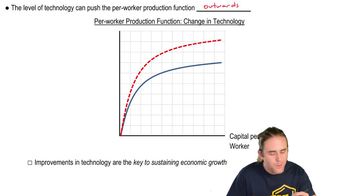
 02:27
02:27