Skip to main content
Macroeconomics
My Course
Learn
Exam Prep
AI Tutor
Study Guides
Flashcards
Explore
Try the app
My Course
Learn
Exam Prep
AI Tutor
Study Guides
Flashcards
Explore
Try the app
Back
Shifting Aggregate Demand definitions
You can tap to flip the card.
Aggregate Demand
You can tap to flip the card.
👆
Aggregate Demand
Total quantity of goods and services demanded across all sectors at various price levels in an economy.
Track progress
Control buttons has been changed to "navigation" mode.
1/15
Related flashcards
Related practice
Recommended videos
Shifting Aggregate Demand quiz #1
Shifting Aggregate Demand
10 Terms
Shifting Aggregate Demand
16. Aggregate Demand and Aggregate Supply Analysis
10 problems
Topic
Long Run Aggregate Supply
16. Aggregate Demand and Aggregate Supply Analysis
10 problems
Topic
17. Aggregate Demand and Aggregate Supply Analysis
8 topics
15 problems
Chapter
Guided course
04:27
Shifting Aggregate Demand
611
views
34
rank
Terms in this set (15)
Hide definitions
Aggregate Demand
Total quantity of goods and services demanded across all sectors at various price levels in an economy.
Consumption
Spending by households on goods and services, influenced by factors like taxes and income expectations.
Investment
Expenditures by businesses on capital goods, often affected by expectations about future economic performance.
Government Purchases
Spending by the public sector on goods and services, directly impacting overall demand in the economy.
Net Exports
Difference between a country's exports and imports, influenced by exchange rates and relative growth rates.
Interest Rates
Cost of borrowing money, which can alter savings, consumption, and investment decisions.
Disposable Income
Household income available for spending and saving after taxes have been deducted.
Exchange Rates
Value of one currency relative to another, affecting the price competitiveness of domestic versus foreign goods.
Price Level
Average of current prices across the entire spectrum of goods and services produced in the economy.
Wealth Effect
Change in consumer spending resulting from perceived changes in household wealth due to price level shifts.
Interest Rate Effect
Impact on aggregate demand when changes in price level influence the cost of borrowing and saving.
Foreign Price Effect
Influence on demand for domestic goods when domestic price levels change relative to foreign prices.
Market Demand
Total demand for a product or service in a market, analogous to aggregate demand at the macro level.
Gross Domestic Product
Monetary value of all finished goods and services produced within a country's borders in a specific period.
Taxes
Compulsory financial charges imposed by governments, which can reduce disposable income and shift demand.
 BackBack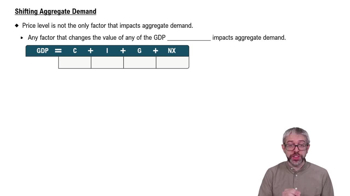
 04:27
04:27