 Back
BackBanking Regulation and Monetary Policy: Balance Sheets, Bank Runs, and Central Bank Roles
Study Guide - Smart Notes
 Tailored notes based on your materials, expanded with key definitions, examples, and context.
Bank Balance Sheets and Their Structure
Understanding the Bank Balance Sheet
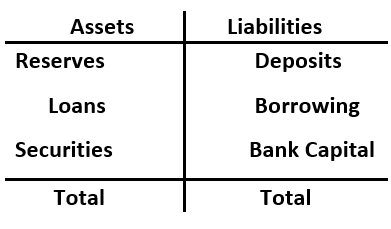
The bank balance sheet is a fundamental tool for analyzing the financial health and operations of a commercial bank. It lists the bank’s assets (uses of funds) and liabilities (sources of funds), providing a snapshot of its financial position at a given moment.
Assets: Resources owned by the bank, including reserves, loans, and securities.
Liabilities: Obligations the bank owes to others, such as deposits and borrowings.
Bank Capital: The equity buffer representing owners’ stake in the bank.
Assets | Liabilities |
|---|---|
Reserves | Deposits |
Loans | Borrowing |
Securities | Bank Capital |
Total | Total |
Liquidity Shocks and Bank Fragility
Shock 1: The Mechanics of Withdrawals
When depositors withdraw funds, the bank’s liabilities (deposits) decrease. To maintain balance, an equivalent reduction occurs on the asset side, typically by reducing reserves. If reserves are depleted, the bank becomes unable to clear payments, highlighting its liquidity risk.
Reserve Drain: Withdrawals are usually met by reducing reserves.
Immediate Fragility: Zero reserves mean the bank cannot meet further withdrawal demands.
Liquidity Management: Four Levers
Banks manage unexpected reserve drains using several strategies:
Borrowing: Short-term loans from other banks or the central bank.
Selling Securities: Liquidating government bonds to adjust the asset mix without shrinking the balance sheet.
Calling in Loans: Demanding rapid repayment, which can harm customer relationships.
Raising Bank Capital: Seeking equity injections from owners, which is difficult during crises.
The Psychology and Dynamics of Bank Runs
Fractional Reserve Fragility and Self-Fulfilling Prophecies
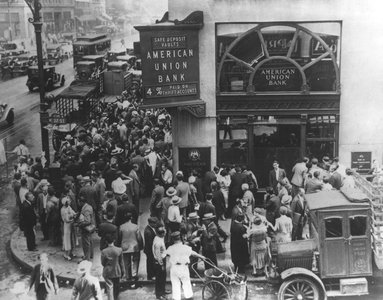
Banks operate on a fractional reserve basis, holding only a fraction of deposits as reserves. If depositors fear insolvency, their collective rush to withdraw funds can trigger the very collapse they fear—a classic self-fulfilling prophecy.
Fractional Reserves: Only a small portion of deposits is held as cash reserves.
Bank Run: Panic-driven withdrawals can rapidly exhaust reserves, leading to failure.
Regulation: Reserve Requirements and Deposit Insurance
Reserve Requirements
Regulators require banks to maintain a minimum reserve ratio to ensure liquidity. The ratio varies by account type:
Checking Accounts: High reserve requirements due to unpredictable withdrawals.
Time-Locked CDs: Lower or zero requirements since funds are contractually locked.
Example Reserve Requirement: 10% statutory buffer for checking accounts.
Deposit Insurance and Its Effects
Deposit insurance guarantees that depositors will recover their funds even if a bank fails, removing the incentive for panic-driven withdrawals. In the U.S., the Federal Deposit Insurance Corporation (FDIC) provides this guarantee, transforming private deposit claims into sovereign-backed promises.
FDIC: Established in 1933 to protect depositors and prevent bank runs.
Effect: Reduces the risk of self-fulfilling panics.
Moral Hazard in Banking
While deposit insurance stabilizes the system, it introduces moral hazard—banks and depositors may take on excessive risk, knowing losses are covered by the government.
Depositors: Less incentive to monitor bank risk.
Banks: May pursue riskier investments, expecting state protection.
Example: Car insurance analogy—full coverage can lead to riskier behavior.
The Role of Institutional Strength
Deposit insurance can increase financial crises if implemented in countries with weak institutions. Effective regulation requires transparency, enforcement, and verification:
Transparency: Publicly visible balance sheets.
Enforcement: Strong legal systems to penalize misuse.
Verification: Third-party audits to prevent fraud.
Shock 2: Asset Value Volatility and Insolvency
Asset Value Fluctuations
Changes in the market value of assets (such as securities or loans) directly affect a bank’s capital. A rise in asset values increases equity, while a decline can erode the capital buffer and threaten solvency.
Wealth Creation Effect: Asset rallies expand bank capital.
Downside Risk: Asset value declines reduce equity and can lead to insolvency.
Understanding Insolvency
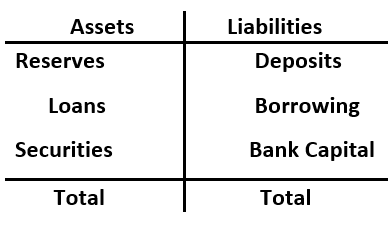
A bank is insolvent when its total assets are less than its total liabilities, even if it remains liquid in the short term.
Metric | Healthy Bank | Insolvent Bank |
|---|---|---|
Total Assets | $120M | $105M |
Total Liabilities | $110M | $110M |
Bank Capital (Equity) | +$10M | -$5M |
Insolvency Definition: Assets < Liabilities; the institution is structurally broken.
Modern Regulation and the Central Bank’s Role
Risk-Weighted Assets and Capital Buffers
Regulators require banks to hold capital buffers based on the riskiness of their assets:
Government Bonds: Low risk, low capital requirement.
Commercial Loans: Moderate risk, intermediate capital requirement.
Tech/Growth Equities: High risk, high capital buffer required.
The Federal Reserve’s Stabilizing Functions
Systemic Supervisor: Monitors risks across financial markets.
Lender of Last Resort: Provides liquidity to solvent but illiquid banks during crises.
The Bank’s Bank: Commercial banks hold reserve accounts at the central bank.
The Bridge to Monetary Policy
Monetary Base and Money Supply
The central bank controls the monetary base (MB), which consists of currency and reserve accounts. The broader money supply (M1/M2) includes currency and deposits circulating in the economy.
Monetary Base (MB):
Money Supply (M1/M2):
Key Question: How do changes in central bank reserve accounts transmit into changes in public deposits?
Additional info: The notes above expand on the original slides by providing definitions, examples, and regulatory context, ensuring a self-contained and academically robust study guide.
