 Back
BackChapter 13: Fiscal Policy and Government Budgets
Study Guide - Smart Notes
 Tailored notes based on your materials, expanded with key definitions, examples, and context.
Government Budgets
Definition and Purpose
The federal budget is the annual statement of the federal government’s outlays and tax revenues. It serves two main purposes:
Financing government programs and activities
Achieving macroeconomic objectives such as full employment, sustained economic growth, and price level stability
Fiscal policy refers to the use of the federal budget to achieve these macroeconomic objectives.
Components of the Federal Budget
Receipts: Personal income taxes, Social Security taxes, corporate income taxes, indirect taxes, and other receipts
Outlays: Transfer payments, expenditure on goods and services, and debt interest
Budget Balance and Government Debt
Budget balance = Receipts - Outlays
If receipts > outlays: Budget surplus
If outlays > receipts: Budget deficit
If receipts = outlays: Balanced budget
Government debt is the total amount borrowed, equal to the sum of past deficits minus past surpluses
Supply-Side Effects of Fiscal Policy
Impact on Employment and Potential GDP
Fiscal policy, especially taxation, affects employment, potential GDP, and aggregate supply. These are known as supply-side effects.
Income Tax and the Labor Market
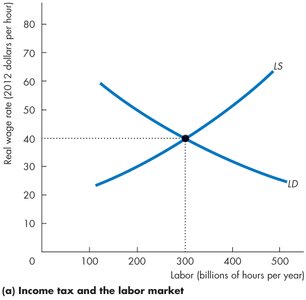
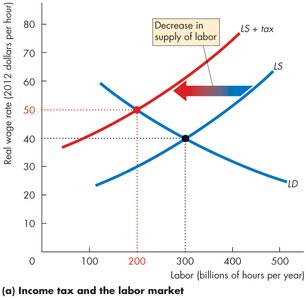
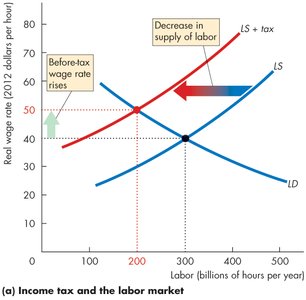
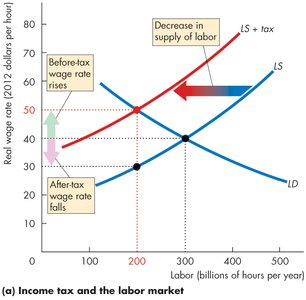
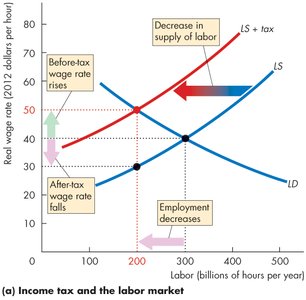
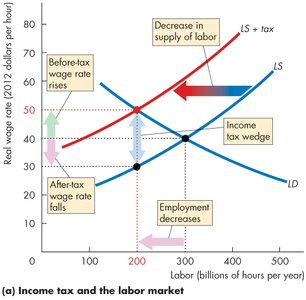
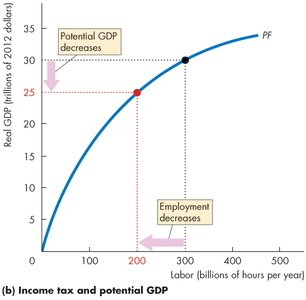
An income tax increases the marginal cost of working, causing the labor supply curve to shift left. This results in a higher before-tax real wage rate, a lower after-tax real wage rate, and a decrease in the quantity of labor employed.
Tax wedge: The gap between the before-tax and after-tax wage rates
Result: Decreased labor supply and lower potential GDP
Effect on Potential GDP
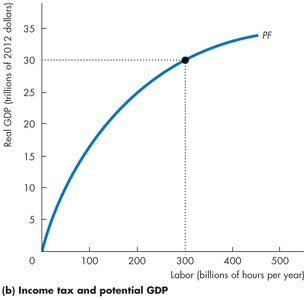
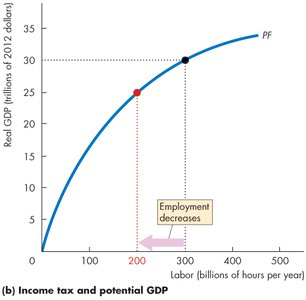
When the quantity of labor employed decreases, potential GDP also decreases, reducing aggregate supply.
Taxes on Expenditure and the Tax Wedge
Taxes on consumption (e.g., HST) add to the tax wedge by raising the prices paid for consumption goods, effectively reducing the real wage rate and further discouraging labor supply.
Taxes and the Incentive to Save
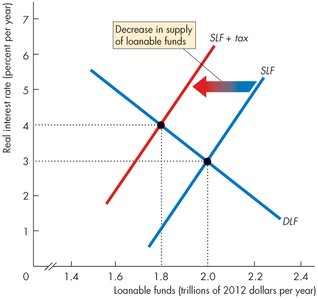
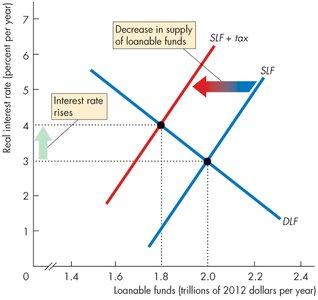
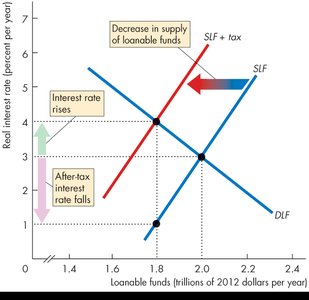
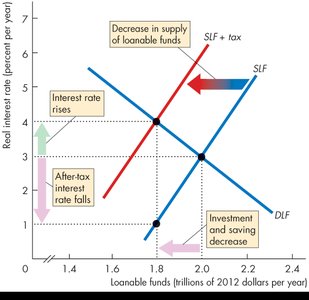
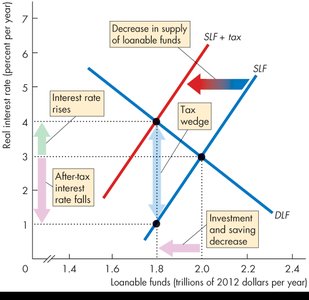
A tax on capital income lowers the quantity of saving and investment, slowing the growth rate of real GDP. The relevant interest rate is the real after-tax interest rate:
A tax on capital income decreases the supply of loanable funds, creating a tax wedge between the real interest rate and the real after-tax interest rate.
Result: Investment and saving decrease.
Stabilizing the Business Cycle
Types of Fiscal Policy
Discretionary fiscal policy: Policy actions initiated by Congress, such as changes in government spending (G) or taxes (T), to close inflationary or recessionary gaps. These actions have multiplier effects but can be limited by time lags.
Automatic fiscal policy: Changes triggered automatically by the state of the economy, not requiring explicit government action.
Automatic Stabilizers
Automatic stabilizers: Mechanisms that stabilize real GDP without explicit government action, such as induced taxes and needs-tested spending.
Induced taxes: Taxes that vary with real GDP (rise in expansions, fall in recessions)
Transfer payments: Payments to qualified individuals or businesses (fall in expansions, rise in recessions)
These mechanisms moderate the multiplier effects, making real GDP more stable.
Cyclical and Structural Balances
Definitions
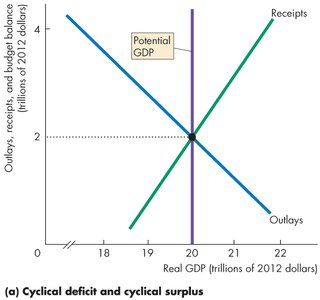
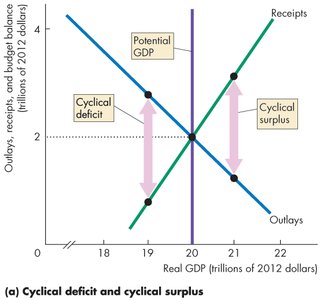
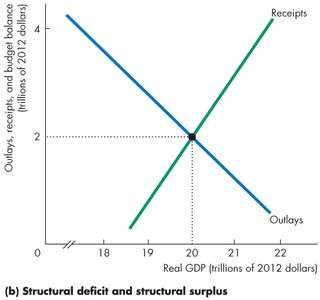
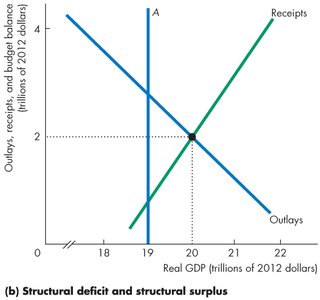
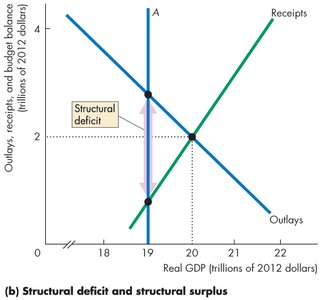
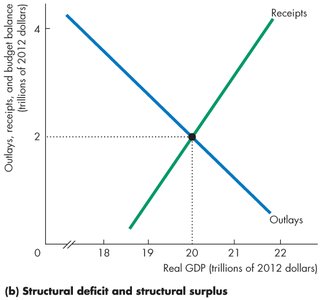
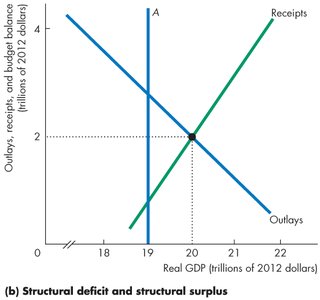
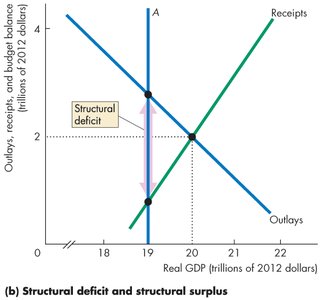
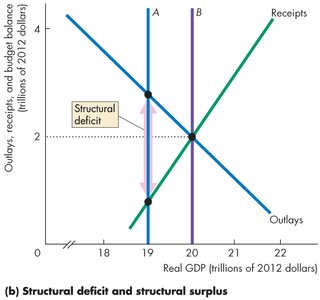
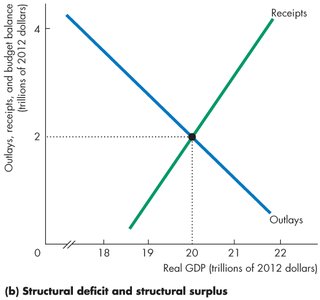
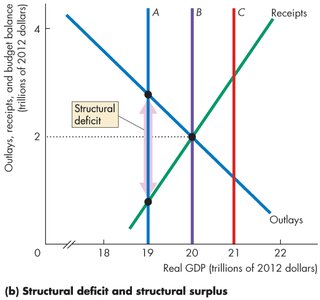
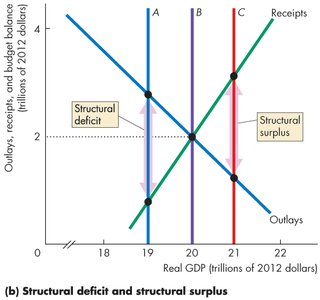
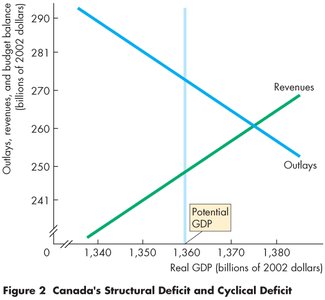
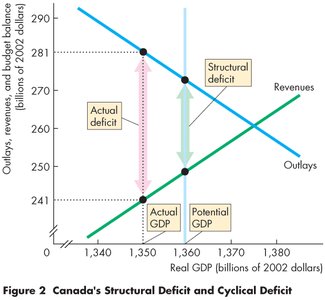
Structural surplus/deficit: The budget balance that would occur if the economy were at full employment (real GDP = potential GDP)
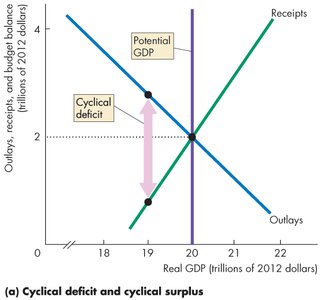
Cyclical surplus/deficit: The actual surplus or deficit minus the structural surplus or deficit; arises purely because real GDP does not equal potential GDP
Illustrations of Cyclical and Structural Balances
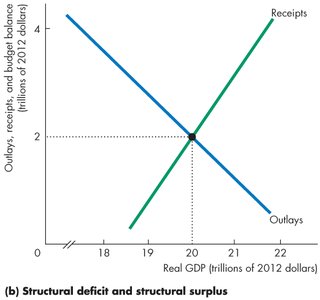
As real GDP fluctuates around potential GDP, cyclical deficits or surpluses arise. If the budget is not balanced only because the economy is not at full employment, the imbalance is cyclical. If there is a deficit or surplus even at full employment, it is structural.
Summary Table: Types of Budget Balances
Type | Definition | When It Occurs |
|---|---|---|
Structural Deficit | Deficit at full employment (potential GDP) | Government spending exceeds receipts even at potential GDP |
Cyclical Deficit | Deficit due to real GDP below potential GDP | Occurs during recessions or below full employment |
Structural Surplus | Surplus at full employment (potential GDP) | Government receipts exceed spending at potential GDP |
Cyclical Surplus | Surplus due to real GDP above potential GDP | Occurs during expansions or above full employment |
Key Equation:
Example: If the structural deficit is $100 billion and the cyclical deficit is $50 billion, the actual deficit is $150 billion.
Additional info: The distinction between structural and cyclical balances is crucial for understanding whether fiscal imbalances are due to temporary economic fluctuations or persistent policy choices.
