 Back
BackChapter 4: What Macroeconomics Is All About – Key Variables, Trends, and Policy
Study Guide - Smart Notes
 Tailored notes based on your materials, expanded with key definitions, examples, and context.
Key Macroeconomic Variables
National Income and Output
National income and output are central concepts in macroeconomics, reflecting the total value of goods and services produced by an economy. These variables are measured in both nominal and real terms to distinguish between changes in price and changes in quantity.
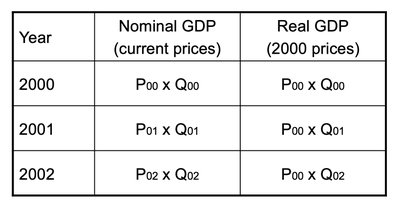
Nominal National Income (Nominal GDP): The value of output measured at current market prices. It does not account for inflation.
Real National Income (Real GDP): The value of output measured at constant base-year prices, reflecting only changes in quantity produced.
Formula for Real GDP:
Formula for Nominal GDP:
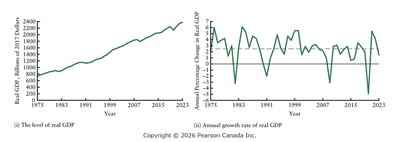
GDP Growth: Real GDP typically follows a long-run upward trend (economic growth) but also exhibits short-run fluctuations (business cycles).
Business Cycles and Output Gaps
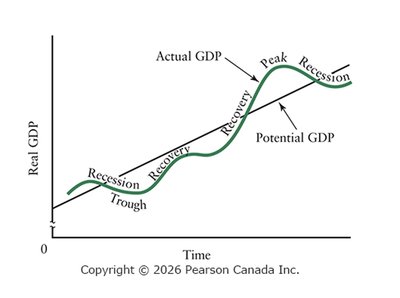
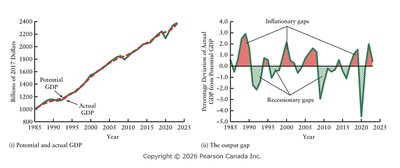
The business cycle describes the short-term fluctuations in real GDP around its long-term trend. Key phases include trough, recession, recovery, and peak. The difference between actual and potential output is called the output gap.
Potential Output (Y*): The level of output the economy can produce when all resources are employed at normal levels (also called full employment output).
Output Gap:
Recessionary Gap: When , indicating underutilized resources and higher unemployment.
Inflationary Gap: When , indicating overutilized resources and upward pressure on prices.
Employment, Unemployment, and Labour Force
Definitions and Measurement
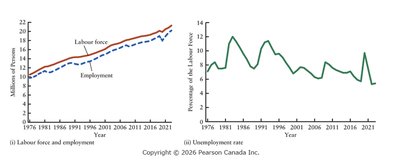
Labour market indicators are crucial for understanding economic performance and policy. The labour force includes all individuals aged 15 and over who are either employed or actively seeking work.
Employment: Number of people holding jobs.
Unemployment: Number of people not employed but actively seeking work.
Labour Force: Employed + Unemployed.
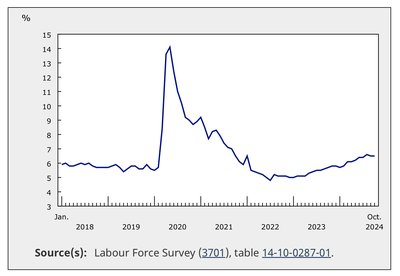
Unemployment Rate:
Types of Unemployment:
Frictional: Short-term, due to normal turnover.
Structural: Mismatch between skills and jobs.
Cyclical: Due to economic downturns (when ).
Natural Rate of Unemployment (NAIRU): The unemployment rate when the economy is at potential output; includes frictional and structural unemployment.
Why Unemployment Matters
Economic Costs: Lost output and income, economic waste.
Social Costs: Associated with crime, mental illness, and social unrest.
Productivity
Definition and Importance
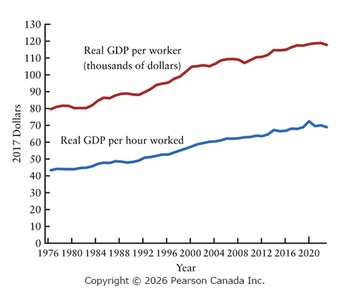
Productivity measures the efficiency of production and is a key determinant of long-run living standards. It is commonly measured as output per worker or output per hour worked.
Labour Productivity:
Productivity Growth: Drives improvements in material living standards over time.
Inflation and Price Level
Definitions and Measurement
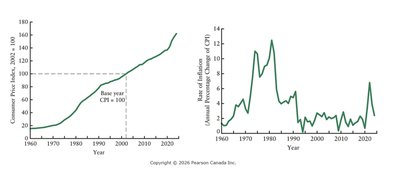
Inflation is the rate at which the general price level rises, reducing the purchasing power of money. The Consumer Price Index (CPI) is a common measure of the price level, based on the cost of a typical consumption basket relative to a base year.
Price Level: Average of all prices in the economy.
Inflation Rate: Percentage change in the price level over time.
Consumer Price Index (CPI):
Effects of Inflation
Reduces purchasing power of money.
Reduces real value of sums fixed in nominal terms (e.g., pensions, contracts).
Anticipated vs. Unanticipated Inflation: If inflation is anticipated, contracts and wages can adjust; if not, real values are distorted.
Interest Rates
Nominal vs. Real Interest Rates
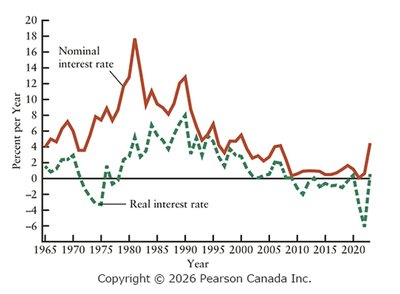
Interest rates are the price of credit. The nominal rate is expressed in money terms, while the real rate is adjusted for inflation and reflects the true cost of borrowing.
Nominal Interest Rate: The stated rate on loans or deposits.
Real Interest Rate:
Burden of Borrowing: Depends on the real interest rate, not the nominal rate.
Different Interest Rates
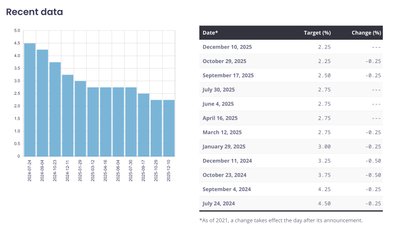
Prime Rate: Rate charged by banks to their best business customers.
Bank Rate: Rate charged by the Bank of Canada on short-term loans to commercial banks.
The International Economy
Exchange Rates
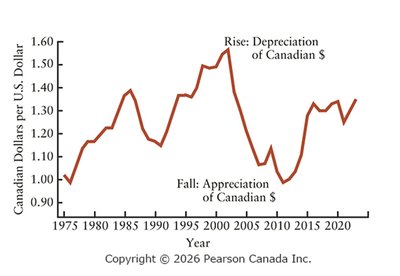
The exchange rate is the price of one currency in terms of another. It affects the competitiveness of exports and imports and is influenced by domestic and international factors.
Depreciation: A fall in the value of the domestic currency relative to others (exchange rate rises).
Appreciation: A rise in the value of the domestic currency (exchange rate falls).
Factors Affecting Exchange Rates:
Monetary policy (interest rates)
Fiscal policy (government deficits/surpluses)
Inflation rates
Trade balance (exports vs. imports)
Net Exports
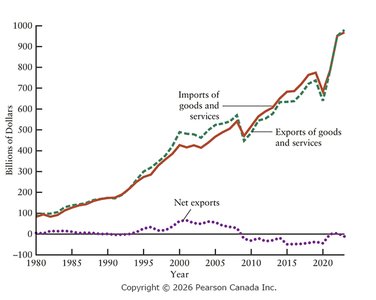
Net exports are the value of exports minus imports. They are a key component of national income and affect the exchange rate and overall economic activity.
Net Exports:
Trade Surplus: When exports exceed imports.
Trade Deficit: When imports exceed exports.
Growth Versus Fluctuations
Long-Term Economic Growth
Long-term economic growth refers to the sustained upward trend in real GDP and output per person, which leads to higher living standards over generations. Productivity growth is the main driver of long-term improvements.
Short-Term Fluctuations
Short-term fluctuations, or business cycles, are deviations from the long-term growth trend. Economists debate the effectiveness of government policy (monetary and fiscal) in managing these fluctuations, with some cautioning against frequent intervention.
