 Back
BackChapter 11 for final exam studying
Study Guide - Smart Notes
 Tailored notes based on your materials, expanded with key definitions, examples, and context.
Demand and Supply of Canadian Dollars
Exchange Rate Fundamentals
The exchange rate is the price at which one currency can be exchanged for another. In the context of the Canadian dollar (C$), it is typically quoted as the amount of foreign currency (e.g., US dollars) required to purchase one Canadian dollar. The foreign exchange market is a global marketplace where currencies are bought and sold, and exchange rates are determined by the forces of demand and supply.
Currency depreciation: A fall in the exchange rate of one currency relative to another.
Currency appreciation: A rise in the exchange rate of one currency relative to another.
Demand for Canadian Dollars
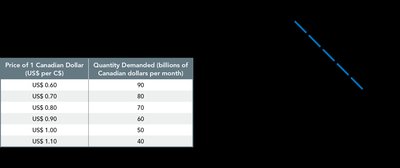
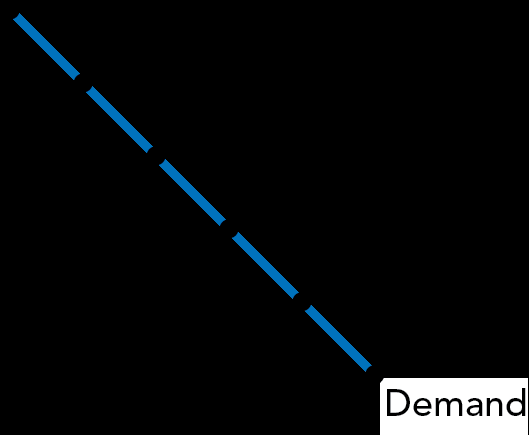
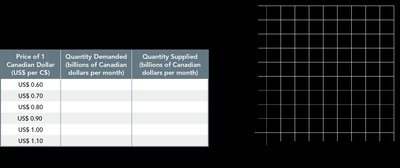
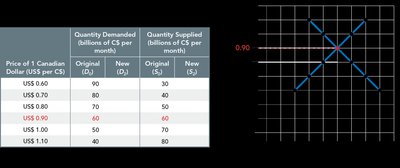
The demand for Canadian dollars comes primarily from non-Canadians who wish to purchase Canadian exports, invest in Canadian assets, or speculate on the future value of the C$. According to the law of demand, as the exchange rate rises (C decreases because Canadian goods and assets become more expensive for the rest of the world (R.O.W.).
Higher C decreases.

Supply of Canadian Dollars
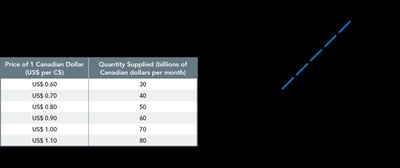
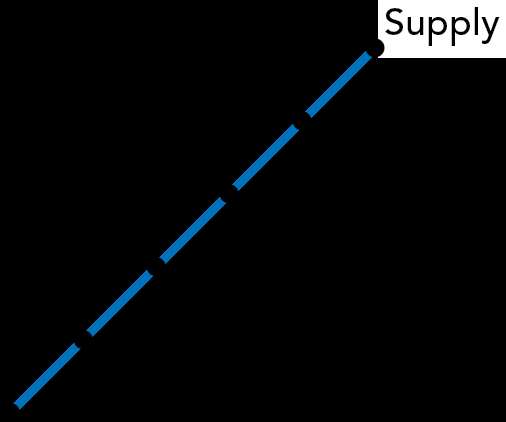
The supply of Canadian dollars is determined by Canadians who wish to buy foreign goods, services, or assets, or who are speculating on the value of foreign currencies. The law of supply states that as the exchange rate rises, the quantity supplied of C.
Higher C increases.
Equilibrium in the Foreign Exchange Market
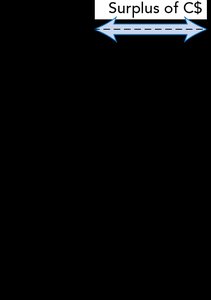
The equilibrium exchange rate is the rate at which the quantity of Canadian dollars demanded equals the quantity supplied. If the exchange rate is below equilibrium, there is excess demand (shortage) for C$, causing the rate to rise. If above equilibrium, there is excess supply (surplus), causing the rate to fall.
At equilibrium: Quantity demanded = Quantity supplied.
Below equilibrium: Shortage of C$ → Exchange rate rises.
Above equilibrium: Surplus of C$ → Exchange rate falls.
Reciprocal Exchange Rates and Cross Rates
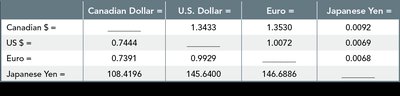
The supply of one currency is always the demand for another. For example, Americans demanding C in exchange, and vice versa. The reciprocal exchange rate can be calculated by dividing 1 by the given exchange rate. When one currency appreciates, the other depreciates.
Example: If C$1.00 = US$0.90, then US$1.00 = 1 / 0.90 = C$1.11.
Fluctuating Exchange Rates
Economic Forces Affecting Exchange Rates
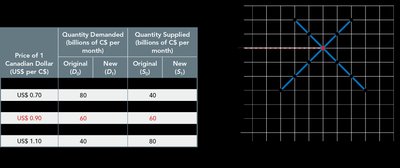
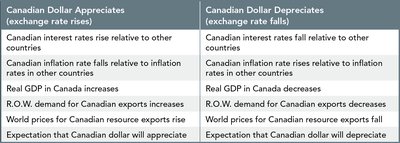
Several economic forces can shift the demand and supply curves for Canadian dollars, causing exchange rates to fluctuate:
Interest rate differential: If Canadian interest rates rise relative to other countries, the C$ appreciates (demand increases, supply decreases).
Inflation rate differential: If Canadian inflation rises relative to other countries, the C$ depreciates (demand decreases, supply increases).
Changes in real GDP: Higher Canadian GDP can increase investor confidence (appreciation) but also increase imports (slight depreciation); net effect is usually appreciation.
Demand for Canadian exports: Increased demand for exports or higher world prices for Canadian resources cause the C$ to appreciate.
Currency speculation: Expectations of future appreciation or depreciation can cause large, rapid changes in exchange rates.
Role of Speculators
Currency speculators are a major force in the foreign exchange market, often amplifying and accelerating the effects of other economic forces. The daily value of foreign currency exchange far exceeds the value of world goods trade, highlighting the importance of speculation in exchange rate movements.

International Transmission Mechanism
Effects of Exchange Rate Changes on the Economy
The international transmission mechanism describes how changes in exchange rates affect a country's real GDP and inflation:
Appreciating C$: Negative aggregate demand shock. Decreases net exports, aggregate demand, and real GDP; increases unemployment; causes disinflation; may lead to economic contraction.
Depreciating C$: Positive aggregate demand shock. Increases net exports, aggregate demand, and real GDP; decreases unemployment; increases inflation; may lead to economic expansion.
Trade-Offs of Exchange Rate Movements
There are both advantages and disadvantages to higher or lower exchange rates. An appreciating C helps exporters but makes imports more expensive and can increase inflation. There is no universally optimal exchange rate—only trade-offs between different groups in the economy.
Canadian Dollar Appreciates (exchange rate rises) | Canadian Dollar Depreciates (exchange rate falls) |
|---|---|
Canadian interest rates rise relative to other countries | Canadian interest rates fall relative to other countries |
Canadian inflation rate falls relative to inflation rates in other countries | Canadian inflation rate rises relative to inflation rates in other countries |
Real GDP in Canada increases | Real GDP in Canada decreases |
R.O.W. demand for Canadian exports increases | R.O.W. demand for Canadian exports decreases |
World prices for Canadian resource exports rise | World prices for Canadian resource exports fall |
Expectation that Canadian dollar will appreciate | Expectation that Canadian dollar will depreciate |
Key Equations
Reciprocal Exchange Rate: price in US\
