 Back
BackEconomic Efficiency, Government Price Setting, and Taxes: Structured Study Notes
Study Guide - Smart Notes
 Tailored notes based on your materials, expanded with key definitions, examples, and context.
Economic Efficiency, Government Price Setting, and Taxes
Key Concepts and Definitions
This chapter explores how markets achieve efficiency, the impact of government intervention through price controls and taxes, and the measurement of consumer and producer surplus. Understanding these concepts is essential for analyzing real-world economic policies and their effects on welfare.
Consumer Surplus: The difference between the highest price a consumer is willing to pay and the actual price paid.
Producer Surplus: The difference between the lowest price a producer is willing to accept and the price actually received.
Economic Surplus: The sum of consumer surplus and producer surplus; a measure of total net benefit to society.
Economic Efficiency: Achieved when marginal benefit equals marginal cost and economic surplus is maximized.
Deadweight Loss: The reduction in economic surplus from a market not being in competitive equilibrium.
Price Ceiling: A legally determined maximum price sellers may charge.
Price Floor: A legally determined minimum price sellers may receive.
Tax Incidence: The actual division of the burden of a tax between buyers and sellers.
Consumer Surplus and Producer Surplus
Consumer and producer surplus are graphical measures of the net benefits to buyers and sellers in a market. The demand curve represents consumers' willingness to pay, while the supply curve represents producers' willingness to sell.
Consumer Surplus: Area below the demand curve and above the market price.
Producer Surplus: Area above the supply curve and below the market price.
Marginal Benefit: The additional benefit from consuming one more unit.
Marginal Cost: The additional cost from producing one more unit.
Example: Calculating Surplus
If Jill is willing to pay $4 for bottled water and the market price is $1.50, her consumer surplus is $2.50.
The Efficiency of Competitive Markets
Competitive markets maximize economic surplus by equating marginal benefit and marginal cost. Any deviation from equilibrium reduces efficiency and creates deadweight loss.
Economic Surplus: Maximized at equilibrium.
Deadweight Loss: Occurs when output is not at the efficient level.
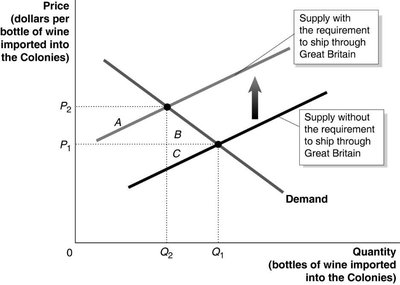
Historical Example: Navigation Acts
The Navigation Acts imposed trade restrictions, shifting the supply curve left, raising prices, and reducing quantity, resulting in deadweight loss and reduced consumer surplus.
Government Intervention: Price Floors and Price Ceilings
Governments may impose price floors (minimum prices) or price ceilings (maximum prices) to aid producers or consumers, respectively. These interventions often create surpluses or shortages and reduce economic efficiency.
Price Floor: Leads to surplus (e.g., agricultural products, minimum wage).
Price Ceiling: Leads to shortage (e.g., rent control, food price controls).
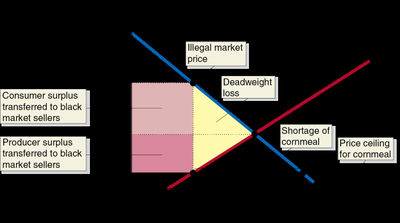
Illegal Markets: Arise when buyers and sellers transact at prices violating regulations.
Case Study: Venezuela Food Price Controls
Price ceilings on food in Venezuela led to shortages, deadweight loss, and the emergence of illegal markets where goods were sold at higher prices.
The Economic Effect of Taxes
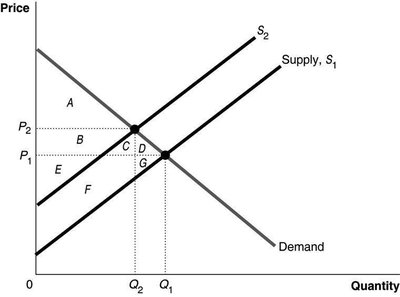
Taxes on goods and services shift the supply curve upward, reducing equilibrium quantity and creating deadweight loss. The efficiency of a tax depends on the excess burden relative to tax revenue.
Tax Incidence: Determined by the relative elasticities of demand and supply, not by who officially pays the tax.
Excess Burden: The deadweight loss from a tax.
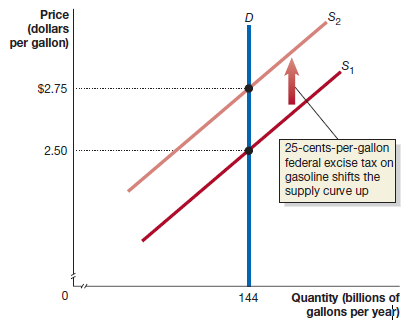
Example: Gasoline Tax
A 25-cent-per-gallon excise tax on gasoline shifts the supply curve up, increasing price and reducing quantity.
Quantitative Demand and Supply Analysis
Demand and supply equations can be used to calculate equilibrium price and quantity, as well as consumer and producer surplus. Linear demand and supply curves allow for straightforward calculation of areas representing surplus and deadweight loss.
Demand Equation:
Supply Equation:
Equilibrium:
Consumer Surplus (triangle):
Producer Surplus (triangle):
Effects of Price Controls and Taxes: Graphical Analysis
Graphical analysis is essential for visualizing the effects of price controls and taxes on surplus and deadweight loss.
Price Ceilings: Reduce producer surplus, increase consumer surplus for some, but create shortages and deadweight loss.
Price Floors: Increase producer surplus for some, reduce consumer surplus, create surpluses and deadweight loss.
Taxes: Reduce both consumer and producer surplus, create deadweight loss, and generate government revenue.
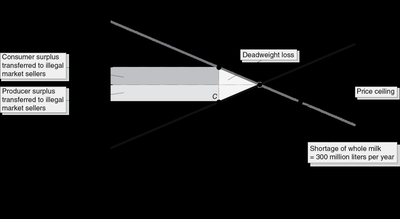
Example: Milk Price Ceiling and Illegal Market
A price ceiling on milk creates a shortage, deadweight loss, and transfers surplus to illegal market sellers.
Example: Value-Added Tax Reduction
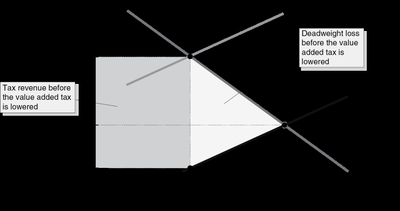
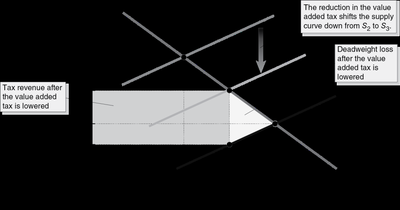
Lowering a value-added tax shifts the supply curve down, reduces deadweight loss, and decreases tax revenue.
Example: Tax Incidence and Deadweight Loss
Tax incidence is illustrated by the division of surplus and deadweight loss between buyers and sellers after a tax is imposed.
Government Price Setting in Agricultural Markets
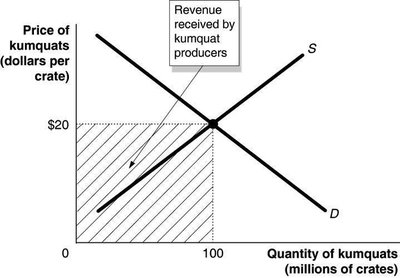
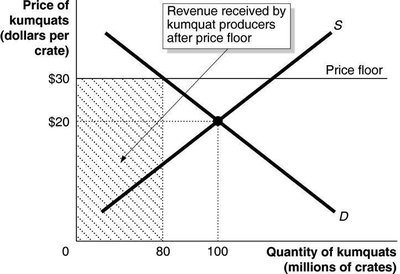
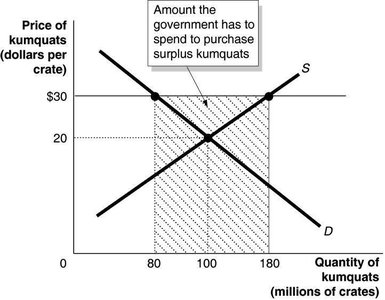
Price floors in agricultural markets often lead to surpluses, requiring government purchases and increased spending.
Producer Revenue: Increases with price floors, but government must buy surplus.
Consumer Surplus: Decreases due to higher prices.
Labor Market Interventions: Minimum Wage
Minimum wage laws act as price floors in labor markets, potentially reducing employment and creating deadweight loss.
Employment: May decrease if minimum wage is set above equilibrium.
Earned Income Tax Credit: Alternative policy to raise incomes without reducing employment.
Rent Control and Housing Markets
Rent control acts as a price ceiling, reducing the quantity of apartments available and creating shortages and deadweight loss.
Winners: Renters who secure apartments at controlled prices.
Losers: Landlords and renters unable to find apartments.
Illegal Markets: May arise as landlords and tenants circumvent controls.
Summary Table: Effects of Price Controls and Taxes
Policy | Effect on Surplus | Deadweight Loss | Market Outcome |
|---|---|---|---|
Price Ceiling | Consumer surplus may increase for some, producer surplus decreases | Yes | Shortage, illegal markets |
Price Floor | Producer surplus may increase for some, consumer surplus decreases | Yes | Surplus, government purchases |
Tax | Both consumer and producer surplus decrease | Yes | Lower quantity, government revenue |
Formulas and Equations
Consumer Surplus (triangle):
Producer Surplus (triangle):
Deadweight Loss:
Equilibrium:
Critical Thinking and Applications
Students should be able to analyze real-world cases of price controls and taxes, identify winners and losers, and calculate changes in surplus and deadweight loss using supply and demand graphs and equations.
Additional info: These notes expand on brief textbook points with academic context, examples, and formulas to ensure completeness and clarity for exam preparation.
