 Back
BackMacroeconomic Challenges Facing Gen Z in the Labor Market
Study Guide - Smart Notes
 Tailored notes based on your materials, expanded with key definitions, examples, and context.
Macroeconomic Conditions and the Gen Z Labor Market
Labor Market Tightness and Entry-Level Employment
The current macroeconomic environment has created significant challenges for recent college graduates, particularly those belonging to Generation Z. A combination of factors—including post-pandemic hiring slowdowns, inflation, and technological advancements—has led to a tight labor market, making it difficult for entry-level job seekers to secure positions aligned with their qualifications.
Labor Market Tightness: Businesses are hiring fewer entry-level employees due to economic uncertainty and previous over-hiring.
Layoffs and Job Availability: Layoffs have increased, and fewer new jobs are being created, resulting in stagnant job mobility.
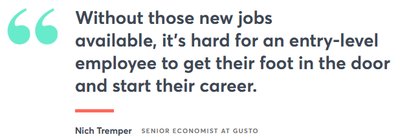
Impact on Entry-Level Employees: Without new job openings, recent graduates struggle to begin their careers and gain experience.
Unemployment Rates Among Recent Graduates
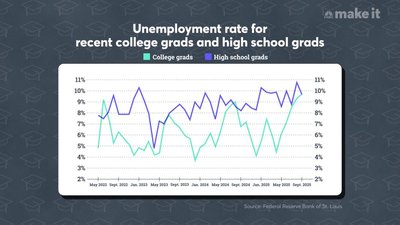
Unemployment rates for recent college graduates have risen, converging with those of high school graduates. This trend reflects broader macroeconomic pressures and signals a weakening of the traditional advantage held by college degree holders in the labor market.
Unemployment Rate Trends: The unemployment rate for recent college graduates reached 9.7% in September 2025, matching the rate for 20- to 24-year-olds with only a high school diploma.
Macroeconomic Implications: High unemployment among young workers can have long-term effects on wage growth, skill development, and career progression.
Macroeconomic Factors Affecting Hiring
Several macroeconomic factors contribute to the challenging job market for Gen Z, including inflation, tariff policies, and the rise of artificial intelligence (AI). These factors influence business hiring strategies and the types of jobs available.
Inflation: Rising prices increase business costs, leading to cautious hiring practices.
Tariff Policies: Changes in trade policy can affect business operations and employment needs.
Artificial Intelligence: AI allows businesses to fill gaps without hiring new employees, slowing the creation of entry-level jobs.
Underemployment and Career Path Shifts
Many young workers are experiencing underemployment, taking jobs that do not utilize their college degrees. Some are shifting to trade professions, which are projected to grow in the coming decade.
Underemployment: Graduates often accept jobs outside their field or below their skill level due to limited opportunities.
Shift to Trades: Some graduates pursue trade careers, such as electricians, which offer stable employment and growth potential.
Long-Term Effects: Early-career joblessness and underemployment can compound over time, affecting lifetime earnings and career advancement.

Value of College Education Amid Macroeconomic Challenges
Despite the difficulties in finding jobs related to their degrees, many graduates still value their college education for the life skills and independence it provides. Networking and referrals remain important for job searches, but the fast-changing economic landscape poses ongoing challenges.
Non-Monetary Benefits: College education fosters independence, time management, and personal growth.
Networking: Referrals and connections are increasingly important for securing interviews and job offers.
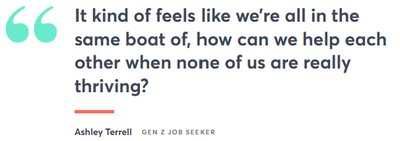
Collective Experience: Many graduates feel a shared struggle, highlighting the widespread impact of macroeconomic conditions on young workers.
Summary Table: Macroeconomic Factors Affecting Gen Z Employment
Factor | Impact on Labor Market |
|---|---|
Inflation | Reduces hiring due to increased costs |
AI Technology | Slows hiring, fills gaps without new employees |
Tariff Policies | Creates uncertainty, affects business operations |
Post-Pandemic Over-Hiring | Fewer job openings as businesses retain previous hires |
Layoffs | Increase unemployment, reduce job mobility |
Key Equations and Concepts
Unemployment Rate: The percentage of the labor force that is unemployed and actively seeking work.
Underemployment: When workers are employed in jobs below their skill level or desired hours.
Labor Force Participation Rate: The proportion of the working-age population that is either employed or actively seeking employment.
Additional info:
Macroeconomic conditions such as business cycles, inflation, and technological change are central to understanding labor market dynamics for young workers.
Long-term effects of early-career unemployment include lower lifetime earnings and slower skill accumulation.
