 Back
BackMacroeconomic Indicators: GDP, Labour, Inflation, and Trade
Study Guide - Smart Notes
 Tailored notes based on your materials, expanded with key definitions, examples, and context.
Real GDP and the Business Cycle
Measuring National Production and Income
Gross Domestic Product (GDP) is the primary measure of a nation's total economic output, representing the market value of all final goods and services produced within a country over a specific period. National income, which sums all forms of income (wages, profits, rents, and interest), is conceptually equal to national production due to the circular flow of income and expenditure.
Nominal GDP: The value of all goods and services produced, measured at current market prices. It reflects changes in both quantities and prices.
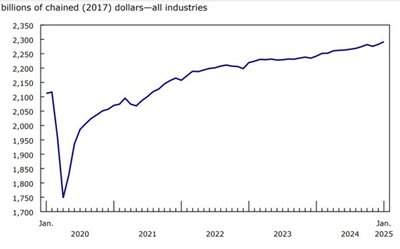
Real GDP: The value of all goods and services produced, measured using constant prices from a base year (e.g., 2017). It isolates changes in output by removing the effects of price changes.
Potential GDP (Y*): The level of output the economy can produce at full employment, when all resources are used sustainably without generating inflationary pressure.
Output Gap: The difference between actual GDP (Y) and potential GDP (Y*). A negative gap indicates a recessionary gap; a positive gap indicates an inflationary gap.
Equation for Output Gap:
Business Cycle Phases:
Peak: The highest point before a downturn.
Trough: The lowest point before recovery begins.
Expansion/Recovery: Periods of rising real GDP.
Recession/Contraction: Periods of declining real GDP.
Short-Term vs. Long-Term GDP:
Short-term: Focuses on business cycle fluctuations and the role of monetary and fiscal policy in stabilizing the economy.
Long-term: Concerns the determinants of economic growth and living standards over decades, such as productivity and technological progress.
Labour Force Statistics
Measuring Unemployment and Labour Productivity
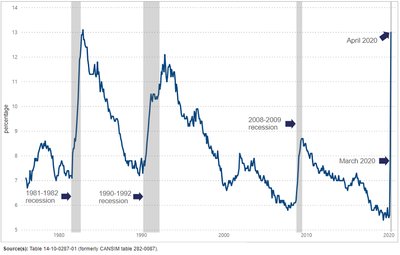
Labour force statistics provide insight into the health of the economy by tracking employment, unemployment, and productivity. The unemployment rate is a key indicator, reflecting the percentage of the labour force that is actively seeking work but not currently employed.
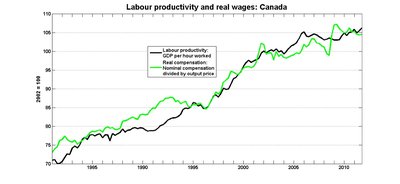
Labour Productivity: Real GDP per hour worked or per worker. It is a major determinant of long-run increases in living standards.
Unemployment Rate: The proportion of the labour force that is unemployed and actively seeking work.
Unemployment Rate Formula:
Categories of Unemployment:
Frictional Unemployment: Short-term, normal turnover as people change jobs or enter the workforce.
Structural Unemployment: Long-term mismatch between workers' skills and job requirements, often due to technological change or globalization.
Cyclical Unemployment: Caused by economic downturns (recessionary gaps) or booms (inflationary gaps).
Seasonal Unemployment: Fluctuations due to seasonal patterns in certain industries; data are often seasonally adjusted.
At full employment (Y = Y*), unemployment consists only of frictional and structural unemployment, known as the natural rate of unemployment.
The Consumer Price Index (CPI) and Inflation
Measuring Price Changes and Inflation
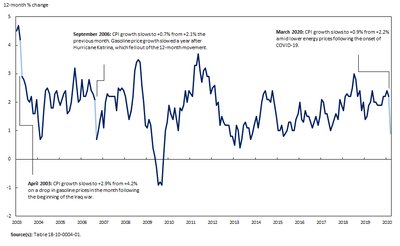
The Consumer Price Index (CPI) is a cost-of-living index that tracks the prices of a fixed basket of goods and services purchased by typical households. It is used to measure inflation, which is the rate at which the general price level changes over time.
Fixed Basket: Quantities of goods and services in the base year, reflecting typical household consumption.
Base-Period Cost:
Current Cost:
CPI Formula:
Inflation Rate Formula:
Purchasing Power of Money: The real value of money, or the amount of goods and services it can buy, is eroded by inflation.
Anticipated vs. Unanticipated Inflation:
Anticipated Inflation: Allows for economic adjustments, minimizing distortions.
Unanticipated Inflation: Causes market distortions, redistributes wealth, and creates winners and losers.
Interest Rates, Exchange Rates, and Trade
Interest Rates: Nominal vs. Real
Interest rates represent the cost of borrowing money. The nominal interest rate is the stated rate, while the real interest rate adjusts for expected inflation, reflecting the true cost in terms of purchasing power.
Real Interest Rate Formula:
i: Nominal interest rate
r: Real interest rate
\pi^e: Expected inflation rate
Exchange Rates
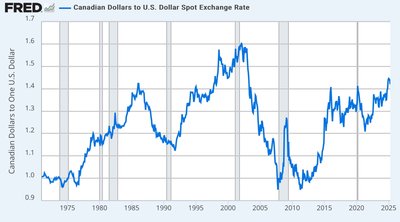
The exchange rate is the price of one country's currency in terms of another's. For example, the Canadian dollar price of one US dollar. Changes in the exchange rate affect the value of the domestic currency:
Depreciation: A rise in the exchange rate; the domestic currency is worth less.
Appreciation: A fall in the exchange rate; the domestic currency is worth more.
Trade Flows and Balance
Trade flows measure the value of exports (goods and services sold to foreigners) and imports (goods and services purchased from foreigners). The trade balance is the difference between exports and imports, known as net exports (NX):
Trade Surplus: Net exports are positive (exports > imports).
Trade Deficit: Net exports are negative (exports < imports).
