 Back
BackMacroeconomic Policy Objectives: Foundations, Conflicts, and Applications
Study Guide - Smart Notes
 Tailored notes based on your materials, expanded with key definitions, examples, and context.
Macroeconomic Policy Objectives
Introduction to Policy Objectives
Understanding macroeconomic policy objectives is essential for evaluating the effectiveness of government actions and for comprehending the rationale behind policy decisions. Policymakers must balance multiple, sometimes conflicting, goals to achieve optimal outcomes for society. The seven key objectives of macroeconomic policy are: economic growth, low unemployment, price stability, balance of payments equilibrium, balanced government budget, environmental protection, and income redistribution.
Key Macroeconomic Policy Objectives
1. Economic Growth
Economic growth refers to an increase in the productive capacity of an economy, typically measured by sustained increases in real Gross Domestic Product (GDP). Growth is fundamental because it expands the range of choices available to citizens and underpins other macroeconomic objectives.
Definition: Economic growth is the sustained increase in real GDP over time.
Importance: Enables higher living standards, supports other objectives (e.g., low unemployment, price stability), and increases available resources.
Measurement: Real GDP is used as the primary indicator.
Example: A country experiencing 3% annual real GDP growth will see its output double approximately every 24 years (using the Rule of 70).
Additional info: Full employment does not mean zero unemployment; frictional and structural unemployment always exist.
2. Full Employment (Low Unemployment)
Full employment occurs when all available factors of production are utilized efficiently, and the economy operates on its production possibility frontier (PPF). Unemployment represents a waste of resources and lost potential output.
Definition: Full employment is achieved when the economy operates at its potential output, with only frictional and structural unemployment present.
Implications: Operating below full capacity leads to unnecessary waste and social costs.
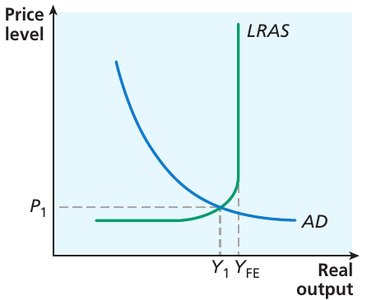
Additional info: The diagram shows equilibrium output below the full employment level, indicating underutilization of resources.
3. Price Stability (Control of Inflation)
Price stability is a central macroeconomic objective, as high inflation imposes significant costs on society and disrupts market efficiency. Inflation can be caused by both supply-side (cost-push) and demand-side (demand-pull) factors.
Definition: Inflation is a sustained rise in the general price level.
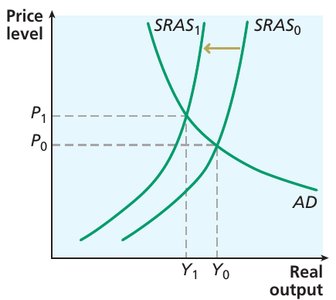
Cost-push inflation: Initiated by rising costs (e.g., oil price shocks) that shift the short-run aggregate supply (SRAS) curve leftward.
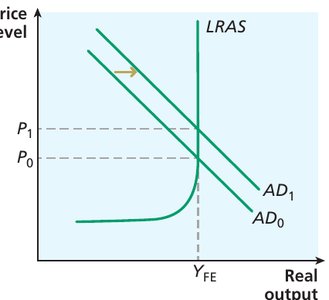
Demand-pull inflation: Initiated by increases in aggregate demand (AD), especially when the economy is near or at full capacity.
Money supply: Persistent inflation occurs when the money supply grows faster than real output.
Costs of inflation: Menu costs, shoe-leather costs, uncertainty, unreliable price signals, and income redistribution effects.
Example: Argentina's hyperinflation in 2022 and Zimbabwe's extreme inflation demonstrate the severe consequences of uncontrolled inflation.
Additional info: The UK inflation target is set at 2% CPI to allow for relative price adjustments and to account for measurement biases.
4. Balance of Payments Equilibrium
The balance of payments records all economic transactions between residents of a country and the rest of the world. The current account, which includes trade in goods and services, investment income, and transfers, is a key focus for policymakers.
Definition: Current account equilibrium means exports of goods and services are balanced with imports, preventing unsustainable borrowing or asset sales.
Exchange rates: In a floating system, exchange rates adjust to balance supply and demand for currency.
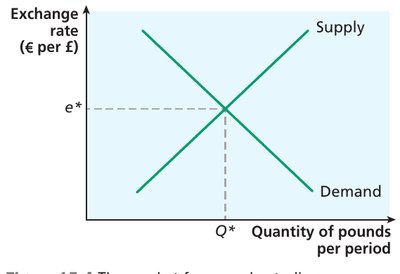
Policy implications: Persistent current account deficits require financing through asset sales or borrowing, which is unsustainable in the long run.
Example: The UK has run a current account deficit every year since 1984, with notable increases during the 2010s.
Additional info: Deficits often reflect a lack of competitiveness, overvalued exchange rates, or higher domestic income growth relative to trading partners.
5. Balanced Government Budget
A balanced government budget ensures that government spending does not consistently exceed revenue, preventing unsustainable debt accumulation. The financial crisis of the late 2000s and the COVID-19 pandemic highlighted the importance of prudent fiscal management.
Key terms: Public sector net cash requirement (PSNCR) is the government deficit; net debt is the accumulation of past borrowing.
Policy debate: Borrowing for investment is justified, but excessive debt burdens future generations and limits policy flexibility.
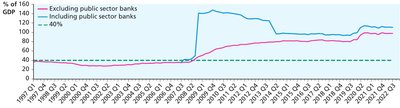
Example: UK public sector net debt rose sharply after the 2008 financial crisis and again during the COVID-19 pandemic, exceeding 100% of GDP by 2021.
Additional info: High debt levels increase interest payments, reducing funds available for other public expenditures.
6. Environmental Protection
Environmental protection has become a key macroeconomic objective due to the recognition of international and intergenerational externalities. Economic growth must be balanced with sustainability to ensure long-term well-being.
Externalities: Pollution and resource depletion impose costs not reflected in market prices, affecting other countries and future generations.
Policy challenge: Achieving sustainable growth requires international cooperation and policies that internalize environmental costs.
Additional info: Global warming and climate change have increased the urgency of integrating environmental objectives into macroeconomic policy.
7. Income Redistribution
Income redistribution aims to reduce inequality and promote social cohesion. Policies include progressive taxation, social security benefits, and equal opportunities legislation.
Causes of inequality: Differences in skills, education, asset ownership, and discrimination.
Policy approaches: Horizontal equity (equal treatment for equal circumstances) and progressive taxation.
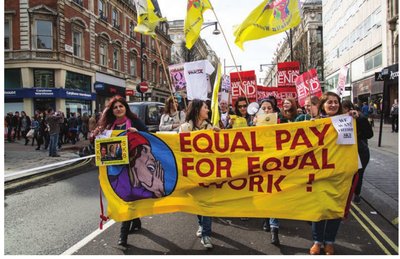
Costs of inequality: Reduced access to education and credit, inhibited economic growth, higher crime rates, and social instability.
Policy balance: Excessive redistribution may reduce incentives for enterprise; the challenge is to protect the vulnerable while encouraging productivity.
Additional info: Technological change has widened the earnings gap between skilled and unskilled workers in many countries.
Summary Table: The Seven Key Macroeconomic Policy Objectives
Objective | Definition | Key Policy Tools | Potential Conflicts |
|---|---|---|---|
Economic Growth | Increase in real GDP over time | Monetary, fiscal, supply-side policies | May conflict with environmental protection, inflation control |
Low Unemployment | Full utilization of labor resources | Monetary, fiscal, labor market policies | May conflict with inflation control |
Price Stability | Low and stable inflation | Monetary policy, inflation targeting | May conflict with unemployment reduction |
Balance of Payments Equilibrium | Current account not in persistent deficit | Exchange rate, trade, and competitiveness policies | May conflict with growth and employment objectives |
Balanced Government Budget | Spending matches revenue over the cycle | Fiscal policy, debt management | May conflict with stimulus during recessions |
Environmental Protection | Preservation of natural resources and reduction of pollution | Regulation, taxes, international agreements | May conflict with rapid economic growth |
Income Redistribution | Reducing inequality through transfers and taxation | Progressive taxes, social benefits | May reduce incentives for work and investment |
Conclusion
Macroeconomic policy is guided by seven key objectives: economic growth, low unemployment, price stability, balance of payments equilibrium, balanced government budget, environmental protection, and income redistribution. Achieving these objectives requires careful policy design and balancing trade-offs, as actions to achieve one goal may create conflicts with others. Understanding these objectives is fundamental for analyzing and evaluating macroeconomic policy decisions.
