 Back
Malthusian Population Theory and Its Modern Macroeconomic Implications
Study Guide - Smart Notes
 Tailored notes based on your materials, expanded with key definitions, examples, and context.
Robert Malthus and the Foundations of Population Economics
Introduction to Malthus
Robert Malthus (1766–1834) was a foundational figure in economics, best known for his work on population dynamics and their economic consequences. His major works include An Essay on the Principle of Population (1798) and Principles of Political Economy (1820). Malthus was a contemporary and intellectual rival of David Ricardo, engaging in debates that shaped classical economic thought.
The Malthusian Population Doctrine
Core Principles
Malthus argued that population growth tends to outpace the growth of food supply, leading to inevitable economic and social crises. His doctrine is based on two main points:
Exponential Population Growth: Population has the potential to grow exponentially (i.e., doubling at regular intervals).
Linear Food Supply Growth: Agricultural productivity, in contrast, increases only linearly, constrained by land and technology.
Subsistence Wages: Any surplus above basic necessities leads to population growth, which in turn drives real wages back down to subsistence levels.

Example: If a society produces more food, the population will increase until the surplus is consumed, and living standards return to subsistence.
The Dismal Science
Malthus's conclusions led to economics being dubbed "the dismal science," as he predicted a perpetual cycle of population growth and crisis, with no long-term improvement in living standards.
Malthusian Traps and Crises
Population growth can cause economic and social crises, known as "Malthusian traps," where temporary gains are erased by subsequent population increases. Malthus identified two types of population checks:
Preventive (Voluntary) Checks: Actions such as later marriage and reduced birth rates.
Positive (Involuntary) Checks: Events like famine, war, and disease that increase mortality rates.
Historical Evidence: Pre- and Post-1800
Before 1800: Malthusian Dynamics
Prior to the 19th century, population expansion often led to migration or Malthusian crises. For example, the expansion of the Greek world was driven by overpopulation, and the Black Death in Europe was preceded by overpopulation and malnutrition.
Example: European population doubled between 1000 and 1300, outstripping food production and leading to famine and plague.
After 1800: What Malthus Missed
Malthus did not foresee the dramatic increases in productivity brought about by the Industrial and Agricultural Revolutions. These changes allowed for sustained per capita income growth and broke the Malthusian cycle in many countries.
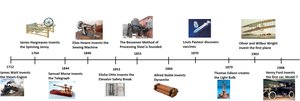
Technological Innovation: Inventions such as the spinning jenny, steam engine, and seed drill revolutionized production.
Demographic Transition: Societies experienced falling mortality and fertility rates, altering population growth patterns.
Modern Twists: Demography and Macroeconomics
Demographic Transitions
Modern economies have experienced two demographic transitions:
First Demographic Transition: Declining mortality followed by declining fertility, leading to slower population growth and aging populations.
Second Demographic Transition: Further declines in fertility, changes in family structure, and increased life expectancy.
Applicability to Developing Nations
While many developed nations have escaped the Malthusian trap, some regions, such as Sub-Saharan Africa, continue to experience high fertility rates and rapid population growth.
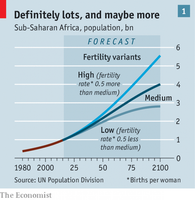
Example: UN projections show that Sub-Saharan Africa's population could reach 4–6 billion by 2100, depending on fertility trends.
Dependency Ratios and Economic Growth
Changes in age structure, such as an increasing proportion of elderly, affect the dependency ratio and have significant macroeconomic implications:
Dependency Ratio Formula:
Implications: Higher dependency ratios mean more resources are allocated to healthcare and pensions, reducing funds for investment and education.
Labor Market Dynamics
Demographic changes influence labor market outcomes and the natural rate of unemployment:
Older populations and higher educational attainment generally lower the natural rate of unemployment.
As the share of teenagers (who have higher unemployment rates) declines, the overall unemployment rate tends to fall.
Population Growth: Economic Implications
Static vs. Dynamic Views
Static View: Higher fertility rates can lower per capita income due to less investment in human capital.
Dynamic View: Larger populations can expand markets, foster human capital formation, and create economies of scale.
Cities, Density, and Economic Growth
Urbanization and population density can drive economic growth through clustering effects, as seen in cities like New York (finance), Detroit (autos), and Silicon Valley (technology).
Modern Malthusian Concerns
Paul Ehrlich and Neo-Malthusianism
Paul Ehrlich's 1968 predictions of mass famine due to population explosion revived Malthusian concerns. Policies such as China's one-child policy were influenced by these ideas, though recent trends show declining birth rates and aging populations.
Policy Implications
Countries with aging populations face challenges in supporting the elderly and maintaining economic growth.
Immigration can offset population decline and support labor markets, as seen in recent U.S. population growth driven by net international migration.
Conclusion: Lessons from Malthus
Malthus's theories highlight the importance of considering resource constraints and demographic trends in macroeconomic analysis. However, technological innovation and demographic transitions have shown that long-term economic growth is possible, challenging the inevitability of the Malthusian trap.
Key Takeaway: Never extrapolate from past data without considering potential changes in technology, institutions, and demographics.
