 Back
BackPotential GDP and the Natural Unemployment Rate: Macroeconomic Foundations and Labor Market Dynamics
Study Guide - Smart Notes
 Tailored notes based on your materials, expanded with key definitions, examples, and context.
Potential GDP and the Natural Unemployment Rate
Introduction
This chapter explores the determinants of potential GDP and the natural unemployment rate, two foundational concepts in macroeconomics. It also compares macroeconomic performance and labor market structures between the United States and Europe, and introduces the main schools of macroeconomic thought.
Macroeconomic Approaches and Pathways
The Three Main Schools of Thought
Classical Macroeconomics: Argues that markets are self-correcting and government intervention is unnecessary. Fluctuations are natural, and the economy tends toward full employment.
Keynesian Macroeconomics: Emphasizes that the economy can remain below full employment for extended periods. Advocates for government intervention (fiscal policy) to restore full employment during recessions.
Monetarist Macroeconomics: Builds on Keynesian ideas but stresses the importance of the money supply. Fluctuations in money supply can cause business cycles; steady monetary growth is recommended to avoid inflation and recession.
Long-term economic growth is considered more important than short-term fluctuations, as even small changes in growth rates can have large effects on living standards over time.
US vs Europe: Labor Markets and Productivity
Income, Productivity, and Social Benefits
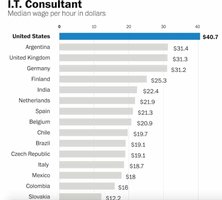
Americans generally earn more and produce more than Europeans, but European countries often provide more generous social benefits, health care, and free services.
Low-skilled jobs are often better paid in Europe, while high-skilled jobs pay more in the US.
Higher productivity in the US is due to greater capital per worker and more advanced technology.
Taxes and Labor Supply
European countries have higher income taxes and social security contributions, reducing take-home pay and affecting labor supply.
The US has state-level tax differences, but these are less significant than the differences across European countries.
Labor Market Outcomes
US labor is more productive, so US employers pay higher wages for a given quantity of labor.
The US demand for labor curve lies to the right of the European curve, reflecting higher productivity.
Higher European taxes and unemployment benefits shift the European labor supply curve leftward, resulting in lower equilibrium wages and fewer hours worked.
Potential GDP
Definition and Determinants
Potential GDP is the value of real GDP when all the economy’s factors of production are fully employed. The main factors of production are:
Labor and human capital
Physical capital
Land
Entrepreneurship
Technology
At any given time, all factors except labor are fixed. The quantity of labor employed depends on choices made by people and businesses.
The Production Function
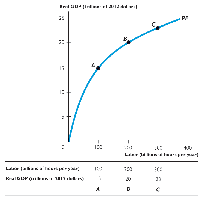
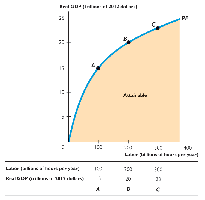
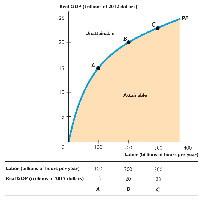
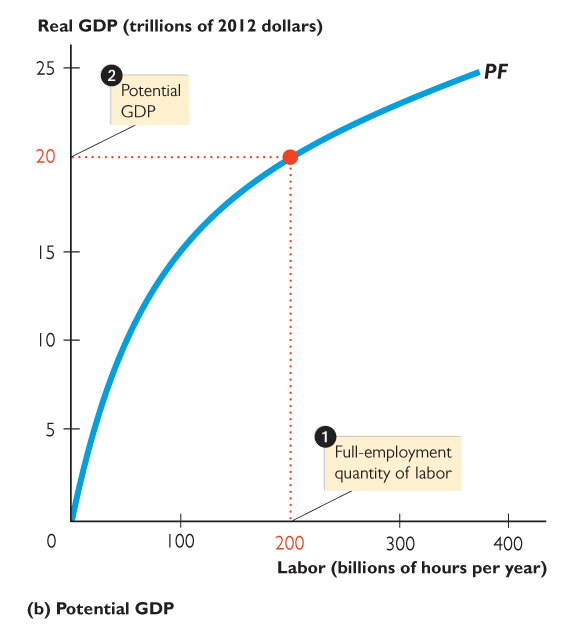
The production function shows the maximum quantity of real GDP that can be produced as the quantity of labor employed changes, holding all other factors constant.
Displays diminishing returns: each additional hour of labor adds less to real GDP than the previous hour.
Labor Market: Demand and Supply
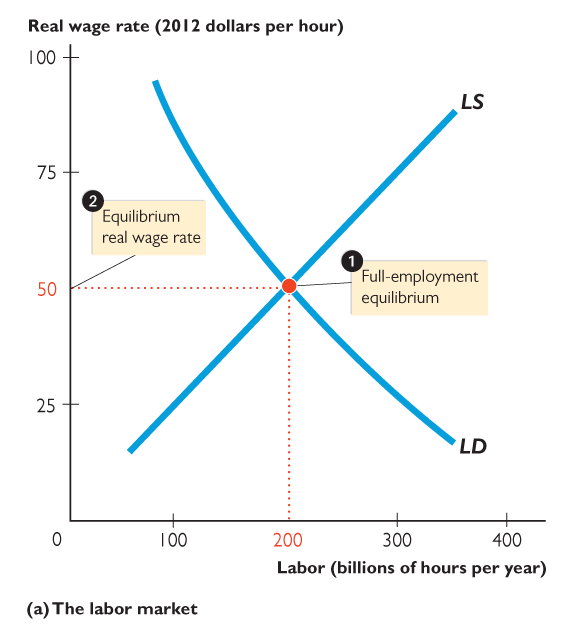
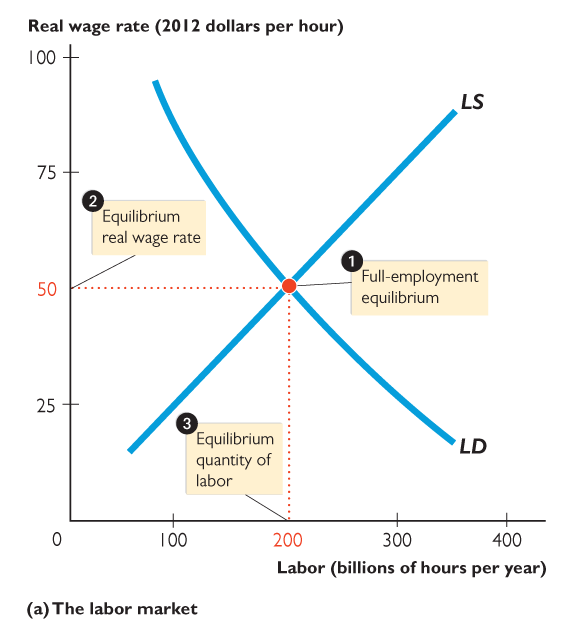
The labor market determines the quantity of labor employed and the real wage rate.
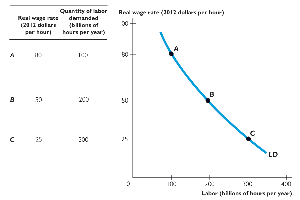
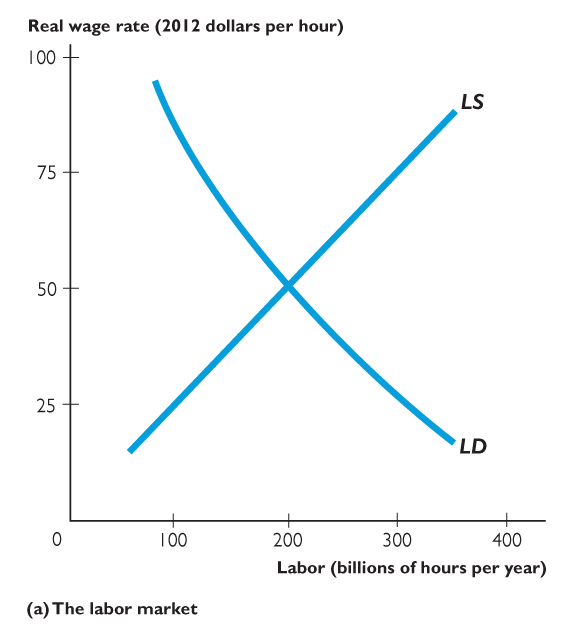
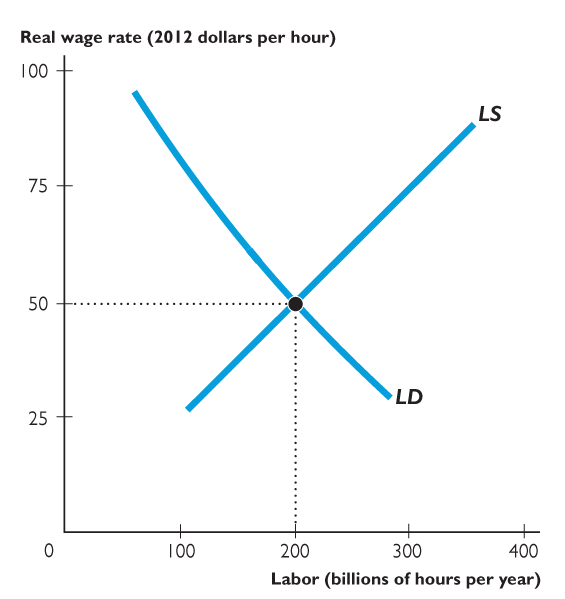
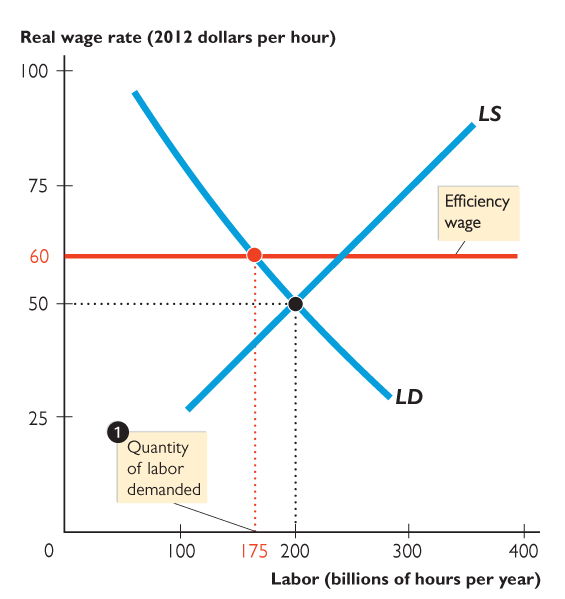
Demand for labor: The relationship between the quantity of labor firms want to hire and the real wage rate. As the real wage rate falls, the quantity of labor demanded increases.
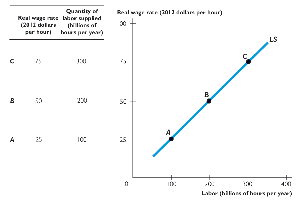
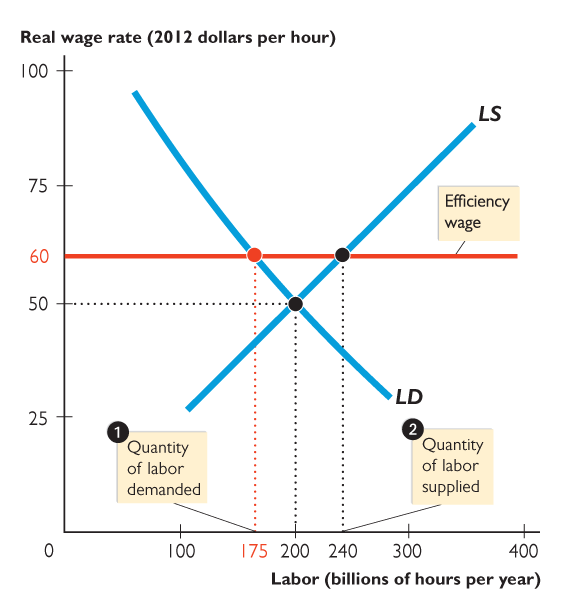
Supply of labor: The relationship between the quantity of labor households want to supply and the real wage rate. As the real wage rate rises, the quantity of labor supplied increases.
Labor Market Equilibrium
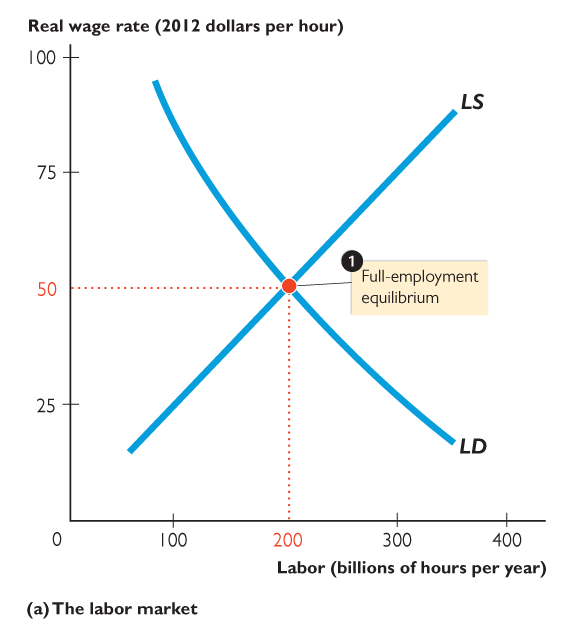
Equilibrium occurs where the quantity of labor demanded equals the quantity supplied. At this point, the real wage rate and employment level are stable.
Full employment is achieved at the equilibrium real wage rate and labor quantity.
At full employment, real GDP equals potential GDP.
The Natural Unemployment Rate
Definition and Causes
The natural unemployment rate is the unemployment rate when the economy is at full employment. It consists of:
Frictional unemployment: Short-term unemployment from job search and matching.
Structural unemployment: Unemployment from changes in technology or market conditions that require new skills.
Two main causes:
Job search: Influenced by demographic changes, unemployment benefits, and structural changes in the economy.
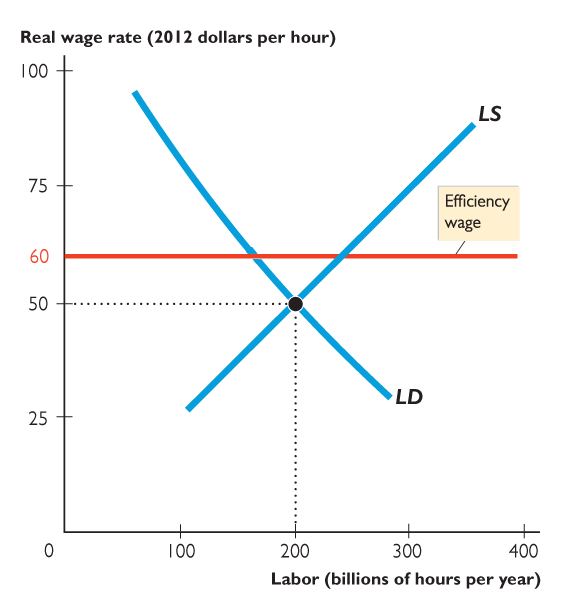
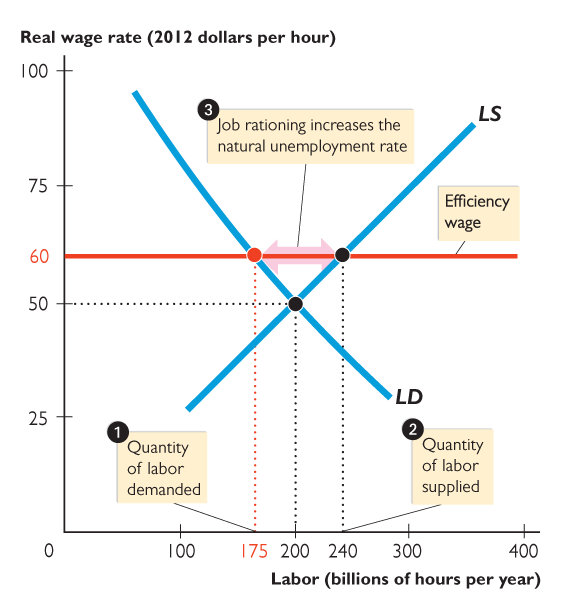
Job rationing: Occurs when the real wage rate is above equilibrium due to efficiency wages, minimum wages, or union wages.
Job Rationing and the Natural Unemployment Rate
Efficiency wage: Firms pay above-equilibrium wages to increase worker effort, reducing turnover but increasing unemployment.
Minimum wage: Government-mandated wage floors can create unemployment if set above equilibrium.
Union wage: Collective bargaining can set wages above equilibrium, increasing unemployment.
Comparing US and European Labor Markets
Productivity and Labor Supply Differences
US labor is more productive due to higher capital per worker and more advanced technology.
US employers pay higher wages, and Americans work longer hours than Europeans.
Higher European taxes and unemployment benefits reduce labor supply and hours worked.
Potential GDP is higher in the US than in Europe.
Key Formulas and Concepts
Production Function: Where = real GDP, = labor, = physical capital, = human capital, = natural resources, = technology.
Labor Market Equilibrium: Where = labor demand, = labor supply.
Potential GDP: The level of real GDP at full employment.
Natural Unemployment Rate:
Summary Table: US vs Europe Labor Market Comparison
Factor | United States | Europe |
|---|---|---|
Productivity | Higher (more capital, better technology) | Lower |
Wages | Higher for skilled workers | Higher for low-skilled, lower for high-skilled |
Social Benefits | Less generous | More generous |
Taxes | Lower, less variation | Higher, more variation |
Labor Supply | Greater (longer hours) | Less (shorter hours) |
Potential GDP | Higher | Lower |
