 Back
Principles of Macro economics
Study Guide - Smart Notes
 Tailored notes based on your materials, expanded with key definitions, examples, and context.
Introduction to Macroeconomics
What is Macroeconomics?
Macroeconomics is the branch of economics that studies the behavior and performance of an economy as a whole. It focuses on aggregate measures such as inflation, unemployment, and economic growth, providing a broad perspective on how economies function and evolve over time.
Macroeconomics examines the 'big picture'—the total output of goods and services, overall price levels, and employment rates.
It contrasts with microeconomics, which studies individual markets and decision-makers.
Key Terms in Economics
Microeconomics: The study of individual choices and markets.
Macroeconomics: The study of the economy as a whole.
Positive Economics: Objective analysis based on facts ("what is").
Normative Economics: Subjective judgments about what ought to be ("what should be").
Foundations of Economics
The Material World and Economic Well-being
Economics is fundamentally concerned with how societies provide for the material well-being of their members. It studies the allocation of scarce resources to meet the needs and wants of individuals and groups.
Focuses on the production, distribution, and consumption of goods and services.
Addresses questions of scarcity, choice, and opportunity cost.
Economic Interdependence and Specialization
Modern economies rely on the cooperation and specialization of individuals. Specialization, or the division of labor, increases productivity and is made possible by trade and markets.
Individuals and firms specialize in tasks where they have a comparative advantage.
Trade allows people to obtain goods and services they do not produce themselves.
Markets and Economic Wealth
What is a Market?
A market is any venue—physical or virtual—where buyers and sellers exchange goods and services. Markets are central to the creation of economic wealth.
Markets can be physical (e.g., grocery stores) or virtual (e.g., online platforms).
They operate based on the interaction of demand (buyers) and supply (sellers).
Role of Property Rights
Well-defined and enforced property rights are essential for markets to function efficiently. They provide incentives for investment, innovation, and the efficient use of resources.
Personal Property: Items like cell phones and cars.
Real Property: Land and buildings.
Intellectual Property: Ideas, inventions, and creative works (protected by patents and copyrights).
How Do Markets Create Wealth?
Markets create wealth through three main mechanisms:
Comparative Advantage: Trade allows low-cost producers to specialize, reducing opportunity costs.
Incentives: Markets create incentives for innovation and efficiency.
Efficient Allocation: Goods and services are allocated to those who value them most.
Measurement and Dynamics of the Macroeconomy
Key Macroeconomic Variables
Macroeconomics seeks to understand the factors driving the level and changes in a nation’s:
Output of goods and services (measured by GDP and real GDP)
General price level (inflation or deflation)
Unemployment rate and labor market metrics
Structure of interest rates
Distribution of wealth and income
Short Run vs. Long Run
The causes of changes in output, employment, and inflation differ depending on the time frame:
Short Run: Business cycles and economic shocks cause fluctuations.
Long Run: Fundamental factors drive sustained economic growth.
The Business Cycle
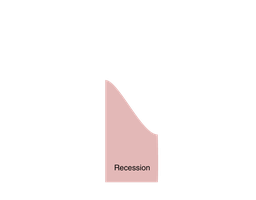
The business cycle refers to the recurring pattern of economic expansion and contraction observed in capitalist economies since the early 1800s.
Expansion: Periods of increasing economic activity and output.
Recession: Periods of declining economic activity and output.


Historical Example: The Great Depression
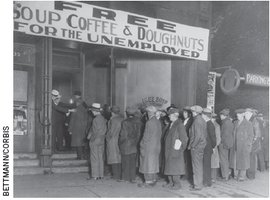
The Great Depression of the 1930s was a period of severe economic downturn, marked by a large drop in output and a rapid increase in unemployment. It profoundly influenced the development of macroeconomic theory and policy.
Government Policy and Macroeconomic Management
Monetary and Fiscal Policy
Governments use monetary and fiscal policies to address adverse economic outcomes, such as when actual GDP falls below potential GDP. These policies aim to stabilize the economy and promote sustainable growth.
Monetary Policy: Central bank actions that influence money supply and interest rates.
Fiscal Policy: Government spending and taxation decisions.
Macroeconomic Schools of Thought
(Neo) Keynesian Economics: Advocates active government intervention to manage economic cycles.
Classical Economics: Emphasizes limited government intervention, focusing on long-run growth and market self-correction.
Principles of Individual Choice and Incentives
The Economic Way of Thinking
Economics is fundamentally about choice. Individuals weigh the benefits and costs of different options and make decisions that maximize their well-being.
People are rational: They use available information to make decisions.
People respond to incentives: Changes in costs or benefits alter behavior.
Optimal decisions are made at the margin: Individuals consider the additional benefit and cost of a choice.
Role of Incentives
Incentives are central to economic behavior. The structure of incentives in a society determines how resources are allocated and how individuals respond to opportunities and constraints.
Examples include wage changes, unemployment benefits, and government policies.
Incentives can have both intended and unintended effects on behavior.
Benefit Cliffs and Work Choices
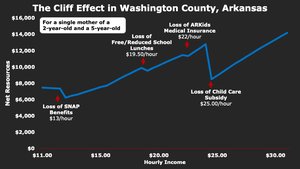
Income-related benefit "cliffs" occur when small increases in earnings lead to large losses in government benefits, potentially discouraging additional work or job advancement.
Markets, Incentives, and Economic Outcomes
Markets and Self-Interest
Markets channel self-interested behavior into socially productive outcomes. In a market-based economy, individuals and firms succeed by creating value for others, guided by prices and incentives.
Adam Smith’s concept of the "invisible hand" describes how individuals pursuing their own interests can benefit society as a whole.
Private vs. Public Ownership
Private ownership creates strong incentives for efficiency and value creation, as owners receive the residual income (profits) and bear the risks of losses. In contrast, public or state ownership can lead to distorted incentives and inefficiency, as managers do not personally benefit from success or bear the costs of failure.
Private owners are motivated to maximize value and minimize costs.
Public managers may lack incentives for efficiency and innovation.
Summary Table: Key Concepts in Macroeconomics
Concept | Definition | Example/Application |
|---|---|---|
GDP | Gross Domestic Product; total value of goods and services produced in a country | Used to measure economic growth |
Inflation | General increase in prices over time | Measured by the Consumer Price Index (CPI) |
Unemployment | Percentage of the labor force without a job but actively seeking work | High during recessions, low during expansions |
Comparative Advantage | Ability to produce a good at a lower opportunity cost than others | Basis for trade and specialization |
Incentives | Factors that motivate behavior and decision-making | Tax credits, subsidies, wage changes |
Key Equations
GDP (Expenditure Approach): Where: = Consumption, = Investment, = Government Spending, = Exports, = Imports
Unemployment Rate:
Inflation Rate:
Additional info: Some explanations and examples have been expanded for clarity and completeness, drawing on standard macroeconomics curriculum and textbook context.
