 Back
Ten Big Ideas in Economics: Foundations and Principles
Study Guide - Smart Notes
 Tailored notes based on your materials, expanded with key definitions, examples, and context.
Economics: Foundations and Models
What Economics Is All About
Economics is the study of how society manages its scarce resources. Because resources are limited, individuals, firms, and governments must make choices about how to allocate them efficiently. Economics examines:
How people decide what to buy, how much to work, save, and spend
How firms decide how much to produce and how many employees to hire
How countries allocate resources among competing needs such as national defense, consumer goods, and environmental protection
Scarcity refers to the limited nature of society’s resources, which makes choice and prioritization necessary.
Ten Big Ideas in Economics
Principles of How People Make Decisions
Big Idea #1: Tradeoffs Are Everywhere
All decisions involve tradeoffs because resources are limited. Choosing one option means giving up others. For example:
Spending time tailgating before a football game leaves less time for other activities.
Working longer hours increases income but reduces leisure time.
Society faces tradeoffs between efficiency (maximizing output from resources) and equality (distributing prosperity uniformly).
Efficiency means getting the most from scarce resources, while equality means distributing economic prosperity fairly among society’s members.
Big Idea #2: The Cost of Something Is What You Give Up to Get It
Making decisions requires comparing costs and benefits. The opportunity cost of any item is what you give up to obtain it. For example, the cost of attending college includes tuition, books, and the income you forgo by not working.
People respond to changes in opportunity cost, even if monetary costs remain unchanged.
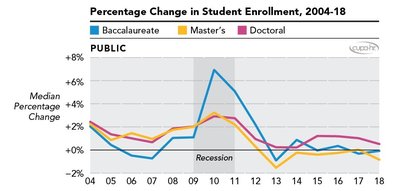
During recessions, the opportunity cost of attending college (lost wages) may decrease, leading to higher enrollment.
Big Idea #3: Rational People Think at the Margin
Rational people make decisions by evaluating marginal changes—small, incremental adjustments to an existing plan. They act to achieve their objectives as efficiently as possible.
Marginal analysis involves comparing the additional benefits and costs of a decision.
Example: The effect of severe penalties for speeding on driver behavior illustrates marginal thinking.
Big Idea #4: Incentives Matter
An incentive is something that induces a person to act, such as the prospect of a reward or punishment. Rational people respond to incentives, and policymakers must consider how laws and policies affect incentives to avoid unintended consequences.
Example: The transportation of British felons to Australia in the 18th century changed incentives and outcomes.
Applying the Principles: Marginal Analysis Example
Consider whether to repair a car’s transmission before selling it. The decision should be based on the marginal cost and benefit, not on past expenses (sunk costs).
If the increase in the car’s value from the repair exceeds the cost, repair it; otherwise, sell as is.
Past expenses are irrelevant to the current decision.
Principles of How People Interact
Big Idea #5: Trade Can Make Everyone Better Off
Trade allows people and countries to specialize in what they do best and to enjoy a greater variety of goods and services at lower cost. Specialization and exchange benefit all parties involved.
Countries can obtain better prices for their exports and buy imports more cheaply than producing them domestically.
Big Idea #6: Markets Are Usually a Good Way to Organize Economic Activity
A market is a group of buyers and sellers. In a market economy, resources are allocated through the decentralized decisions of many households and firms interacting in markets. Adam Smith’s concept of the invisible hand describes how self-interested actions can promote general economic well-being.
Prices, determined by supply and demand, guide resource allocation.
Each price reflects the value to buyers and the cost of production.
Big Idea #7: Governments Can Sometimes Improve Market Outcomes
Markets sometimes fail to allocate resources efficiently, leading to market failure. Causes include:
Externalities: When production or consumption affects bystanders (e.g., pollution).
Market power: When a single buyer or seller can influence prices (e.g., monopoly).
Government intervention can promote efficiency and equity when markets fail.
Principles of How the Economy as a Whole Works
Big Idea #8: Productivity Is the Key to Economic Prosperity
There are large differences in living standards across countries and over time. The most important determinant of living standards is productivity—the amount of goods and services produced per unit of labor. Productivity depends on equipment, skills, education, and technology.
Other factors, such as labor unions or minimum wage laws, have less impact on living standards.
Big Idea #9: Prices Rise When the Government Prints Too Much Money
Inflation is an increase in the general level of prices. In the long run, inflation is almost always caused by excessive growth in the quantity of money, which reduces the value of money. The faster the money supply grows, the higher the inflation rate.

Big Idea #10: Booms and Busts Cannot Be Avoided but Can Be Moderated
Economic activity fluctuates in cycles of booms and busts, known as the business cycle. These fluctuations are irregular and unpredictable. Policymakers use monetary policy and fiscal policy to help smooth out these fluctuations and stabilize the economy.
Additional info: These ten principles provide a foundation for understanding how individuals, firms, and governments make decisions, interact in markets, and influence the overall economy. They are essential for further study in macroeconomics and microeconomics.
