 Back
BackThe Exchange Rate and the Balance of Payments
Study Guide - Smart Notes
 Tailored notes based on your materials, expanded with key definitions, examples, and context.
The Exchange Rate and the Balance of Payments
Introduction
This chapter explores the determination of exchange rates, the functioning of the foreign exchange market, the effects of exchange rate policies, and the structure and implications of the balance of payments. Understanding these concepts is essential for analyzing international economic interactions and macroeconomic policy.
The Foreign Exchange Market
Definition and Function
Foreign Exchange Market: The market where the currency of one country is exchanged for the currency of another.
Foreign Currency: Includes foreign bank notes, coins, and bank deposits.
Facilitates international trade by allowing the purchase of foreign goods and services.
Exchange Rates
Exchange Rate: The price at which one currency exchanges for another.
Currency Depreciation: A fall in the value of one currency in terms of another.
Currency Appreciation: A rise in the value of one currency in terms of another.
Market Determination of Exchange Rates
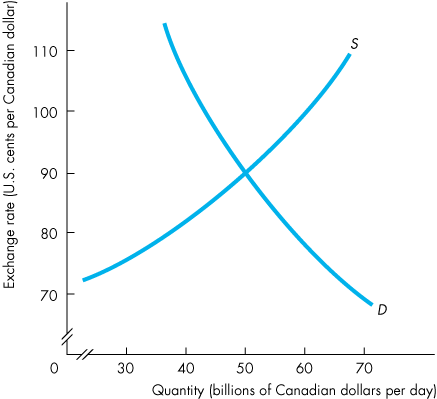
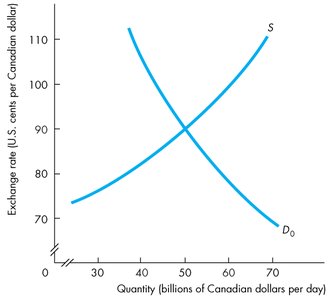
Exchange rates are determined by demand and supply in a competitive market with many traders.
The demand for one currency is the supply of another.
Demand in the Foreign Exchange Market
Determinants of Demand
The quantity of Canadian dollars demanded depends on:
The exchange rate
World demand for Canadian exports
Interest rates in Canada and other countries
The expected future exchange rate
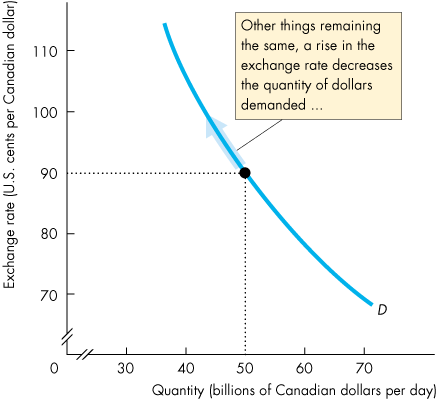
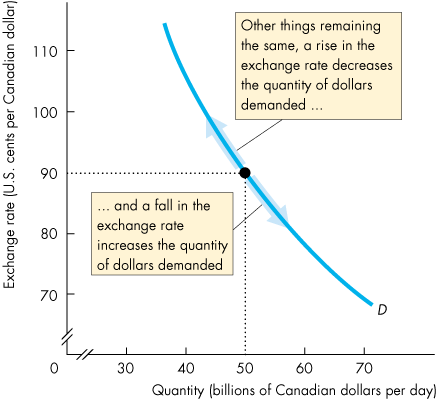
The Law of Demand for Foreign Exchange
The higher the exchange rate, the smaller the quantity of Canadian dollars demanded.
Demand is influenced by:
Exports Effect: Higher exports increase demand for Canadian dollars.
Expected Profit Effect: Higher expected profits from holding Canadian dollars increase demand.
Supply in the Foreign Exchange Market
Determinants of Supply
The quantity of Canadian dollars supplied depends on:
The exchange rate
Canadian demand for imports
Interest rates in Canada and other countries
The expected future exchange rate
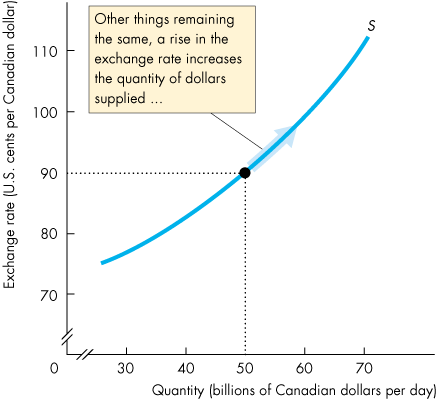
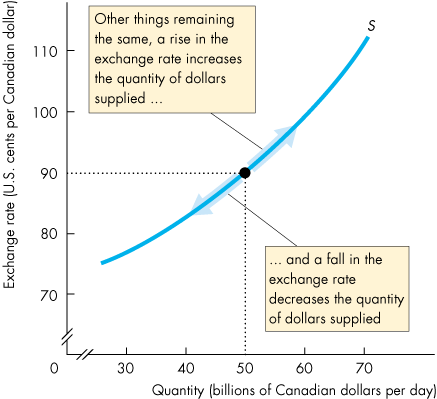
The Law of Supply of Foreign Exchange
The higher the exchange rate, the greater the quantity of Canadian dollars supplied.
Supply is influenced by:
Imports Effect: Higher imports increase supply of Canadian dollars.
Expected Profit Effect: Lower expected profits from holding Canadian dollars increase supply.
Market Equilibrium
Determination of the Exchange Rate
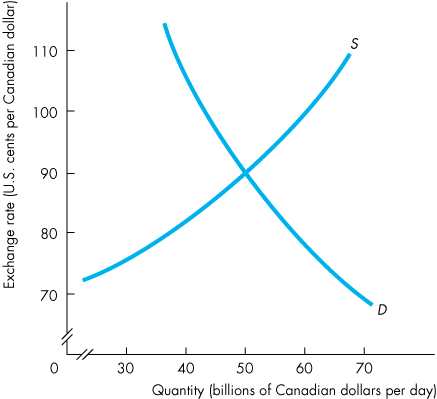
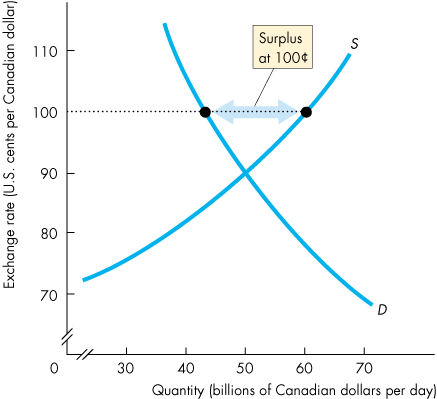
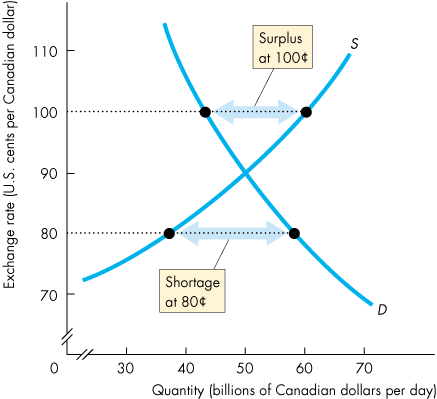
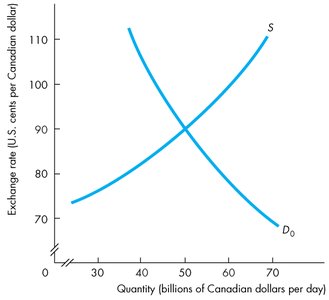
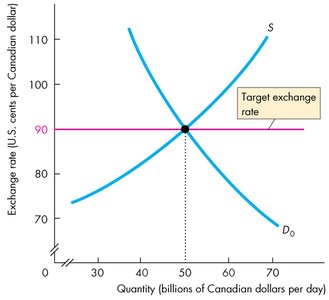
The equilibrium exchange rate is where the quantity of Canadian dollars demanded equals the quantity supplied.
If the exchange rate is too high, a surplus of Canadian dollars drives it down.
If the exchange rate is too low, a shortage drives it up.
Exchange Rate Fluctuations
Changes in Demand and Supply
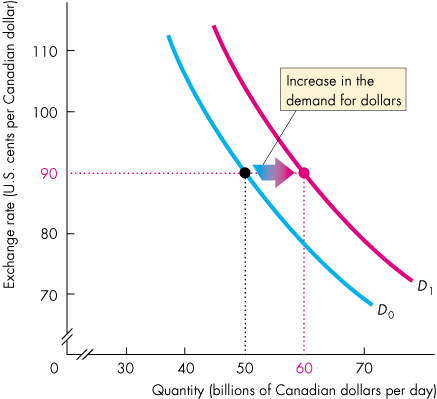
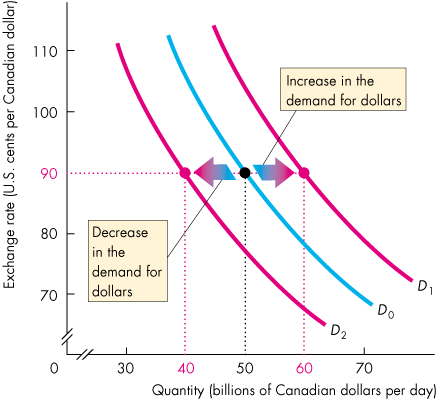
Factors shifting demand:
World demand for Canadian exports
Canadian interest rate differential
Expected future exchange rate
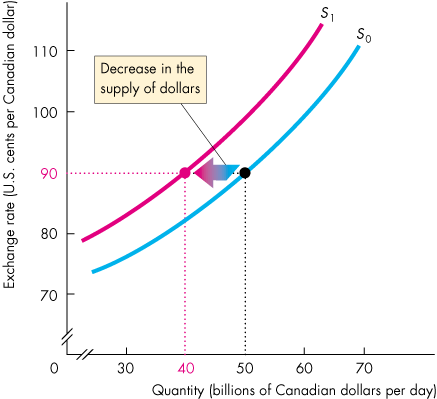
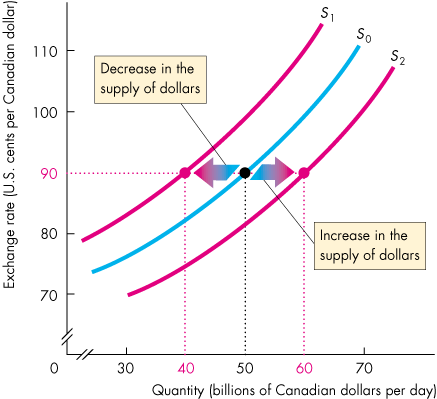
Factors shifting supply:
Canadian demand for imports
Canadian interest rate differential
Expected future exchange rate
Summary of Exchange Rate Changes
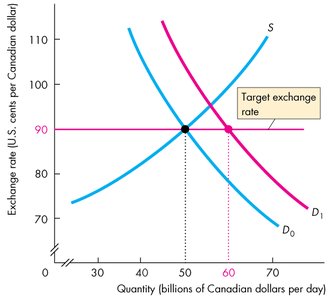
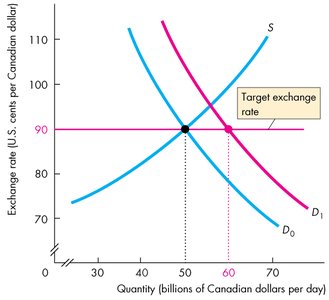
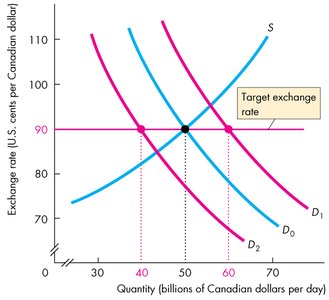
If demand increases (supply constant), exchange rate rises.
If demand decreases (supply constant), exchange rate falls.
If supply increases (demand constant), exchange rate falls.
If supply decreases (demand constant), exchange rate rises.
Exchange Rate Policy
Types of Exchange Rate Policies
Flexible Exchange Rate: Determined by market forces without central bank intervention.
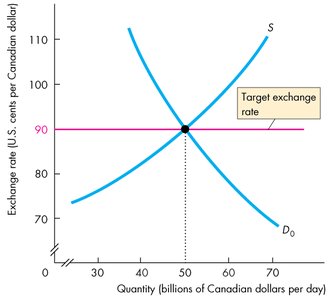
Fixed Exchange Rate: Pegged by the government or central bank, requiring intervention to maintain the target rate.
Crawling Peg: The exchange rate follows a path set by the government or central bank, with periodic adjustments.
Financing International Trade: The Balance of Payments
Balance of Payments Accounts
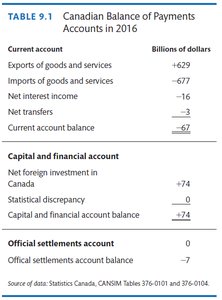
Current Account: Records exports, imports, net interest income, and net transfers.
Capital and Financial Account: Records foreign investment in Canada minus Canadian investment abroad.
Official Settlements Account: Records changes in official reserves (government holdings of foreign currency).
Account | Billions of dollars |
|---|---|
Exports of goods and services | +629 |
Imports of goods and services | -677 |
Net interest income | -16 |
Net transfers | -3 |
Current account balance | -67 |
Net foreign investment in Canada | +74 |
Statistical discrepancy | 0 |
Capital and financial account balance | +74 |
Official settlements account balance | -7 |
Key Concepts
The sum of the balances of the three accounts always equals zero.
Net Borrower: A country borrowing more from the rest of the world than it lends.
Net Lender: A country lending more to the rest of the world than it borrows.
Debtor Nation: Has borrowed more than it has lent over its history.
Creditor Nation: Has invested more abroad than others have invested in it.
Current Account Balance and Sector Balances
The current account balance (CAB) is given by:
Net exports (NX) is the main item in the current account balance.
Government sector balance: (net taxes minus government spending)
Private sector balance: (saving minus investment)
Net exports identity:
For Canada in 2016:
Net exports: –$48 billion
Government sector balance: –$38 billion
Private sector balance: –$10 billion
Net exports equals the sum of the government sector balance and the private sector balance.
Application and Implications
Being a net borrower is sustainable if funds are used for capital accumulation (increasing future income).
It is problematic if borrowing finances only consumption.
Additional info: The above notes integrate textbook-level explanations, definitions, and examples to ensure a comprehensive understanding of exchange rates and the balance of payments, as required for macroeconomics students.
