 Back
BackThe Federal Reserve and Monetary Policy: Tools, Goals, and Economic Impact
Study Guide - Smart Notes
 Tailored notes based on your materials, expanded with key definitions, examples, and context.
The Federal Reserve System and Monetary Policy
Introduction to the Federal Reserve System
The Federal Reserve System (the Fed) is the central bank of the United States, responsible for managing the nation’s money supply and implementing monetary policy. It consists of the Board of Governors in Washington, D.C., and twelve regional Federal Reserve Banks located in major cities across the country. The Fed’s independence from political control is considered crucial for effective inflation management.
Goals of Monetary Policy
The Federal Reserve pursues several key objectives through its monetary policy actions:
Price Stability: Maintaining low and stable inflation to preserve the value of money.
High Employment: Promoting maximum sustainable employment, as mandated by the Employment Act of 1946.
Economic Growth: Supporting conditions for long-term economic expansion.
Stability of Financial Markets and Institutions: Ensuring the smooth functioning of the financial system.
Note: Reducing income inequality is not a direct goal of monetary policy.
The Dual Mandate
The Fed’s dual mandate refers to its commitment to both price stability and high employment. These goals are often complementary but can sometimes conflict, requiring careful policy balancing.
Lender of Last Resort
During financial crises, the Fed acts as a lender of last resort, providing emergency liquidity to financial institutions. This role was especially significant during the 2008–2009 financial crisis, when the Fed extended over $2 trillion in loans to stabilize the economy.
Monetary Policy: Definition and Tools
What Is Monetary Policy?
Monetary policy refers to the actions the Federal Reserve takes to manage the money supply and interest rates to achieve its economic objectives. The main policy tools include:
The Discount Rate: The interest rate charged by Federal Reserve Banks to depository institutions for short-term loans.
Open Market Operations (OMO): The buying and selling of government securities to influence the federal funds rate.
Quantitative Easing (QE): Large-scale purchases of long-term securities to lower long-term interest rates when short-term rates are near zero.
Interest on Reserve Balances (IORB): The interest rate paid on banks’ reserves held at the Fed.
Overnight Reverse Repurchase Agreements: Short-term transactions to help control short-term interest rates.
The Federal Funds Rate
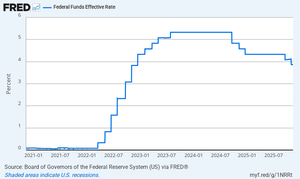
The federal funds rate is the interest rate at which banks lend reserves to each other overnight. It is the primary target for monetary policy and is influenced by the Fed through its policy tools, though not directly set by the Fed.
Discount Rate
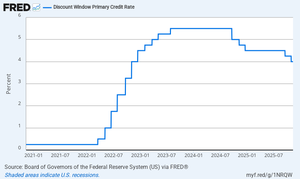
The discount rate is set by the regional Federal Reserve Banks and serves as a backup source of liquidity for banks. Typically, banks prefer to borrow from each other at the federal funds rate, but the discount window is available in times of stress.
Open Market Operations (OMO)
Open market operations are the Fed’s main tool for influencing the money supply and interest rates. By buying government securities, the Fed increases the money supply and lowers interest rates; by selling securities, it decreases the money supply and raises rates.
Quantitative Easing (QE)
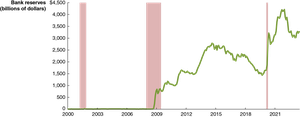
When traditional policy tools are insufficient (e.g., when interest rates are near zero), the Fed uses quantitative easing to purchase long-term securities, increasing bank reserves and lowering long-term interest rates to stimulate aggregate demand.
How Monetary Policy Affects the Economy
Interest Rates and Aggregate Demand
Changes in interest rates affect three main components of aggregate demand:
Consumption: Lower rates encourage borrowing and spending, especially on durable goods, and discourage saving.
Investment: Lower rates make borrowing cheaper for firms and households, stimulating business investment and residential construction.
Net Exports: Higher U.S. interest rates attract foreign capital, raising the dollar’s value and reducing net exports; lower rates have the opposite effect.
Expansionary vs. Contractionary Monetary Policy
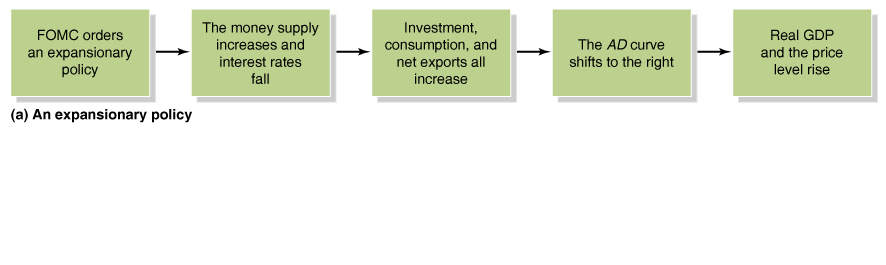
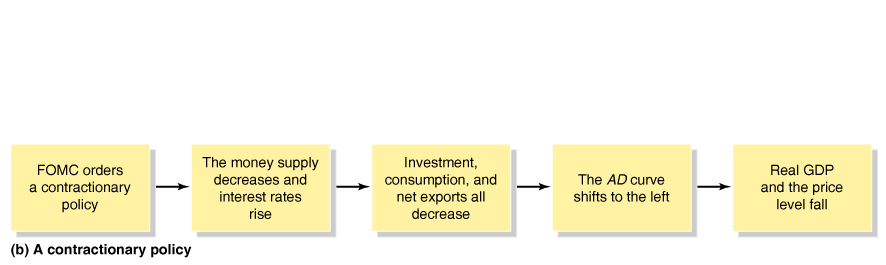
Expansionary monetary policy involves increasing the money supply and lowering interest rates to boost real GDP and reduce unemployment. Contractionary monetary policy involves decreasing the money supply and raising interest rates to control inflation.
Summary Table: Fed Actions and Their Effects
Federal Reserve Action | Money Supply | Interest Rate |
|---|---|---|
Sell Treasury securities (OMO) | Decrease | Increase |
Buy Treasury securities (OMO) | Increase | Decrease |
Raise the discount rate | Decrease | Increase |
Lower the discount rate | Increase | Decrease |
Raise the interest rate on reserves | Decrease | Increase |
Lower the interest rate on reserves | Increase | Decrease |
Monetary Policy Transmission Mechanism
The process by which monetary policy affects the economy can be summarized as follows:
Liquidity Trap
A liquidity trap occurs when interest rates are at or near zero and banks are unwilling to lend, rendering traditional monetary policy ineffective. This situation was observed during the 2008 financial crisis, prompting the use of unconventional tools like quantitative easing.
The Money Market and Interest Rates
Money Demand
The demand for money is inversely related to the interest rate. As interest rates fall, households and firms prefer to hold more money rather than interest-bearing assets. The opportunity cost of holding money is the interest forgone.
Equilibrium in the Money Market
The equilibrium interest rate is determined by the intersection of money demand and money supply. The Fed can shift the money supply curve through its policy tools, affecting the equilibrium interest rate and, consequently, aggregate demand.
Summary
The Federal Reserve uses various tools to influence the money supply and interest rates, aiming to achieve price stability, high employment, economic growth, and financial stability.
Monetary policy affects aggregate demand primarily through its impact on consumption, investment, and net exports.
Expansionary policy is used to combat recessions, while contractionary policy is used to control inflation.
Unconventional tools like quantitative easing are used when traditional policy becomes ineffective, such as during a liquidity trap.
