 Back
Chapter 8: Relevant Costs for Short-Term Decisions – Managerial Accounting Study Notes
Study Guide - Smart Notes
 Tailored notes based on your materials, expanded with key definitions, examples, and context.
Relevant Costs for Short-Term Decisions
Introduction to Short-Term Decision Making
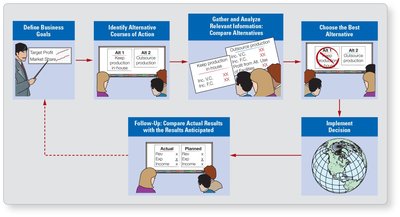
Short-term business decisions require managers to focus on information that will change depending on the alternative chosen. The incremental analysis approach is used to evaluate how operating income would differ under each alternative, emphasizing relevant revenues, costs, and profits.
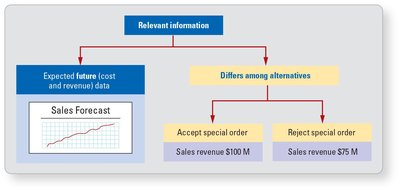
Relevant Information: Expected future costs and revenues that differ among alternatives.
Irrelevant Information: Sunk costs and costs that do not change between alternatives.
Contribution Margin Approach: Separates variable costs from fixed costs to assess profitability.
Types of Short-Term Decisions
Managers commonly face six types of short-term decisions:
Pricing
Special orders
Discontinuing products, departments, or stores
Product mix when resources are constrained
Outsourcing (make or buy)
Selling as is or processing further
Decision Pitfalls
Sunk Costs: Costs incurred in the past that cannot be changed; should not be included in decision-making.
Unit Costs: Avoid using unit costs unless they are purely variable.
Sustainability in Short-Term Decisions
Modern managerial accounting considers the impact of decisions on people, planet, and profitability. Companies like Nike embed sustainability through production practices, cradle-to-cradle systems, and compliance audits.

Identifying Relevant Information
Short Exercise Example
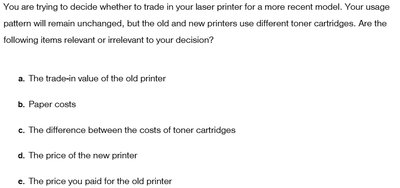
When deciding whether to trade in a printer, only future costs and revenues that differ between alternatives are relevant. For example, the trade-in value and the difference in toner cartridge costs are relevant, while the price paid for the old printer (a sunk cost) is irrelevant.
Approaches to Pricing
Price-Takers vs. Price-Setters
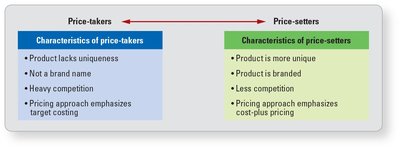
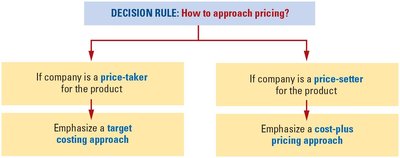
Pricing decisions depend on whether a company is a price-taker or price-setter. Price-takers operate in highly competitive markets with little control over price, while price-setters have more control due to product uniqueness or branding.
Price-Takers: Emphasize target costing.
Price-Setters: Emphasize cost-plus pricing.
Cost-Plus Pricing
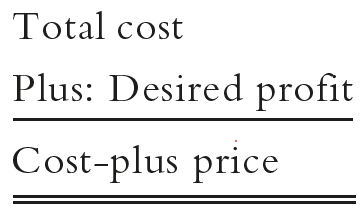
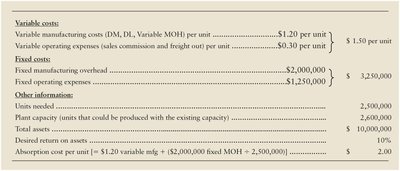
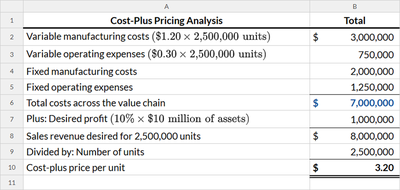
Cost-plus pricing starts with the product’s total costs and adds the desired profit to determine the selling price.
Formula:
Target Costing
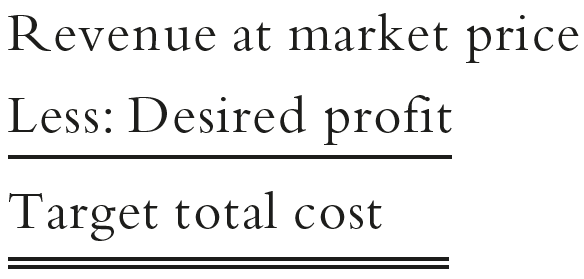
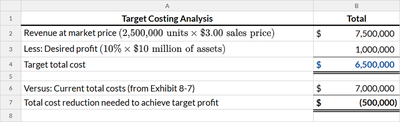
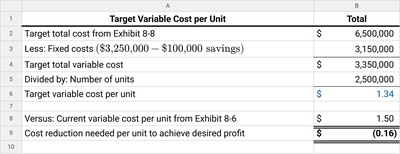
Target costing starts with the market price customers are willing to pay and subtracts the desired profit to determine the target total cost.
Formula:
Pricing Exercise Example
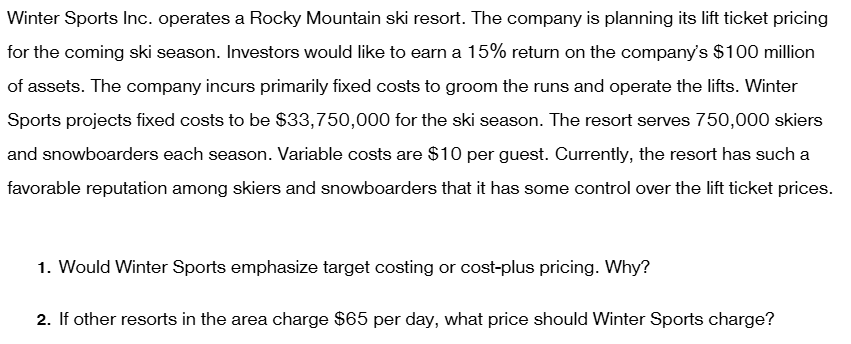
Winter Sports Inc. uses cost-plus pricing due to its favorable reputation and control over pricing. If competitors charge $65 per day, Winter Sports may charge $75, considering its differentiated offering.
Special Order Decisions
Special Order Considerations
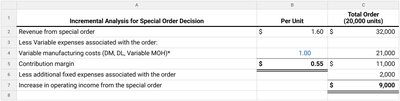
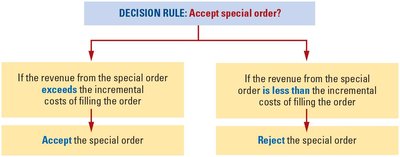
A special order is a one-time order at a reduced sales price, often for a large quantity. Managers must assess excess capacity, incremental costs, and potential impact on regular sales.
Incremental Analysis: Compares additional revenues and costs associated with the special order.
Special Order Example
Garnier considers a special order from Aldi for shampoo bottles at a reduced price. Incremental analysis shows whether the order increases operating income.
Formula:
Pitfall to Avoid
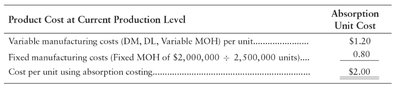
Do not compare the special order price with absorption cost per unit; use the contribution margin approach instead.
Special Order Exercise Example
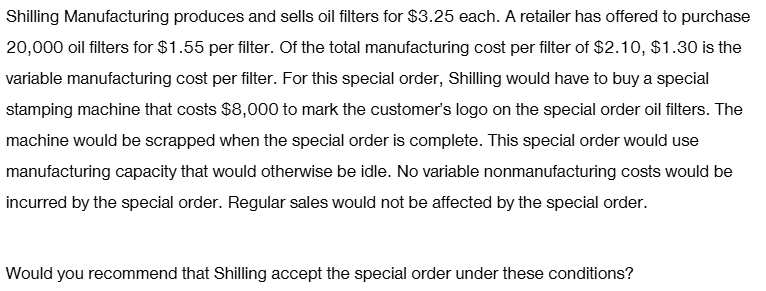
Shilling Manufacturing must consider incremental costs and fixed costs for a special order. If the expected decrease in operating income is negative, the order should be rejected.
Discontinuing Products, Departments, or Stores
Considerations for Discontinuation
Managers must evaluate the product’s contribution margin, avoidable fixed costs, and potential impact on other products. The product line income statement helps assess profitability.
Contribution Margin: Positive or negative margin indicates whether the product covers variable costs.
Avoidable Fixed Costs: Costs that can be eliminated if the product is discontinued.
Unavoidable Fixed Costs: Costs that remain even if the product is discontinued.
Product Mix Decisions with Resource Constraints
Product Mix Considerations
When resources are limited, managers must determine which products offer the highest contribution margin per unit of constraint (e.g., machine hours).
Formula:
Outsourcing (Make-or-Buy) Decisions
Outsourcing Considerations
Managers compare variable costs per unit to outsourcing costs, consider avoidable fixed costs, and evaluate alternative uses for freed capacity.
Opportunity Cost: The benefit forgone by not using freed capacity for another purpose.
Sell As Is or Process Further Decisions
Sell As Is or Process Further Example
Managers compare the revenue from selling a product as is versus after further processing, and the incremental costs of processing further.
Formula:
Summary Table: Pricing Approaches
Approach | Formula | When Used |
|---|---|---|
Cost-Plus Pricing | Price-setters (unique, branded products) | |
Target Costing | Price-takers (commodity, competitive markets) |
Key Terms
Relevant Costs: Costs that will change depending on the decision.
Sunk Costs: Costs already incurred and cannot be changed.
Contribution Margin: Sales revenue minus variable costs.
Incremental Analysis: Evaluation of the difference in costs and revenues between alternatives.
Opportunity Cost: The value of the next best alternative forgone.
