 Back
Comprehensive Budgeting in Managerial Accounting: Chapter 9 Study Notes
Study Guide - Smart Notes
 Tailored notes based on your materials, expanded with key definitions, examples, and context.
The Comprehensive Budget
Introduction to Budgeting
Budgeting is a fundamental process in managerial accounting, enabling managers to plan, coordinate, and control business activities. Budgets serve as a roadmap for achieving organizational goals and provide benchmarks for evaluating performance.
How and Why Do Managers Use Budgets?
Managers use budgets to express plans and assess progress toward organizational goals. Budgeting is an ongoing cycle involving planning, directing, and controlling operations. Managers develop strategies, create detailed plans, execute actions, and compare results to budgets for feedback and corrective action.
Planning: Budgets help managers plan for the future and control revenues and expenses.
Directing: Budgets guide managers in implementing strategies and allocating resources.
Controlling: Budgets provide feedback for evaluating performance and revising strategies.
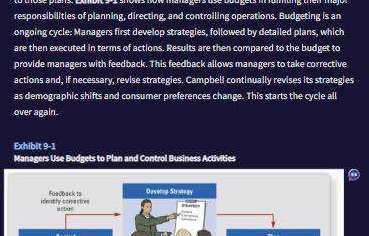
Developing and Using Budgets
Budgeting begins with the company's mission and strategic planning, which sets long-term goals. Management designs key strategies to attain these goals, often using both long-term and short-term budgets. Rolling budgets are continuously updated to ensure ongoing planning for the next 12 months.
Strategic Planning: Involves setting long-term goals (5-10 years).
Rolling Budget: Continuously updated budget covering the next 12 months.
Participants in the Budgeting Process
Participative budgeting involves input from various management levels, increasing motivation and realism. However, it can be complex and time-consuming, and may introduce budgetary slack (intentional over- or under-budgeting).
Advantages: Realistic budgets, increased motivation.
Disadvantages: Complexity, potential for slack.
Budget Committee: Reviews, revises, and approves final budgets, ensuring comprehensive and accurate planning.
Starting Point for Developing Budgets
Most companies use prior year figures as a starting point, adjusting for new products, market changes, labor contracts, inflation, and new strategies. Zero-based budgeting requires justification for every dollar, promoting cost control but is labor-intensive.
Zero-Based Budgeting: All expenses must be justified from zero each period.
The Benefits of Budgeting
Budgeting offers several key benefits: it forces managers to plan, promotes coordination and communication, and provides benchmarks for motivating employees and evaluating performance.
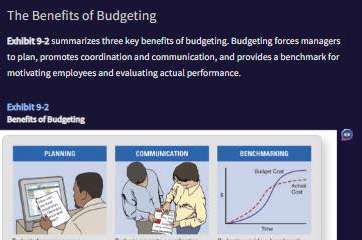
Planning: Encourages managers to focus on future goals.
Coordination and Communication: Aligns activities across departments.
Benchmarking: Sets targets for performance evaluation.
Benchmarking and Performance Evaluation
Budgets provide benchmarks for evaluating performance. The variance, or difference between actual and budgeted figures, is used to assess managerial control and determine if plans need revision.
Variance:
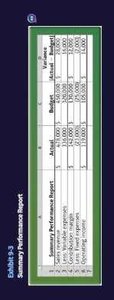
The Comprehensive Budget
Definition and Components
The comprehensive budget is the master planning document for the organization, consisting of all supporting budgets needed to create budgeted financial statements. It includes both operating and financial budgets.
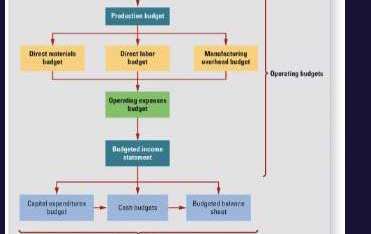
Operating Budgets: Sales, production, direct materials, direct labor, manufacturing overhead, operating expenses, and budgeted income statement.
Financial Budgets: Capital expenditures, cash budget, and budgeted balance sheet.
Operating Budgets
Operating budgets are essential for daily operations and culminate in a budgeted income statement. The sales budget is the starting point, influencing production and other operating budgets.
Sales Budget: Determines expected sales volume and revenue.
Production Budget: Determines units to be produced.
Direct Materials, Labor, and Overhead Budgets: Estimate resources needed for production.
Operating Expenses Budget: Estimates non-production costs.
Financial Budgets
Financial budgets include capital expenditures and cash budgets, culminating in a budgeted balance sheet. These budgets forecast the company's financial position and cash needs.
Capital Expenditures Budget: Plans for purchasing property, plant, and equipment.
Cash Budget: Forecasts available cash for operations and investments.
Budgeted Balance Sheet: Projects financial position at period end.
How Are the Operating Budgets Prepared?
Sales Budget
The sales budget is the foundation for all other budgets. Managers multiply expected unit sales by expected sales price per unit to estimate total sales revenue.
Formula:
Example: If Tucson Tortilla expects to sell 30,000 cases at $20 per case in January, total sales revenue is $600,000.
30,000 cases × $20 per case = $600,000
Importance: The sales budget is the basis for every other budget. Accurate sales forecasts are critical; if sales are off target, all other budgets will be affected.
*Additional info: Academic context was added to clarify the budgeting process, participative budgeting, zero-based budgeting, and the structure of comprehensive budgets.*
