Back

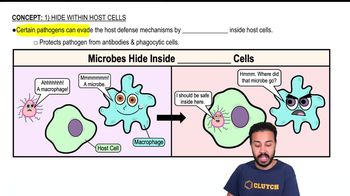
1) Hide Within Host Cells definitions

Control buttons has been changed to "navigation" mode.
1/13
  • Pathogen

    A microbe capable of causing disease, often by evading host defenses through specialized strategies.
  • Host Cell

    A body cell that can be invaded and used as a protective environment by microbes to avoid immune attack.
  • Immune System

    A network of cells and molecules that defends the body against infectious agents like bacteria and viruses.
  • Antibody

    A protein produced by the immune system that binds to foreign invaders, marking them for destruction.
  • Phagocytic Cell

    A type of immune cell that engulfs and digests microbes and debris, playing a key role in host defense.
  • Macrophage

    A large immune cell specialized in detecting, engulfing, and destroying pathogens and cellular debris.
  • Phagocytosis

    A process where immune cells engulf and digest foreign particles, helping to eliminate infections.
  • Evasion Mechanism

    A strategy used by microbes to avoid detection or destruction by the host's immune defenses.
  • Disease

    A condition resulting from the disruption of normal body function, often due to microbial invasion.
  • Microbe

    A microscopic organism, such as a bacterium, that can interact with host cells and immune defenses.
  • Host Defense

    The collective mechanisms by which the body protects itself from infection and disease.
  • Cartoon Illustration

    A simplified visual representation used to clarify complex biological interactions, such as immune evasion.
  • Bacterial Cell

    A single-celled prokaryote that can act as a pathogen and utilize host cells for protection.