What distinguishes P-type transporters from ABC transporters?
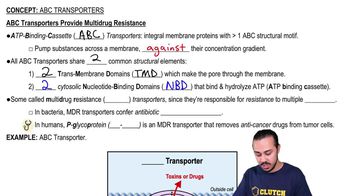
P-type transporters and ABC transporters are both ATPases involved in active transport, but they differ in structure and mechanism. ABC transporters have two transmembrane domains (TMDs) and two cytosolic nucleotide-binding domains (NBDs) that hydrolyze ATP to transport substances against their concentration gradient. In contrast, P-type transporters use ATP to phosphorylate themselves during the transport cycle and typically do not have the characteristic ABC transporter structure of two TMDs and two NBDs.
What does the acronym 'ABC' stand for in ABC transporters?
ABC stands for ATP Binding Cassette, referring to a specific structural motif in these transporters.
How do ABC transporters move substances across the membrane?
They use energy from ATP hydrolysis to pump substances against their concentration gradient, from low to high concentration.
What are the two main structural elements found in all ABC transporters?
All ABC transporters have two transmembrane domains (TMDs) and two cytosolic nucleotide-binding domains (NBDs).
What is the role of the nucleotide-binding domains (NBDs) in ABC transporters?
NBDs bind and hydrolyze ATP, providing the energy needed for active transport.
How do MDR (multidrug resistance) transporters affect bacteria?
MDR transporters in bacteria can pump out antibiotics, leading to antibiotic resistance.
What is the function of p-glycoprotein (PGP) in human cells?
P-glycoprotein removes anticancer drugs from tumor cells, contributing to cancer treatment resistance.
Why are ABC transporters a significant focus in medical research?
They are important due to their roles in antibiotic resistance and cancer drug resistance, which impact human health.
What visual symbol is used in the course to highlight medically relevant concepts related to ABC transporters?
A stethoscope symbol is used to indicate key concepts relevant for medical or pharmaceutical professions.
How do ABC transporters remove toxins and drugs from cells?
They pump toxins and drugs from the cytoplasm or membrane to the outside of the cell using ATP hydrolysis.