Back

Animal Viruses: 3. Synthesis & Replication definitions

Control buttons has been changed to "navigation" mode.
1/15
  • Capsid

    Protein shell surrounding the viral genome, assembled from structural proteins during synthesis in the host cell.
  • Viral Genome

    Genetic material of a virus, composed of DNA or RNA, determining replication and synthesis mechanisms.
  • Structural Proteins

    Proteins forming the physical components of a virus, such as the capsid and spike proteins, produced during infection.
  • Replication Enzymes

    Viral or host enzymes required to duplicate the viral genome within the host cell.
  • Messenger RNA

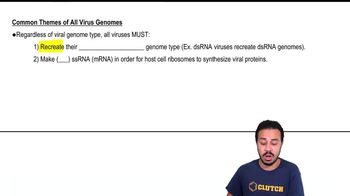
    Single-stranded RNA molecule serving as the template for viral protein synthesis by host ribosomes.
  • Transcription

    Process where DNA or RNA templates are used to generate messenger RNA for protein synthesis.
  • Translation

    Cellular process where messenger RNA is decoded by ribosomes to assemble viral proteins.
  • Double-Stranded DNA

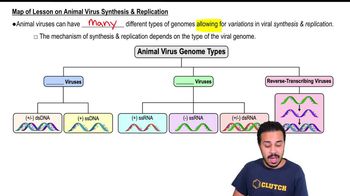
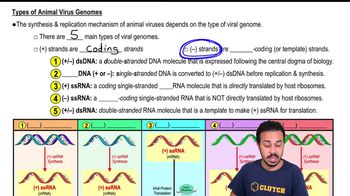
    Viral genome type with two complementary DNA strands, following the central dogma for expression.
  • Single-Stranded DNA

    Viral genome type with only one DNA strand, requiring conversion to double-stranded form before replication.
  • Single-Stranded RNA

    Viral genome type with one RNA strand, which can be coding (plus) or template (minus) for protein synthesis.
  • Double-Stranded RNA

    Viral genome type with two complementary RNA strands, unique to certain viruses, serving as a template for messenger RNA.
  • Coding Strand

    Nucleic acid strand containing the sequence directly used to specify protein synthesis.
  • Template Strand

    Nucleic acid strand complementary to the coding strand, used as a template for messenger RNA synthesis.
  • Reverse Transcribing Virus

    Virus type capable of synthesizing DNA from an RNA template, involving reverse transcription.
  • Host Ribosome

    Cellular machinery hijacked by viruses to translate messenger RNA into viral proteins.