Back

Animal Viruses: Reverse-Transcribing Virus Synthesis & Replication definitions

Control buttons has been changed to "navigation" mode.
1/13
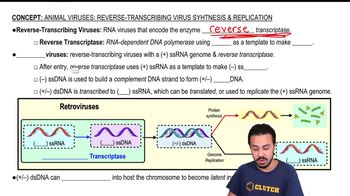
  • Reverse Transcriptase

    An enzyme that synthesizes DNA from an RNA template, reversing the usual flow of genetic information.
  • Retrovirus

    A type of RNA virus with a plus single-stranded RNA genome and reverse transcriptase enzyme.
  • Plus ssRNA

    A single-stranded RNA genome with the same sense as messenger RNA, serving as a template for protein synthesis.
  • Minus ssDNA

    A single-stranded DNA molecule synthesized from an RNA template by reverse transcriptase.
  • dsDNA

    A double-stranded DNA molecule formed after complementary DNA synthesis from minus ssDNA.
  • Genome Integration

    The process where viral double-stranded DNA becomes part of the host cell's chromosome.
  • Latency

    A dormant state where viral DNA remains in the host genome without producing new viruses.
  • RNA-dependent DNA Polymerase

    An enzyme that builds DNA using an RNA template, characteristic of reverse transcriptase.
  • Messenger RNA

    A type of RNA transcribed from DNA that directs the synthesis of viral proteins.
  • Protein Synthesis

    The cellular process where messenger RNA is translated to produce viral proteins.
  • Genome Replication

    The process of producing new copies of the viral genome for packaging into new virus particles.
  • Chromosome

    A structure within the host cell where viral DNA can integrate and persist.
  • Viral Proteins

    Molecules produced from viral messenger RNA that are essential for virus structure and function.